THE ADVENTURE COLLECTIVE® · Independent discovery and booking for outdoor travel

Throttle up, feel the wind, and watch alligators sun along sawgrass channels on a classic Everglades airboat tour from Miami. This half-day experience blends high-speed navigation with hands-on wildlife education and local conservation context.
Throttle up, feel the wind, and watch alligators sun along sawgrass channels on a classic Everglades airboat tour from Miami. This half-day experience blends high-speed navigation with hands-on wildlife education and local conservation context.
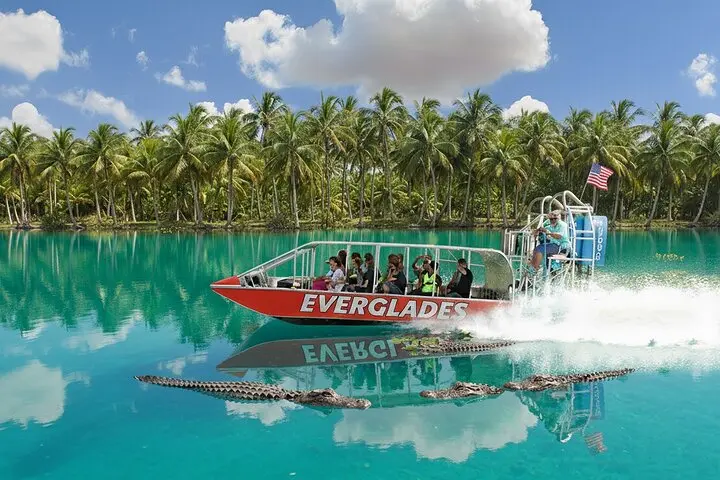
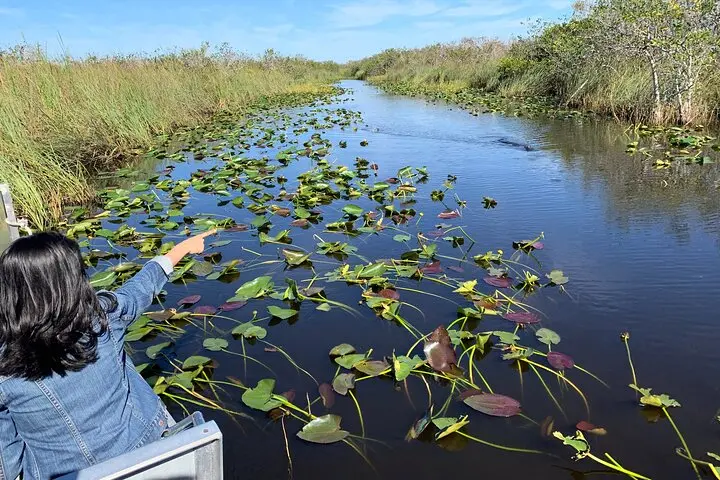
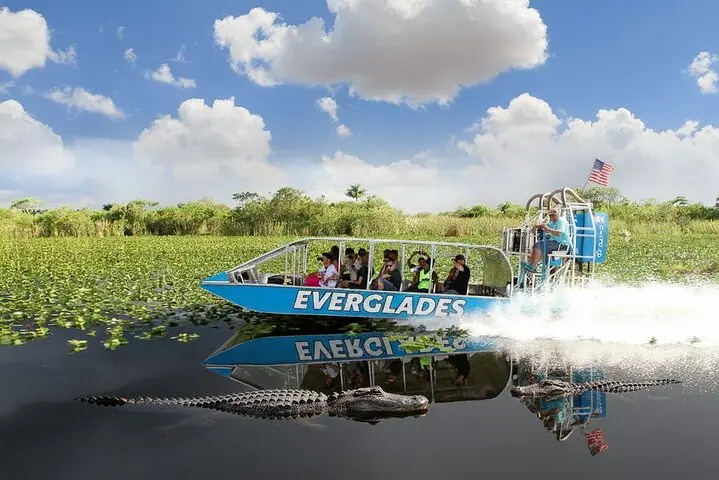
The motor lurches, a low mechanical breath, then the airboat slices forward and the sawgrass flats open like a green sea. Wind and spray press against your face as the captain banks—a sudden, audacious turn that changes the view from horizon to a cluster of sunning alligators in a single heartbeat. That vertigo between speed and stillness is the Everglades: a place where water dares you to slow down and the landscape answers in long, unhurried syllables.
Verified experiences and guided adventures in the surrounding area.
Operated by US2U · Homestead, Florida
The motor lurches, a low mechanical breath, then the airboat slices forward and the sawgrass flats open like a green sea. Wind and spray press against your face as the captain banks—a sudden, audacious turn that changes the view from horizon to a cluster of sunning alligators in a single heartbeat. That vertigo between speed and stillness is the Everglades: a place where water dares you to slow down and the landscape answers in long, unhurried syllables.
This short, high-adrenaline tour threads through the fringe of Everglades National Park and private marshland where the sheet flow of water sculpts wetlands over exposed limestone. Geologically, the Everglades exists because of a slow drainage from Lake Okeechobee down toward Florida Bay; ecologically it supports sawgrass prairies, mangrove-lined channels and a complex web of species from wading birds to top predators. Culturally, the region carries Miccosukee and Seminole histories—people who adapted to living on water and built knowledge of its rhythms long before tourism arrived.
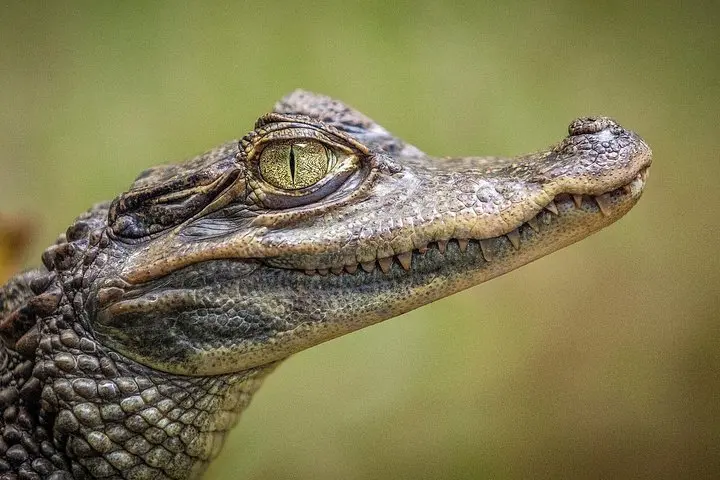
Onboard, guides translate that science into immediate context: why water levels make alligators more visible in the dry season, how mangroves stabilize shorelines, and how rescue animals you may meet are part of state-regulated sanctuary programs. A live gator presentation provides an up-close lesson in scale and behavior—rescue animals are used for education because they cannot survive in the wild—and the experience makes clear how fragile the balance is when coastal development and freshwater diversion change the flow.
Practicalities are straightforward: tours run roughly 60–240 minutes including transport from Miami, with pickup windows in the morning. Airboats may be covered or uncovered depending on season and occupancy; expect wind, spray and engine noise. Wildlife sightings are common but not guaranteed—timing and water conditions matter. Morning rides are cooler and often best for birds and gators; late afternoon gives warmer light for photos but can be buggy.
What to bring: sun protection, insect repellent, closed-toe shoes, a small water bottle and a lightweight jacket for breezy crossings. Keep cameras secure—the boat’s speed and spray demand a good strap. Respect the animals: don’t feed wildlife and follow guide instructions during the gator demo. If conservation matters to you, ask about the operator’s animal-care standards and how they support restoration efforts—part of the Everglades’ future depends on informed visitors as much as scientific policy.
No. Sightings depend on season, water levels and weather; guides try to position boats in active areas but wildlife is not guaranteed.
Yes—operators classify it as suitable for all fitness levels; infants must sit on laps and staff provide safety briefings before departure.
Sometimes. Coverage varies by boat, season and occupancy—expect open-air conditions on some runs.
Yes—photography is encouraged but secure your camera with a strap and be prepared for spray and motion.
Rescue animals used in demonstrations are cared for under state regulations and cannot be released; they’re part of education programs.
Yes—round-trip transportation from select Miami pickup points is usually included; confirm exact pickup time and location after booking.
US2U operates guided outdoor trips and adventures with an emphasis on safety, stewardship, and memorable experiences.
The motor lurches, a low mechanical breath, then the airboat slices forward and the sawgrass flats open like a green sea. Wind and spray press against your face as the captain banks—a sudden, audacious turn that changes the view from horizon to a cluster of sunning alligators in a single heartbeat. That vertigo between speed and stillness is the Everglades: a place where water dares you to slow down and the landscape answers in long, unhurried syllables.
The motor lurches, a low mechanical breath, then the airboat slices forward and the sawgrass flats open like a green sea. Wind and spray press against your face as the captain banks—a sudden, audacious turn that changes the view from horizon to a cluster of sunning alligators in a single heartbeat. That vertigo between speed and stillness is the Everglades: a place where water dares you to slow down and the landscape answers in long, unhurried syllables.
This short, high-adrenaline tour threads through the fringe of Everglades National Park and private marshland where the sheet flow of water sculpts wetlands over exposed limestone. Geologically, the Everglades exists because of a slow drainage from Lake Okeechobee down toward Florida Bay; ecologically it supports sawgrass prairies, mangrove-lined channels and a complex web of species from wading birds to top predators. Culturally, the region carries Miccosukee and Seminole histories—people who adapted to living on water and built knowledge of its rhythms long before tourism arrived.
Onboard, guides translate that science into immediate context: why water levels make alligators more visible in the dry season, how mangroves stabilize shorelines, and how rescue animals you may meet are part of state-regulated sanctuary programs. A live gator presentation provides an up-close lesson in scale and behavior—rescue animals are used for education because they cannot survive in the wild—and the experience makes clear how fragile the balance is when coastal development and freshwater diversion change the flow.
Practicalities are straightforward: tours run roughly 60–240 minutes including transport from Miami, with pickup windows in the morning. Airboats may be covered or uncovered depending on season and occupancy; expect wind, spray and engine noise. Wildlife sightings are common but not guaranteed—timing and water conditions matter. Morning rides are cooler and often best for birds and gators; late afternoon gives warmer light for photos but can be buggy.
What to bring: sun protection, insect repellent, closed-toe shoes, a small water bottle and a lightweight jacket for breezy crossings. Keep cameras secure—the boat’s speed and spray demand a good strap. Respect the animals: don’t feed wildlife and follow guide instructions during the gator demo. If conservation matters to you, ask about the operator’s animal-care standards and how they support restoration efforts—part of the Everglades’ future depends on informed visitors as much as scientific policy.