THE ADVENTURE COLLECTIVE® · Independent discovery and booking for outdoor travel

Stand astride the equator at Mitad del Mundo, then descend into Alambi’s cloudforest to watch hummingbirds flash at feeders. This full-day private excursion pairs hands-on cultural history with easy birding on short trails.
Stand astride the equator at Mitad del Mundo, then descend into Alambi’s cloudforest to watch hummingbirds flash at feeders. This full-day private excursion pairs hands-on cultural history with easy birding on short trails.
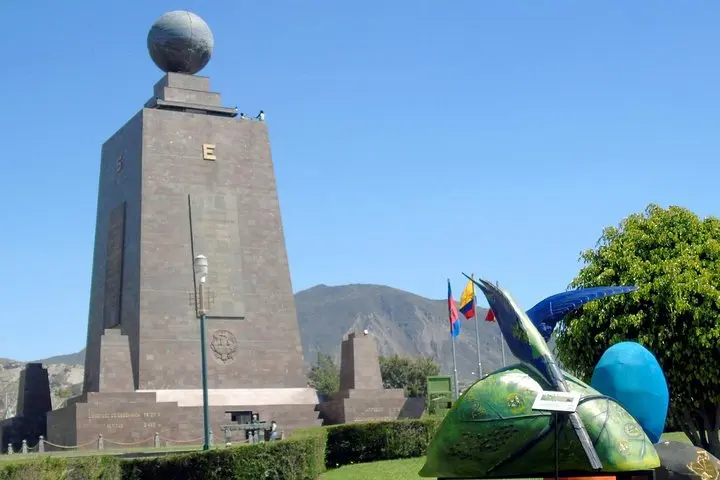
You step from the van onto a broad concrete plaza and the horizon tilts — one foot north, one foot south — while wind off the Andean flank teases your hair. The Monument to the Middle of the World looms nearby, a concrete ring marking centuries of geodesy and the modern tourist claim to the equator; cameras click as guides point out the precise line and the local experiments that challenge your sense of balance.
Verified experiences and guided adventures in the surrounding area.
Operated by CUSCUNGA TOURS · Quito, Pichincha
You step from the van onto a broad concrete plaza and the horizon tilts — one foot north, one foot south — while wind off the Andean flank teases your hair. The Monument to the Middle of the World looms nearby, a concrete ring marking centuries of geodesy and the modern tourist claim to the equator; cameras click as guides point out the precise line and the local experiments that challenge your sense of balance.
A short walk brings you to the Intiñan Museum, where indigenous solar knowledge and colonial-era surveying meet hands-on exhibits. The museum frames Ecuador’s highland culture and the 18th-century French Geodesic Mission that attempted to measure the Earth here, while displays of tools, textiles and traditional instruments give context to the place.
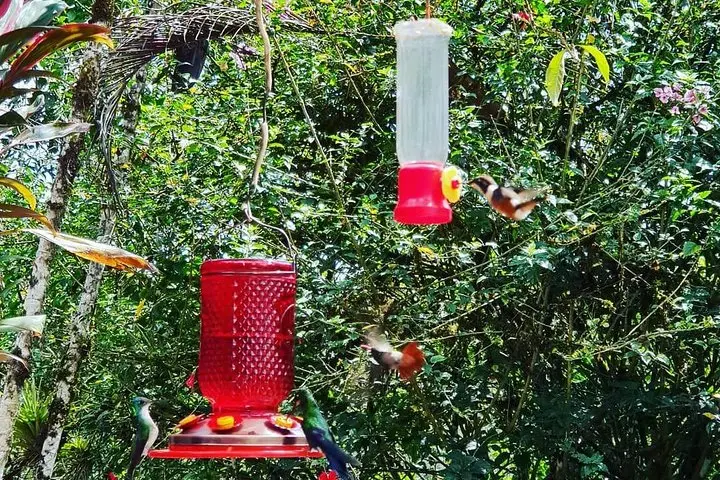
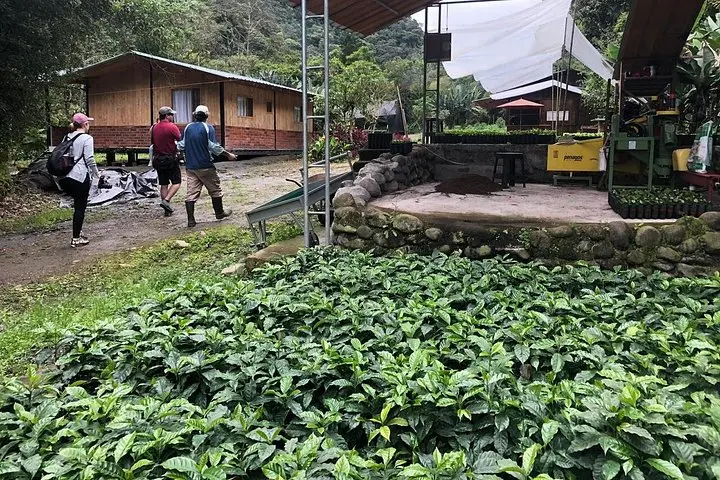
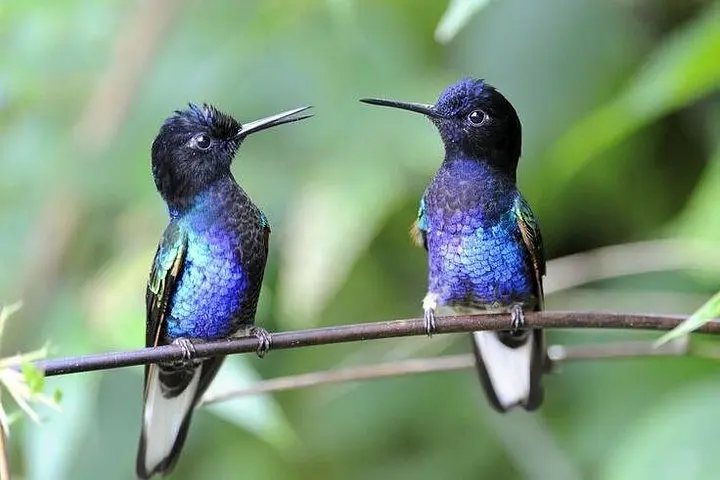
Later the road slips downhill toward Alambi, a family-run reserve on the western cloudforest edge. In a few minutes the air cools and orchids nod; hummingbirds blitz feeders and moss-draped branches become a stage for iridescent wings. The reserve’s trails are short and accessible, designed for birding and relaxed walks through mostly primary cloudforest.
Practical edge: expect high-altitude sun in the Quito sector (≈2,800–2,900 m) and warmer, moister air at Alambi (approx. 1,000–1,600 m). Bring a rain layer, binoculars, and sunscreen; the day mixes paved monuments with uneven forest paths. The pace is easy, the logistics handled by private transport, and an English-speaking guide usually interprets both scientific experiments and bird behavior. Allow a full day (about six hours) to enjoy both cultural context and the sharp, fast theatrics of hummingbirds without rushing.
Admissions to the Intiñan Museum and Alambi Reserve are included in this private excursion.
The itinerary notes stroller and wheelchair accessibility for parts of the tour, though some reserve trails have uneven surfaces—check specifics with the operator on booking.
Mitad del Mundo is roughly 30–45 minutes north of central Quito by road; Alambi is a longer drive toward the western cloudforest and may take 1–1.5 hours depending on traffic and route.
Alambi is renowned for hummingbird diversity and feeders attract many species, but wildlife sightings cannot be guaranteed; visit during morning hours for the best activity.
CUSCUNGA TOURS operates guided outdoor trips and adventures with an emphasis on safety, stewardship, and memorable experiences.
You step from the van onto a broad concrete plaza and the horizon tilts — one foot north, one foot south — while wind off the Andean flank teases your hair. The Monument to the Middle of the World looms nearby, a concrete ring marking centuries of geodesy and the modern tourist claim to the equator; cameras click as guides point out the precise line and the local experiments that challenge your sense of balance.
You step from the van onto a broad concrete plaza and the horizon tilts — one foot north, one foot south — while wind off the Andean flank teases your hair. The Monument to the Middle of the World looms nearby, a concrete ring marking centuries of geodesy and the modern tourist claim to the equator; cameras click as guides point out the precise line and the local experiments that challenge your sense of balance.
A short walk brings you to the Intiñan Museum, where indigenous solar knowledge and colonial-era surveying meet hands-on exhibits. The museum frames Ecuador’s highland culture and the 18th-century French Geodesic Mission that attempted to measure the Earth here, while displays of tools, textiles and traditional instruments give context to the place.
Later the road slips downhill toward Alambi, a family-run reserve on the western cloudforest edge. In a few minutes the air cools and orchids nod; hummingbirds blitz feeders and moss-draped branches become a stage for iridescent wings. The reserve’s trails are short and accessible, designed for birding and relaxed walks through mostly primary cloudforest.
Practical edge: expect high-altitude sun in the Quito sector (≈2,800–2,900 m) and warmer, moister air at Alambi (approx. 1,000–1,600 m). Bring a rain layer, binoculars, and sunscreen; the day mixes paved monuments with uneven forest paths. The pace is easy, the logistics handled by private transport, and an English-speaking guide usually interprets both scientific experiments and bird behavior. Allow a full day (about six hours) to enjoy both cultural context and the sharp, fast theatrics of hummingbirds without rushing.