THE ADVENTURE COLLECTIVE® · Independent discovery and booking for outdoor travel

Hike up Kawah Ijen at night to watch rare blue flames, witness sulfur miners at work, and catch sunrise over the turquoise crater lake. This shared, budget-friendly tour includes jeep transfer, guide, and basic gas mask.
Hike up Kawah Ijen at night to watch rare blue flames, witness sulfur miners at work, and catch sunrise over the turquoise crater lake. This shared, budget-friendly tour includes jeep transfer, guide, and basic gas mask.
You arrive at the trailhead just after midnight; a jeep drops you where the headlamps start to stitch the dark. The trail climbs under a sky thick with stars, and the crater’s rim waits like a weathered lip. Trekking for roughly 1.5 hours on a steep, rocky track, you gain a few hundred meters while the forest loosens and the cold at altitude begins to bite.
Verified experiences and guided adventures in the surrounding area.
Operated by Tera TNT · Banyuwangi, East Java
You arrive at the trailhead just after midnight; a jeep drops you where the headlamps start to stitch the dark. The trail climbs under a sky thick with stars, and the crater’s rim waits like a weathered lip. Trekking for roughly 1.5 hours on a steep, rocky track, you gain a few hundred meters while the forest loosens and the cold at altitude begins to bite.
Kawah Ijen is as much industrial history as geological wonder. The acidic crater lake sits amid an active volcanic complex; sulfurous gases seep and burn where miners collect bright yellow sulfur by hand. The famed blue fire is not illusion but sulfuric gases igniting as they exit fissures — an eerie, rare phenomenon visible only at night.
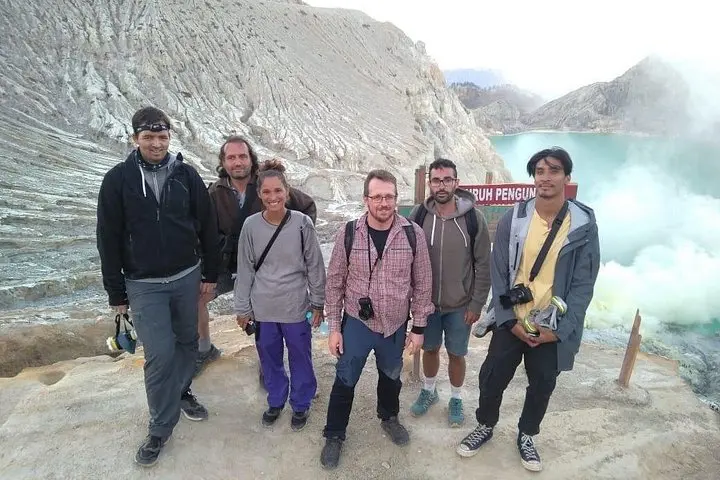
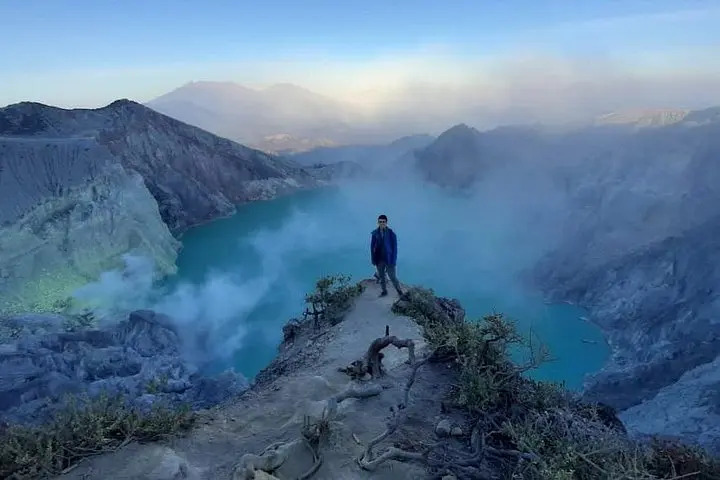
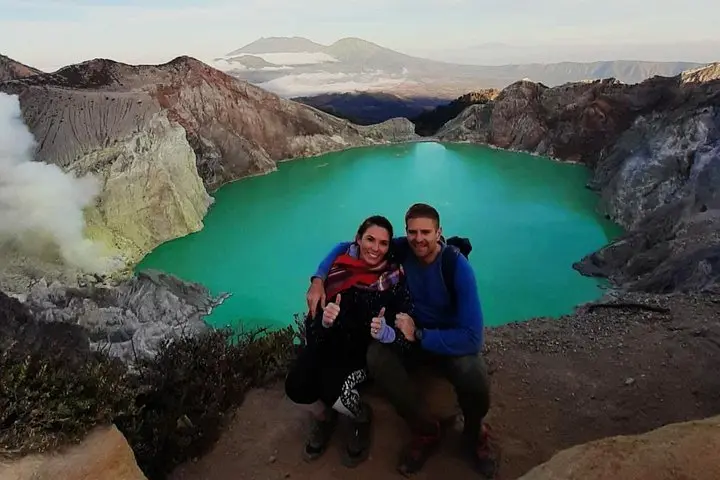
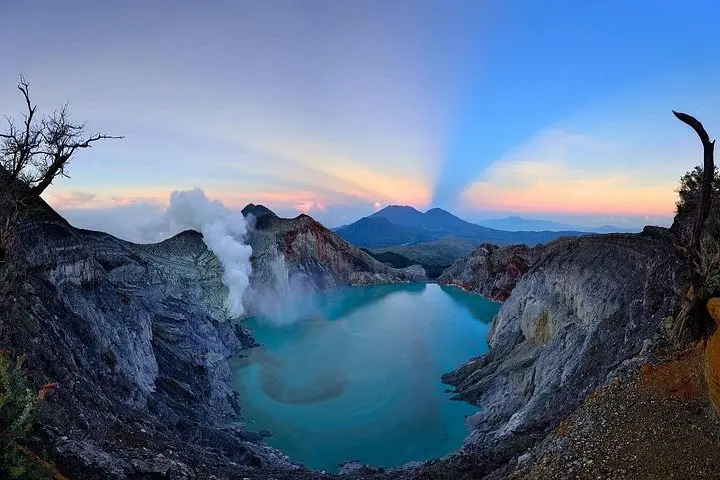
Culturally, the site is defined by the miners: hardy local workers who haul heavy loads down the switchbacks before dawn. Geologically, the contrast of turquoise lake, yellow sulfur, and blackened rock is immediate and elemental.
Practically: tours pick up in Banyuwangi around midnight, include jeep transfer, entrance fee, and a basic gas mask (though bringing your own higher-grade respirator helps). Expect a 3 km uphill approach with uneven footing, steep steps, and loose scree; plan for 8–9 hours total round-trip including transfers. Bring a reliable headlamp, sturdy boots, warm layers, and plenty of water. Respect miners’ space, follow guides’ directions around gas vents, and time your summit for the blue flame and early sunrise — the payoff is dramatic light over the crater and an unvarnished view of human labor against volcanic power.
Most operators advertise about a 1.5-hour ascent from the parking/jeep drop point — plan for loose rocks and steps and a similar time to descend.
Blue fire visibility depends on volcanic gas emissions and wind; clear, still nights increase chances, but it cannot be guaranteed.
A basic mask is usually included, but visitors with sensitive lungs should bring a P2/FFP2 or higher-rated respirator for better protection.
Tours advise against participation for pregnant travelers, those with serious heart or spinal conditions, and recommend a moderate fitness level.
Tera TNT operates guided outdoor trips and adventures with an emphasis on safety, stewardship, and memorable experiences.
You arrive at the trailhead just after midnight; a jeep drops you where the headlamps start to stitch the dark. The trail climbs under a sky thick with stars, and the crater’s rim waits like a weathered lip. Trekking for roughly 1.5 hours on a steep, rocky track, you gain a few hundred meters while the forest loosens and the cold at altitude begins to bite.
You arrive at the trailhead just after midnight; a jeep drops you where the headlamps start to stitch the dark. The trail climbs under a sky thick with stars, and the crater’s rim waits like a weathered lip. Trekking for roughly 1.5 hours on a steep, rocky track, you gain a few hundred meters while the forest loosens and the cold at altitude begins to bite.
Kawah Ijen is as much industrial history as geological wonder. The acidic crater lake sits amid an active volcanic complex; sulfurous gases seep and burn where miners collect bright yellow sulfur by hand. The famed blue fire is not illusion but sulfuric gases igniting as they exit fissures — an eerie, rare phenomenon visible only at night.
Culturally, the site is defined by the miners: hardy local workers who haul heavy loads down the switchbacks before dawn. Geologically, the contrast of turquoise lake, yellow sulfur, and blackened rock is immediate and elemental.
Practically: tours pick up in Banyuwangi around midnight, include jeep transfer, entrance fee, and a basic gas mask (though bringing your own higher-grade respirator helps). Expect a 3 km uphill approach with uneven footing, steep steps, and loose scree; plan for 8–9 hours total round-trip including transfers. Bring a reliable headlamp, sturdy boots, warm layers, and plenty of water. Respect miners’ space, follow guides’ directions around gas vents, and time your summit for the blue flame and early sunrise — the payoff is dramatic light over the crater and an unvarnished view of human labor against volcanic power.