THE ADVENTURE COLLECTIVE® · Independent discovery and booking for outdoor travel

A private overnight-style excursion from Bali that combines long transfers with a midnight hike to witness Mount Ijen’s rare blue fire and panoramic crater lake. Expect steep, uneven terrain, sulfur fumes, and sunrise views from the rim.
A private overnight-style excursion from Bali that combines long transfers with a midnight hike to witness Mount Ijen’s rare blue fire and panoramic crater lake. Expect steep, uneven terrain, sulfur fumes, and sunrise views from the rim.
Night cloaks the coastal roads as a private van slides away from Bali toward Gilimanuk, headlights cutting a trail through rice terraces and dark village lanes. By dawn’s slack light the ferry crosses to Ketapang, but the real ascent begins in the deep hours: a headlamp cone and a steady boot rhythm against volcanic scree as you climb toward the crater rim.
Verified experiences and guided adventures in the surrounding area.
Operated by TripGuru · Banyuwangi, East Java
Night cloaks the coastal roads as a private van slides away from Bali toward Gilimanuk, headlights cutting a trail through rice terraces and dark village lanes. By dawn’s slack light the ferry crosses to Ketapang, but the real ascent begins in the deep hours: a headlamp cone and a steady boot rhythm against volcanic scree as you climb toward the crater rim.
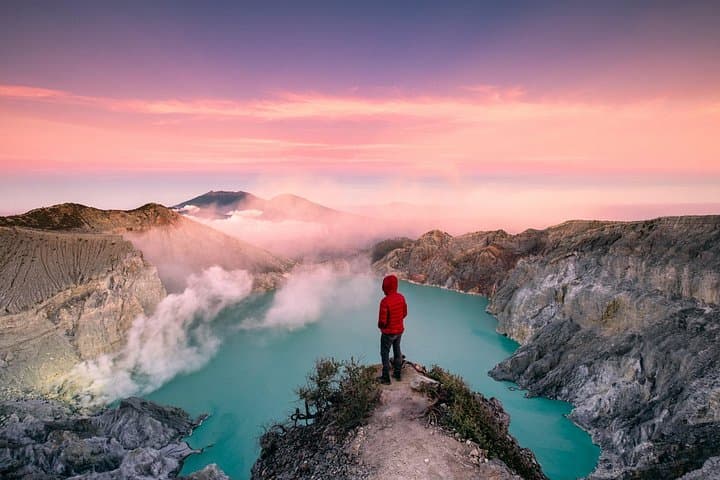
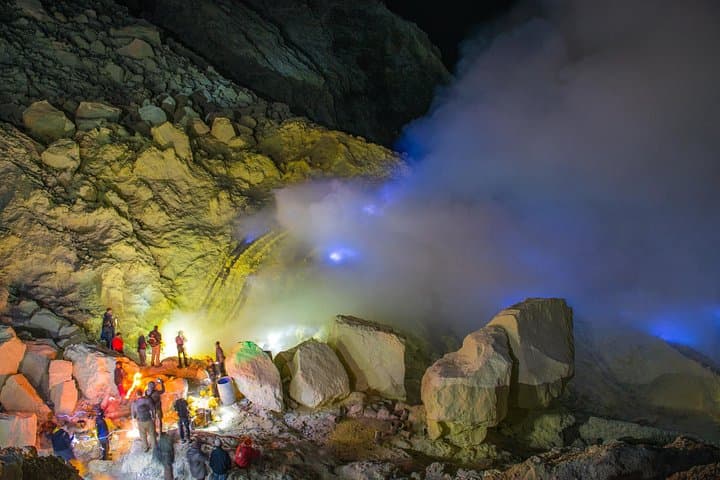
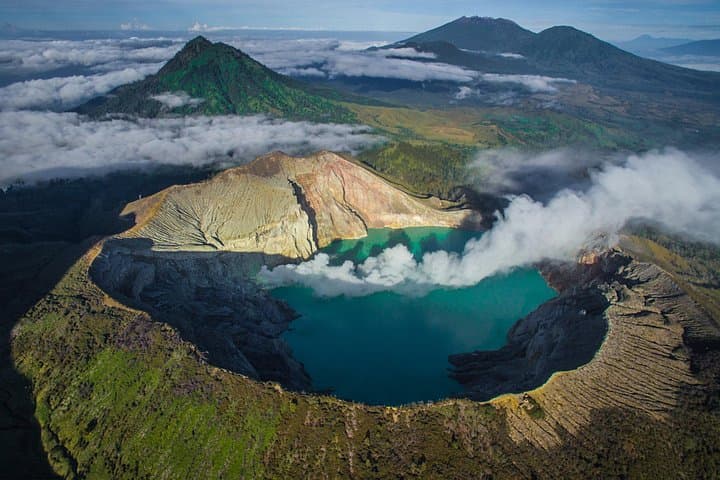
Ijen is a volcanic complex on Java known for its acid turquoise lake and the rare “blue fire” — combustion of sulfuric gases visible only near the vent at night. The crater’s steep cliffs are the result of millennia of eruptions; sulfur miners still work here with baskets and masks, a cultural practice that blends economy and endurance.
Geology is obvious underfoot: black tephra, crumbly ash steps and jagged fumaroles that hiss like a living thing. The lake below exhales steam; sulfur crystals pineapple the inner walls in yellow veins. Local warungs and Banyuwangi town form the human backdrop to the landscape’s raw elements.
Practical guidance: expect a lengthy transfer, an uphill hike of 1.5–3 hours each way depending on pace, and unstable terrain near the rim. Carry a reliable headlamp, a particulate mask (provided by most operators but bring your own for fit and comfort), water, and layered clothing—the crater rim can be cold and windy even in tropical months. Respect mining operations: keep distance from vents, avoid loose edges, and follow your guide’s route. Timing your visit during the drier months improves visibility for the blue fire and the lake views. With preparation, the midnight trek to Ijen delivers a striking, singular volcanic encounter.
Blue fire is only visible at night when sulfur gases ignite; guides time the ascent to arrive before the phenomenon, typically late-night to pre-dawn.
The trail is steep and uneven—beginners can do it with good fitness and a steady pace, but it’s not recommended for those with serious mobility, spinal, or heart conditions.
Most operators supply basic gas masks, but bringing a well-fitting P100/N95 respirator improves protection and comfort.
Expect 1.5–3 hours uphill depending on pace and starting point, with a similar descent; total door-to-door time includes long transfers and boarding times.
TripGuru operates guided outdoor trips and adventures with an emphasis on safety, stewardship, and memorable experiences.

Night cloaks the coastal roads as a private van slides away from Bali toward Gilimanuk, headlights cutting a trail through rice terraces and dark village lanes. By dawn’s slack light the ferry crosses to Ketapang, but the real ascent begins in the deep hours: a headlamp cone and a steady boot rhythm against volcanic scree as you climb toward the crater rim.
Night cloaks the coastal roads as a private van slides away from Bali toward Gilimanuk, headlights cutting a trail through rice terraces and dark village lanes. By dawn’s slack light the ferry crosses to Ketapang, but the real ascent begins in the deep hours: a headlamp cone and a steady boot rhythm against volcanic scree as you climb toward the crater rim.
Ijen is a volcanic complex on Java known for its acid turquoise lake and the rare “blue fire” — combustion of sulfuric gases visible only near the vent at night. The crater’s steep cliffs are the result of millennia of eruptions; sulfur miners still work here with baskets and masks, a cultural practice that blends economy and endurance.
Geology is obvious underfoot: black tephra, crumbly ash steps and jagged fumaroles that hiss like a living thing. The lake below exhales steam; sulfur crystals pineapple the inner walls in yellow veins. Local warungs and Banyuwangi town form the human backdrop to the landscape’s raw elements.
Practical guidance: expect a lengthy transfer, an uphill hike of 1.5–3 hours each way depending on pace, and unstable terrain near the rim. Carry a reliable headlamp, a particulate mask (provided by most operators but bring your own for fit and comfort), water, and layered clothing—the crater rim can be cold and windy even in tropical months. Respect mining operations: keep distance from vents, avoid loose edges, and follow your guide’s route. Timing your visit during the drier months improves visibility for the blue fire and the lake views. With preparation, the midnight trek to Ijen delivers a striking, singular volcanic encounter.