THE ADVENTURE COLLECTIVE® · Independent discovery and booking for outdoor travel

Witness the Great Wildebeest Migration’s calving pulse on a focused five-day safari that moves from Tarangire’s elephants to Ndutu’s birth plains and down into Ngorongoro Crater. Expect long game drives, pop-up 4x4 viewing, and windows into predator-prey seasonality.
Witness the Great Wildebeest Migration’s calving pulse on a focused five-day safari that moves from Tarangire’s elephants to Ndutu’s birth plains and down into Ngorongoro Crater. Expect long game drives, pop-up 4x4 viewing, and windows into predator-prey seasonality.
Dust lifts in columns as the Land Cruiser eases off the tarmac and onto the open Maasai plains. You feel the motion of a landscape that guides two million hooves each year—endless grass folding into horizon—while the driver-guide scans a horizon already crowded with life.
Verified experiences and guided adventures in the surrounding area.
Operated by Alkanjaoi Tours and Safaris · Karatu, Arusha Region
Dust lifts in columns as the Land Cruiser eases off the tarmac and onto the open Maasai plains. You feel the motion of a landscape that guides two million hooves each year—endless grass folding into horizon—while the driver-guide scans a horizon already crowded with life.
This five-day circuit threads Tarangire’s elephant country, the flat grass seas of the Serengeti, the Ndutu calving grounds, and the dramatic bowl of Ngorongoro Crater. Geologically the route moves from ancient volcanic highlands into one of Earth’s largest intact calderas; Ngorongoro’s rim walls are living geology, carved by eruptions and erosion. Culturally the region is Maasai country—herds, spoked-wood carts, and painted cloaks punctuate roadside scenes and remind visitors that people and migration share this land.
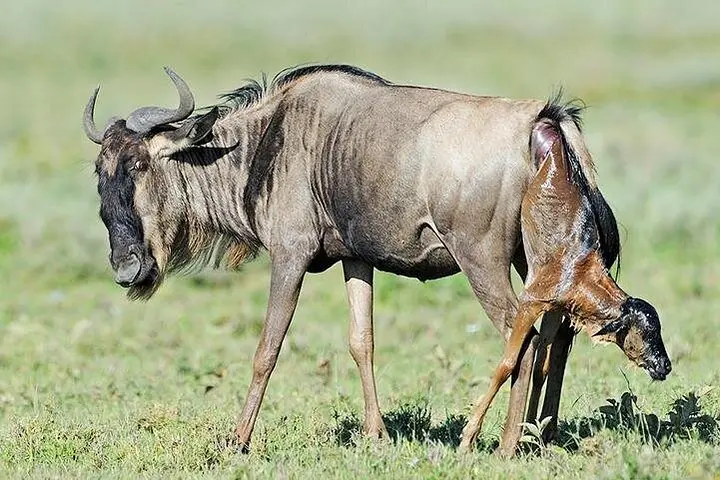
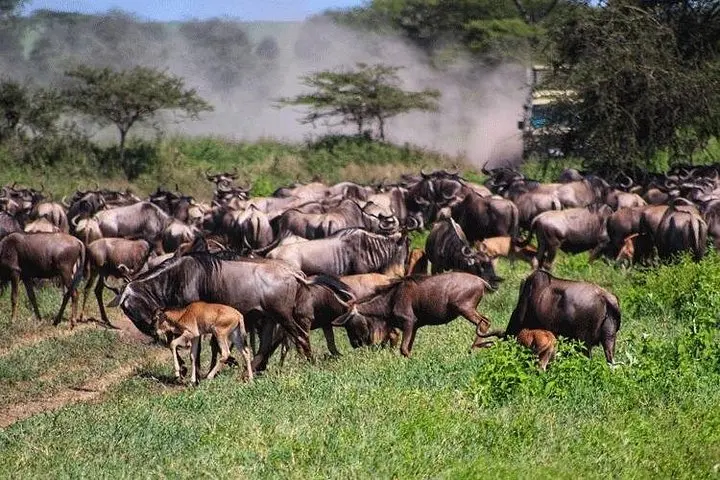
The Ndutu area is where the Great Wildebeest Migration often gives birth to thousands of calves between December and April; predators and scavengers time their lives to that pulse. Game drives here are long, deliberate, and sensory: grasses whisper under a breeze, rivers push water across stone, and vultures circle like punctuation marks.
Practical side: aim for December–March for calving; roads can be rough and wet during rains. Vehicles are pop-top 4x4s; expect early mornings, full days of viewing, and picnic lunches. Bring binoculars, layered sun protection, insect repellent, and a camera with a medium telephoto. Hydrate for the sun and plan for dusty vehicles and cool crater mornings. With modest fitness and patience, travelers leave with close encounters and a clearer sense of how migration shapes this landscape.
The Ndutu calving season most commonly occurs between December and March; timing varies annually with rains, so plan within that window for the highest probability.
Children and guests with limited mobility can usually join; vehicles have pop-up roofs for viewing, but long drives and bumpy tracks may be uncomfortable—check with the operator about vehicle access.
Routine vaccinations and malaria prophylaxis are advised; carry any personal medications and consult a travel clinic for up-to-date health guidance before departure.
You can bring typical camera kits; space in safari vehicles is limited—limit lenses to a compact selection and secure gear during rough sections.
Alkanjaoi Tours and Safaris operates guided outdoor trips and adventures with an emphasis on safety, stewardship, and memorable experiences.
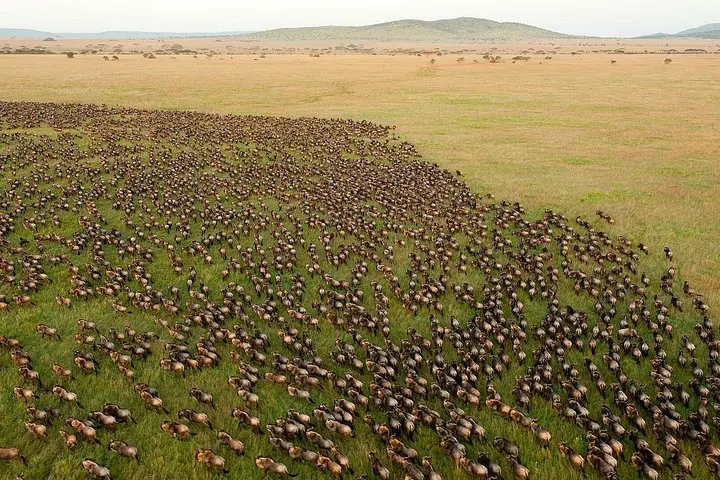
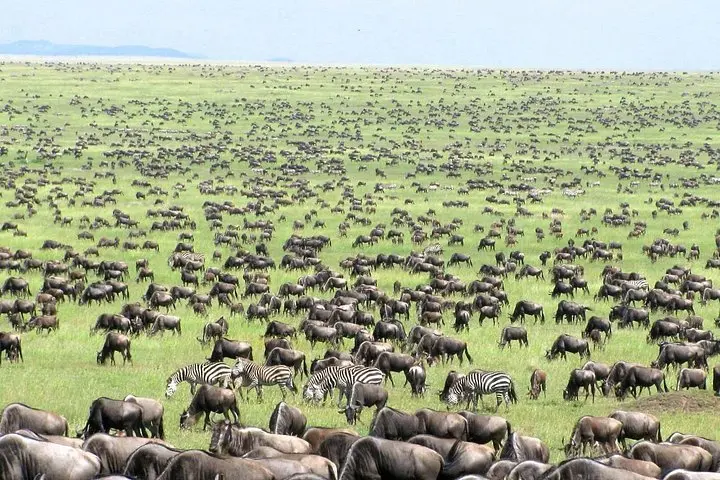
Dust lifts in columns as the Land Cruiser eases off the tarmac and onto the open Maasai plains. You feel the motion of a landscape that guides two million hooves each year—endless grass folding into horizon—while the driver-guide scans a horizon already crowded with life.
Dust lifts in columns as the Land Cruiser eases off the tarmac and onto the open Maasai plains. You feel the motion of a landscape that guides two million hooves each year—endless grass folding into horizon—while the driver-guide scans a horizon already crowded with life.
This five-day circuit threads Tarangire’s elephant country, the flat grass seas of the Serengeti, the Ndutu calving grounds, and the dramatic bowl of Ngorongoro Crater. Geologically the route moves from ancient volcanic highlands into one of Earth’s largest intact calderas; Ngorongoro’s rim walls are living geology, carved by eruptions and erosion. Culturally the region is Maasai country—herds, spoked-wood carts, and painted cloaks punctuate roadside scenes and remind visitors that people and migration share this land.
The Ndutu area is where the Great Wildebeest Migration often gives birth to thousands of calves between December and April; predators and scavengers time their lives to that pulse. Game drives here are long, deliberate, and sensory: grasses whisper under a breeze, rivers push water across stone, and vultures circle like punctuation marks.
Practical side: aim for December–March for calving; roads can be rough and wet during rains. Vehicles are pop-top 4x4s; expect early mornings, full days of viewing, and picnic lunches. Bring binoculars, layered sun protection, insect repellent, and a camera with a medium telephoto. Hydrate for the sun and plan for dusty vehicles and cool crater mornings. With modest fitness and patience, travelers leave with close encounters and a clearer sense of how migration shapes this landscape.