THE ADVENTURE COLLECTIVE® · Independent discovery and booking for outdoor travel

A full-day safari from Morogoro to Mikumi National Park that delivers big-plain wildlife, wide savanna views, and intense birding. Plan for an early start, dusty roads, and long windows of wildlife watching.
A full-day safari from Morogoro to Mikumi National Park that delivers big-plain wildlife, wide savanna views, and intense birding. Plan for an early start, dusty roads, and long windows of wildlife watching.
The morning light in Mikumi cuts across the plain like a blade — heat rising from cracked dust, acacia silhouettes sharpening against an endless sky. You set out from Morogoro before dawn, the road unspooling through sisal farms and low hills until the horizon opens into grassland where giraffes graze like slow-moving windmills and hippos wait in shaded river bends.
Verified experiences and guided adventures in the surrounding area.
Operated by Safaris Partners · Mikumi, Morogoro Region
The morning light in Mikumi cuts across the plain like a blade — heat rising from cracked dust, acacia silhouettes sharpening against an endless sky. You set out from Morogoro before dawn, the road unspooling through sisal farms and low hills until the horizon opens into grassland where giraffes graze like slow-moving windmills and hippos wait in shaded river bends.
Mikumi sits on the southern edge of the East African Rift’s floodplain, its geology a mixture of alluvial soils and outcrops that channel seasonal rivers through wide savanna. The park has been a corridor for human and animal movement for centuries; local communities around Mikumi town have long interwoven cattle grazing and smallholder farming with seasonal hunting and wildlife stewardship. Birdlife here is loud and busy — more than 300 species recorded — and the elephants and buffaloes that cross the plains give the park its steady, deliberate pulse.
On a day trip from Morogoro expect long drives between sightings, wide vistas, and the sudden hush that falls when a predator is near. Vehicles follow established tracks; rangers enforce viewing distances to protect animals and visitors.
Practical guidance: start early to avoid mid-day heat, bring layered clothing for cool mornings that warm quickly, carry at least 2 liters of water, and use binoculars or a zoom lens for distant subjects. Roads can be dusty and rough — pack motion-sickness remedies if you’re sensitive. With a bit of patience and timing, a single day can deliver hippos, giraffes, zebras, and, if luck favors you, a pride of lions moving through the long grass.
The transfer typically takes about 2–3 hours each way depending on traffic and road conditions, making this a full-day (about 12-hour) excursion.
Common sightings include giraffes, zebras, wildebeest, impalas, warthogs, buffalo, elephants, hippos, and a wide range of birds; lions are possible but not guaranteed.
Yes — the tour notes stroller accessibility and infant seats; however, children must be supervised, and the long day and bumpy roads can be tiring for very young travelers.
Yes — this day trip typically includes breakfast, lunch, and bottled water as part of the tour inclusions.
Safaris Partners operates guided outdoor trips and adventures with an emphasis on safety, stewardship, and memorable experiences.


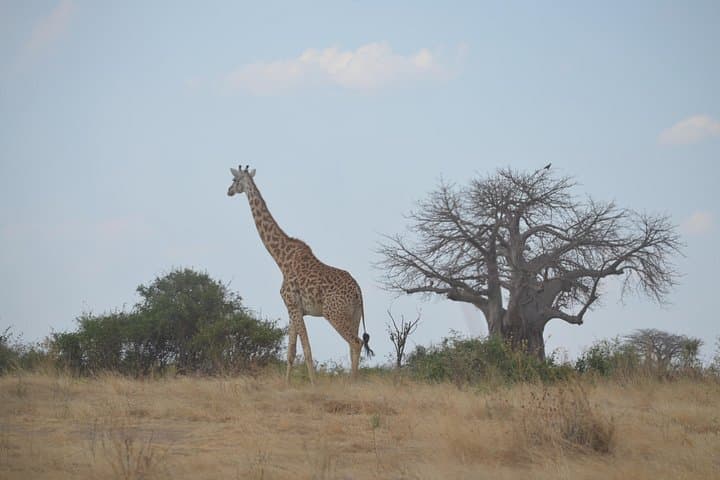
The morning light in Mikumi cuts across the plain like a blade — heat rising from cracked dust, acacia silhouettes sharpening against an endless sky. You set out from Morogoro before dawn, the road unspooling through sisal farms and low hills until the horizon opens into grassland where giraffes graze like slow-moving windmills and hippos wait in shaded river bends.
The morning light in Mikumi cuts across the plain like a blade — heat rising from cracked dust, acacia silhouettes sharpening against an endless sky. You set out from Morogoro before dawn, the road unspooling through sisal farms and low hills until the horizon opens into grassland where giraffes graze like slow-moving windmills and hippos wait in shaded river bends.
Mikumi sits on the southern edge of the East African Rift’s floodplain, its geology a mixture of alluvial soils and outcrops that channel seasonal rivers through wide savanna. The park has been a corridor for human and animal movement for centuries; local communities around Mikumi town have long interwoven cattle grazing and smallholder farming with seasonal hunting and wildlife stewardship. Birdlife here is loud and busy — more than 300 species recorded — and the elephants and buffaloes that cross the plains give the park its steady, deliberate pulse.
On a day trip from Morogoro expect long drives between sightings, wide vistas, and the sudden hush that falls when a predator is near. Vehicles follow established tracks; rangers enforce viewing distances to protect animals and visitors.
Practical guidance: start early to avoid mid-day heat, bring layered clothing for cool mornings that warm quickly, carry at least 2 liters of water, and use binoculars or a zoom lens for distant subjects. Roads can be dusty and rough — pack motion-sickness remedies if you’re sensitive. With a bit of patience and timing, a single day can deliver hippos, giraffes, zebras, and, if luck favors you, a pride of lions moving through the long grass.