THE ADVENTURE COLLECTIVE® · Independent discovery and booking for outdoor travel

Escape Dar for a full-day safari to Mikumi National Park where open plains, Mkata floodplains and reliable wildlife sightings make for a compact but rewarding safari. Read on for what to expect and how to prepare for a long, wildlife-rich day.
Escape Dar for a full-day safari to Mikumi National Park where open plains, Mkata floodplains and reliable wildlife sightings make for a compact but rewarding safari. Read on for what to expect and how to prepare for a long, wildlife-rich day.
You leave the city behind before dawn, the highway opening into long grass and flat, golden plains. Acacia silhouettes puncture the horizon and the air carries a dry, distant smell of dust and leaves; by mid-morning the park’s big-sky scale becomes obvious as herds dot the Mkata floodplain like punctuation.
Verified experiences and guided adventures in the surrounding area.
Operated by Dove Adventure Tanzania · Mikumi, Morogoro Region
You leave the city behind before dawn, the highway opening into long grass and flat, golden plains. Acacia silhouettes puncture the horizon and the air carries a dry, distant smell of dust and leaves; by mid-morning the park’s big-sky scale becomes obvious as herds dot the Mkata floodplain like punctuation.
Mikumi sits at the edge of the Selous ecosystem and benefits from unusually high game density for this part of Tanzania. The park straddles savanna and seasonal wetlands, with the Uluguru and Udzungwa ranges visible on the skyline; those geological shoulders help funnel wildlife into the open plains that make sightings reliable. Local communities have long grazed cattle at the park margins, and today tourism—managed along established tracks—helps fund conservation and anti-poaching efforts.
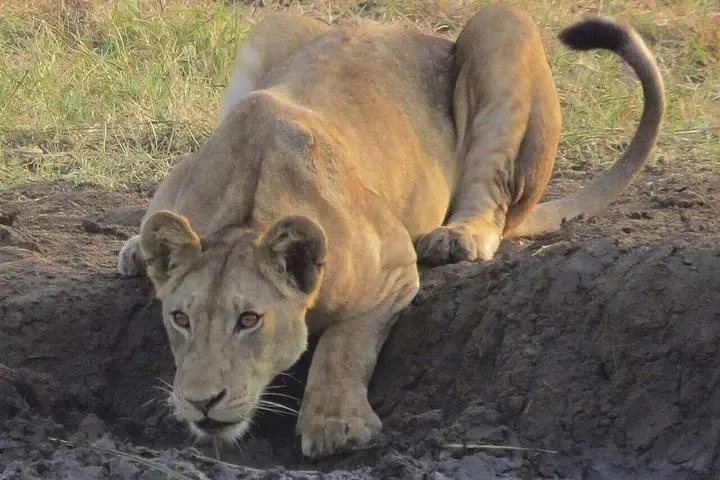
On a day trip you’ll spend most of the time on guided game drives, scanning for lion families, buffalo herds, elephants moving between shade, and leaping impala. Drives concentrate around the Mkata floodplain and quieter tributaries where animals gather at water. Expect bumpy roads, sudden stops, and long looks through binoculars.
Practical guidance: the outing is a long day (often 10–12 hours including transfers) so hydrate, carry sun protection and a light layer for cooler mornings. Wear neutral-colored clothing and sturdy closed shoes for short walks. Keep to the vehicle and follow ranger instructions—wildlife is wild. If you want closer photography, bring a telephoto lens and patience; mornings and late afternoons deliver the best light and activity.
Typical door-to-door trips run 10–12 hours; driving to the park and back takes several hours, with 3–5 hours of game driving in the park itself.
Common sightings include African elephant, buffalo, impala, and often lions or leopards; birdlife is abundant around the Mkata floodplain.
Most visitation is by vehicle; short guided walks may be offered in designated areas, but always follow ranger guidance for safety.
The trip is not recommended for travelers with serious back or heart conditions or for pregnant visitors due to long vehicle transfers and rough roads.
Dove Adventure Tanzania operates guided outdoor trips and adventures with an emphasis on safety, stewardship, and memorable experiences.
You leave the city behind before dawn, the highway opening into long grass and flat, golden plains. Acacia silhouettes puncture the horizon and the air carries a dry, distant smell of dust and leaves; by mid-morning the park’s big-sky scale becomes obvious as herds dot the Mkata floodplain like punctuation.
You leave the city behind before dawn, the highway opening into long grass and flat, golden plains. Acacia silhouettes puncture the horizon and the air carries a dry, distant smell of dust and leaves; by mid-morning the park’s big-sky scale becomes obvious as herds dot the Mkata floodplain like punctuation.
Mikumi sits at the edge of the Selous ecosystem and benefits from unusually high game density for this part of Tanzania. The park straddles savanna and seasonal wetlands, with the Uluguru and Udzungwa ranges visible on the skyline; those geological shoulders help funnel wildlife into the open plains that make sightings reliable. Local communities have long grazed cattle at the park margins, and today tourism—managed along established tracks—helps fund conservation and anti-poaching efforts.
On a day trip you’ll spend most of the time on guided game drives, scanning for lion families, buffalo herds, elephants moving between shade, and leaping impala. Drives concentrate around the Mkata floodplain and quieter tributaries where animals gather at water. Expect bumpy roads, sudden stops, and long looks through binoculars.
Practical guidance: the outing is a long day (often 10–12 hours including transfers) so hydrate, carry sun protection and a light layer for cooler mornings. Wear neutral-colored clothing and sturdy closed shoes for short walks. Keep to the vehicle and follow ranger instructions—wildlife is wild. If you want closer photography, bring a telephoto lens and patience; mornings and late afternoons deliver the best light and activity.