THE ADVENTURE COLLECTIVE® · Independent discovery and booking for outdoor travel

Watch the caldera wake or breathe as sunset coats Mount Batur from a private 4x4 vantage. This short, safety-driven tour pairs dramatic volcano views with a rare close-up of cliff-roosting bats.
Watch the caldera wake or breathe as sunset coats Mount Batur from a private 4x4 vantage. This short, safety-driven tour pairs dramatic volcano views with a rare close-up of cliff-roosting bats.
Dawn or dusk here feels engineered for drama: light creeps over Lake Batur, rims Mount Batur and Abang, and, on clear days, spills as far as Mount Rinjani on Lombok. The vehicle pulls up to a high caldera lip where wind and steam from the geothermal plain meet, and the view stretches—lake glass, stratified volcanoes, a sliver of the Indian Ocean.
Verified experiences and guided adventures in the surrounding area.
Operated by Expedition Bali Tours · Kintamani, Bali
Dawn or dusk here feels engineered for drama: light creeps over Lake Batur, rims Mount Batur and Abang, and, on clear days, spills as far as Mount Rinjani on Lombok. The vehicle pulls up to a high caldera lip where wind and steam from the geothermal plain meet, and the view stretches—lake glass, stratified volcanoes, a sliver of the Indian Ocean.
This route follows the geologic seams of Bali’s eastern caldera. Mount Batur is a young active volcano in a larger collapsed caldera; terraces and lava fields around the lake tell of repeated eruptions that reshaped local settlements. Kintamani itself grew as a vantage and agricultural enclave, supplying upland crops to nearby regencies.
Local guides combine Balinese cultural context with practical safety: temple shrines dot viewpoints, offerings are common, and the community near the caldera maintains a close relationship with the land and its volcanic cycles. At the nearby cliff, a mass emergence of fruit bats offers an up-close wildlife spectacle—millions wheel and roost on exposed ledges rather than deep caves.
Expect a short, curated outing—roughly 2–3 hours—with light walking at viewpoints and time for photos. Wear closed-toe shoes for uneven viewing platforms, bring a layer for early-morning chill, and plan around cloud cover (sunrise yields softer light; sunset can be warmer but cloudier). The operator supplies bottled volcanic spring water and a light breakfast; private 4x4 transport makes the route accessible in varied weather. Carry a camera with steady support, respect local shrines, and be prepared for abrupt weather shifts near the caldera.
The private 4x4 tour runs about 2.5 hours (150 minutes) including driving, viewpoint time, and a light breakfast at the viewing platform.
Yes—it's listed as physically easy with short, flat walks at viewpoints; infants must sit on laps in the vehicle.
Bats at the cliff are frequently present but wildlife sightings can't be guaranteed; Mount Rinjani is visible on clear, low-haze days—clouds and haze may obstruct views.
Vehicles are custom 4x4s with safety equipment onboard, guides are locally experienced, and the operator includes basic medical and fire-safety gear.
Expedition Bali Tours operates guided outdoor trips and adventures with an emphasis on safety, stewardship, and memorable experiences.
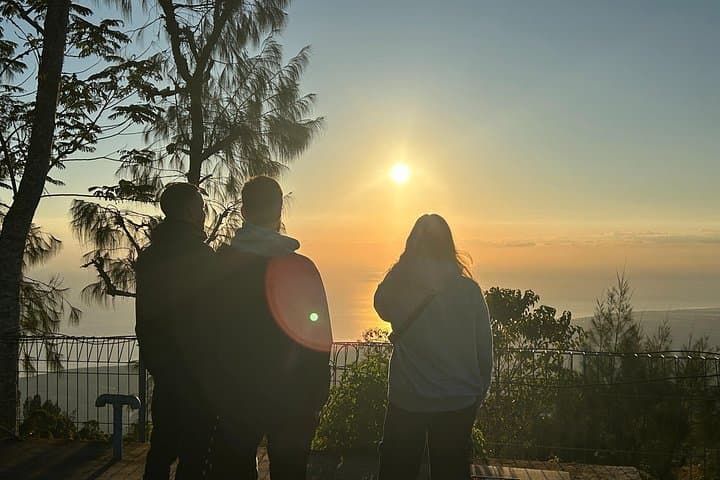
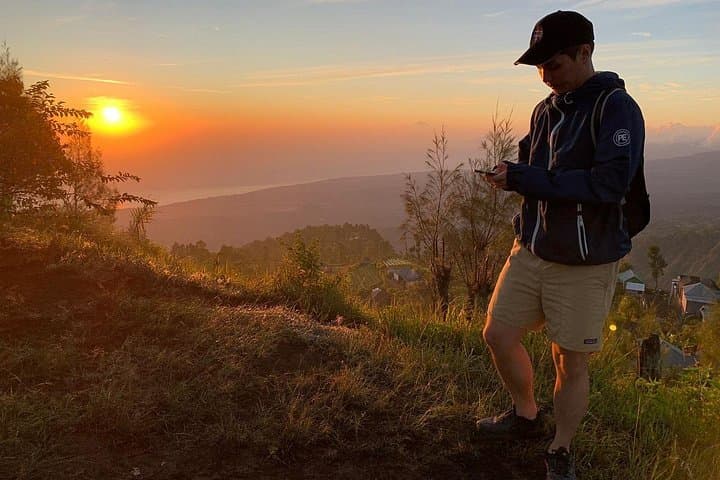
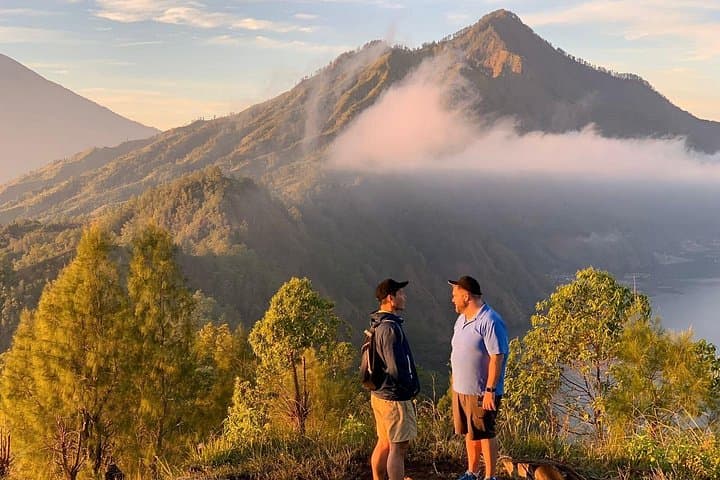
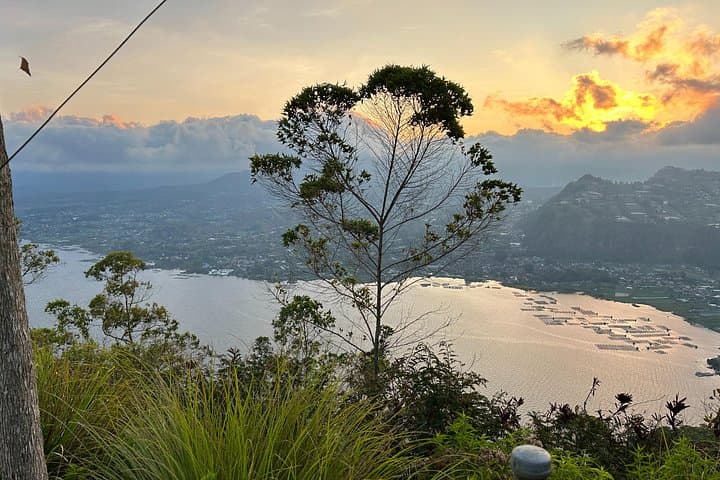
Dawn or dusk here feels engineered for drama: light creeps over Lake Batur, rims Mount Batur and Abang, and, on clear days, spills as far as Mount Rinjani on Lombok. The vehicle pulls up to a high caldera lip where wind and steam from the geothermal plain meet, and the view stretches—lake glass, stratified volcanoes, a sliver of the Indian Ocean.
Dawn or dusk here feels engineered for drama: light creeps over Lake Batur, rims Mount Batur and Abang, and, on clear days, spills as far as Mount Rinjani on Lombok. The vehicle pulls up to a high caldera lip where wind and steam from the geothermal plain meet, and the view stretches—lake glass, stratified volcanoes, a sliver of the Indian Ocean.
This route follows the geologic seams of Bali’s eastern caldera. Mount Batur is a young active volcano in a larger collapsed caldera; terraces and lava fields around the lake tell of repeated eruptions that reshaped local settlements. Kintamani itself grew as a vantage and agricultural enclave, supplying upland crops to nearby regencies.
Local guides combine Balinese cultural context with practical safety: temple shrines dot viewpoints, offerings are common, and the community near the caldera maintains a close relationship with the land and its volcanic cycles. At the nearby cliff, a mass emergence of fruit bats offers an up-close wildlife spectacle—millions wheel and roost on exposed ledges rather than deep caves.
Expect a short, curated outing—roughly 2–3 hours—with light walking at viewpoints and time for photos. Wear closed-toe shoes for uneven viewing platforms, bring a layer for early-morning chill, and plan around cloud cover (sunrise yields softer light; sunset can be warmer but cloudier). The operator supplies bottled volcanic spring water and a light breakfast; private 4x4 transport makes the route accessible in varied weather. Carry a camera with steady support, respect local shrines, and be prepared for abrupt weather shifts near the caldera.