THE ADVENTURE COLLECTIVE® · Independent discovery and booking for outdoor travel

A compact three-day escape from Marrakech to the sweeping Erg Chegaga dunes, combining off-road tracks, a night in a traditional haima, and stops at pottery and weaving villages. Ideal for travelers who want an efficient yet immersive Sahara experience.
A compact three-day escape from Marrakech to the sweeping Erg Chegaga dunes, combining off-road tracks, a night in a traditional haima, and stops at pottery and weaving villages. Ideal for travelers who want an efficient yet immersive Sahara experience.
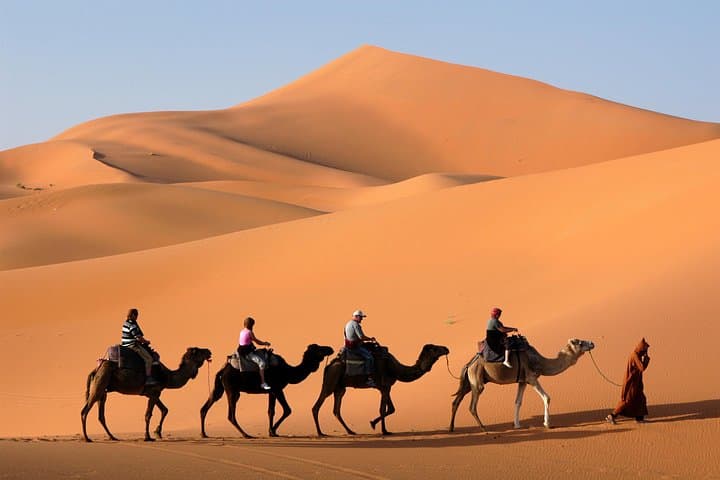
Sunlight thins across the High Atlas as the van rolls away from Marrakech, the city’s heat giving way to scrub and rocky passes. By mid-afternoon the road opens into wide, ochre plains and the vista tightens: tracks, a lone kasbah, then the first ripples of sand. The Chegaga dunes dare you forward—huge, shifting forms shaped by relentless wind, their ridgelines like slow-moving waves.
Verified experiences and guided adventures in the surrounding area.
Operated by Transfert Marrakech · M'Hamid, Drâa-Tafilalet
Sunlight thins across the High Atlas as the van rolls away from Marrakech, the city’s heat giving way to scrub and rocky passes. By mid-afternoon the road opens into wide, ochre plains and the vista tightens: tracks, a lone kasbah, then the first ripples of sand. The Chegaga dunes dare you forward—huge, shifting forms shaped by relentless wind, their ridgelines like slow-moving waves.
This three-day route threads history and geology: you cross the ancient caravan corridor past Aït Ben Haddou and Ouarzazate, skirt the dry salt flats and the ephemeral Lake Iriqi, and enter the realm of Erg Chegaga—one of Morocco’s larger ergs formed by long-term aeolian deposition. Along the way you’ll meet Tamgroute pottery and Taznakht weaving traditions; Berber villages here are living links to nomadic trade and crafts.
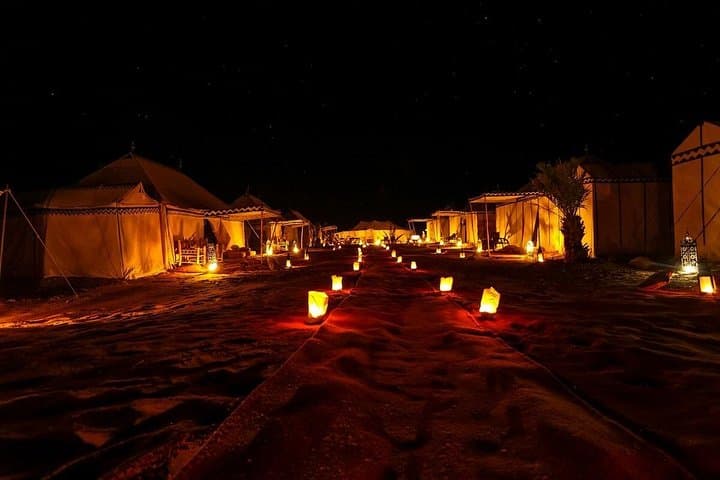
Nights are under a haima in a desert camp. Expect clear stars, sharp nocturnal cold, and sunrise light that remolds the dunes. Practically: pace your walking on soft sand, use gaiters or sturdy shoes for side-hilling, and time dune visits for sunrise or sunset to avoid the heat and to see the best light for contour and shadow. Hydrate early and often—electrolytes are helpful—and layer for large day-to-night temperature swings.
A private, air-conditioned vehicle handles the off-road approach, but the route demands fitness for camel rides, some walking on loose sand, and adaptability to simple camp facilities. With basic planning—sun protection, warm layers, and sensible footwear—you’ll trade city bustle for a spartan, vividly present desert experience.
Expect around 8–10 hours of combined driving over two days with stops (Aït Ben Haddou, Ouarzazate, Zagora), depending on road and traffic conditions.
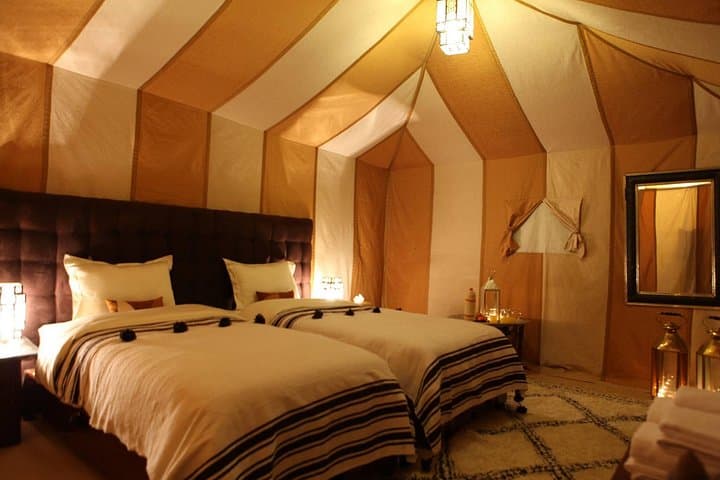
Overnight is in a traditional haima (Berber tent) at the desert camp; accommodations are simple but usually include bedding and dinner.
The itinerary advises high fitness and is not recommended for travelers with spinal or serious cardiovascular issues; children must be accompanied by an adult.
Autumn and spring offer the most comfortable daytime temperatures; winter brings cool evenings and occasional very cold nights, while summer can be extremely hot midday.
Transfert Marrakech operates guided outdoor trips and adventures with an emphasis on safety, stewardship, and memorable experiences.

Sunlight thins across the High Atlas as the van rolls away from Marrakech, the city’s heat giving way to scrub and rocky passes. By mid-afternoon the road opens into wide, ochre plains and the vista tightens: tracks, a lone kasbah, then the first ripples of sand. The Chegaga dunes dare you forward—huge, shifting forms shaped by relentless wind, their ridgelines like slow-moving waves.
Sunlight thins across the High Atlas as the van rolls away from Marrakech, the city’s heat giving way to scrub and rocky passes. By mid-afternoon the road opens into wide, ochre plains and the vista tightens: tracks, a lone kasbah, then the first ripples of sand. The Chegaga dunes dare you forward—huge, shifting forms shaped by relentless wind, their ridgelines like slow-moving waves.
This three-day route threads history and geology: you cross the ancient caravan corridor past Aït Ben Haddou and Ouarzazate, skirt the dry salt flats and the ephemeral Lake Iriqi, and enter the realm of Erg Chegaga—one of Morocco’s larger ergs formed by long-term aeolian deposition. Along the way you’ll meet Tamgroute pottery and Taznakht weaving traditions; Berber villages here are living links to nomadic trade and crafts.
Nights are under a haima in a desert camp. Expect clear stars, sharp nocturnal cold, and sunrise light that remolds the dunes. Practically: pace your walking on soft sand, use gaiters or sturdy shoes for side-hilling, and time dune visits for sunrise or sunset to avoid the heat and to see the best light for contour and shadow. Hydrate early and often—electrolytes are helpful—and layer for large day-to-night temperature swings.
A private, air-conditioned vehicle handles the off-road approach, but the route demands fitness for camel rides, some walking on loose sand, and adaptability to simple camp facilities. With basic planning—sun protection, warm layers, and sensible footwear—you’ll trade city bustle for a spartan, vividly present desert experience.