THE ADVENTURE COLLECTIVE® · Independent discovery and booking for outdoor travel
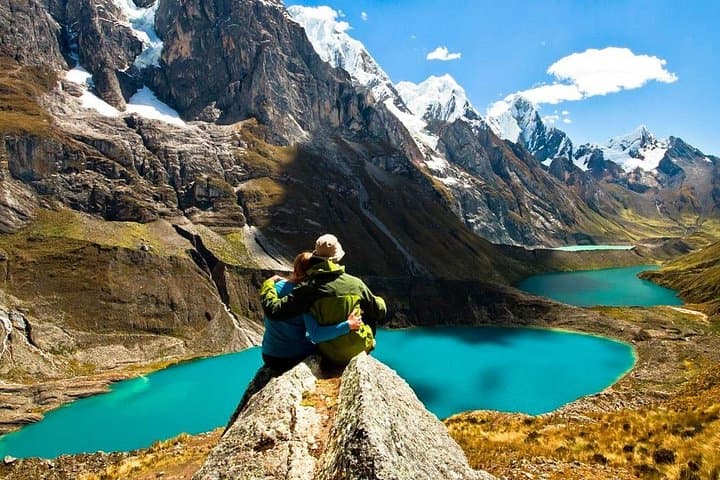
A four-day, guided circuit that stitches high passes and glacial lakes into a compact Huayhuash experience. Expect steep ascents to 4,750 m, camping by Jahuacocha, and dramatic views of Yerupajá and Rasac.
A four-day, guided circuit that stitches high passes and glacial lakes into a compact Huayhuash experience. Expect steep ascents to 4,750 m, camping by Jahuacocha, and dramatic views of Yerupajá and Rasac.
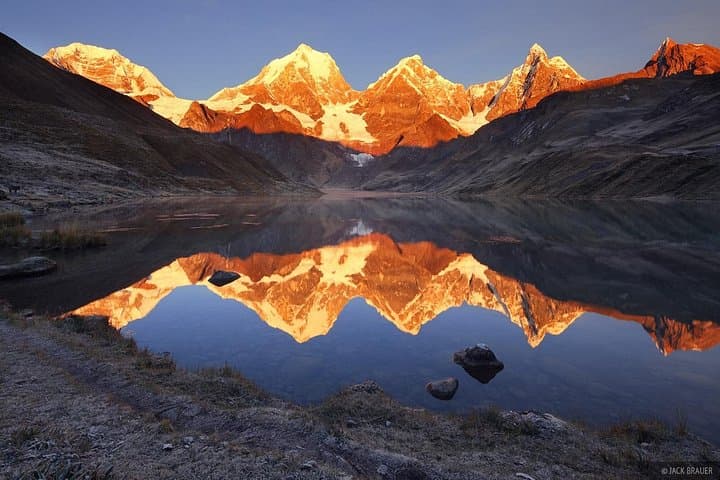
Cold air bites at first light as the van climbs out of Huaraz and the Huayhuash peaks come into focus—knife-edged ridges, granite faces, and glaciers that still gleam even in thin mountain sunlight.
Verified experiences and guided adventures in the surrounding area.
Operated by IZI PERU · Huaraz, Ancash
Cold air bites at first light as the van climbs out of Huaraz and the Huayhuash peaks come into focus—knife-edged ridges, granite faces, and glaciers that still gleam even in thin mountain sunlight.
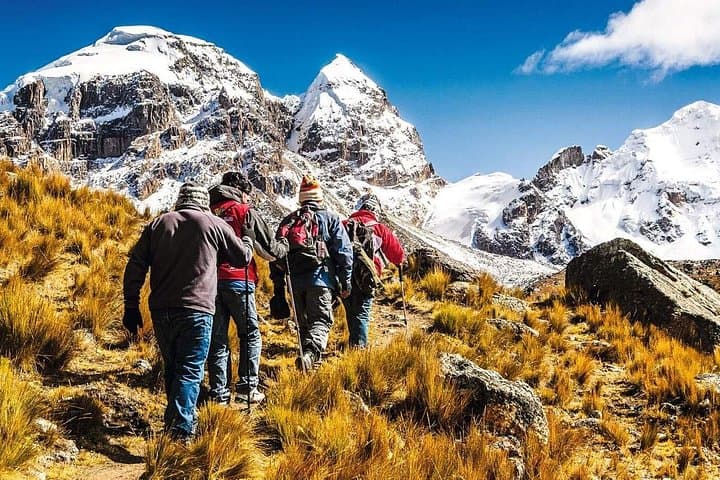
The Mini Huayhuash circuit condenses classic high-Andean terrain into four days: village trails and cactus scrub at 3,300 m, a long ascent to Rondoy Pass at ~4,750 m, and lakeside camping beside Jahuacocha (≈4,100 m). Geologically the range is young, uplifted granite and metamorphic rock carved by Pleistocene ice; the result is steep cols, glacial lakes, and talus-filled valleys. Culturally, small Quechua-speaking communities around Llamac maintain llama and sheep grazing routes that the trek follows; arrieros (donkey drivers) still move gear between camps.
Expect hard ascents and technical footing on scree near passes, with daily distances up to ~14 km and single-day elevation gains of 1,200–1,500 m on the Rondoy day. Weather is alpine—bright sun, strong UV, and sudden storms that can bring sleet to higher passes.
Practically: plan for four days of backpacking with tent camping (group equipment and cook provided), bring layered insulation, a 0°C sleeping bag, and boots rated for ankle support. Hydrate early, pace on ascents to aid acclimatization, and keep a rain shell and sun protection ready. Guided groups use donkeys to carry heavy loads, reducing pack weight but not eliminating the need for fitness. For those with limited time, the Mini Huayhuash offers concentrated exposure to some of Peru’s most dramatic high-mountain scenery—and a real test of altitude readiness.
The Rondoy ascent is long and sustained—expect ~1,200–1,500 m of gain over several hours; pace conservatively and take regular water breaks.
No prior camping experience is required—the tour provides tents and a cook, but basic comfort with sleeping in a tent and managing your personal kit is helpful.
Yes—some groups include sport fishing opportunities at Jahuacocha and nearby lagoons; bring appropriate permits or ask your guide for local rules.
Symptoms can occur above 3,000 m; acclimatize in Huaraz, stay hydrated, ascend slowly, and notify guides immediately if severe symptoms appear.
IZI PERU operates guided outdoor trips and adventures with an emphasis on safety, stewardship, and memorable experiences.
Cold air bites at first light as the van climbs out of Huaraz and the Huayhuash peaks come into focus—knife-edged ridges, granite faces, and glaciers that still gleam even in thin mountain sunlight.
Cold air bites at first light as the van climbs out of Huaraz and the Huayhuash peaks come into focus—knife-edged ridges, granite faces, and glaciers that still gleam even in thin mountain sunlight.
The Mini Huayhuash circuit condenses classic high-Andean terrain into four days: village trails and cactus scrub at 3,300 m, a long ascent to Rondoy Pass at ~4,750 m, and lakeside camping beside Jahuacocha (≈4,100 m). Geologically the range is young, uplifted granite and metamorphic rock carved by Pleistocene ice; the result is steep cols, glacial lakes, and talus-filled valleys. Culturally, small Quechua-speaking communities around Llamac maintain llama and sheep grazing routes that the trek follows; arrieros (donkey drivers) still move gear between camps.
Expect hard ascents and technical footing on scree near passes, with daily distances up to ~14 km and single-day elevation gains of 1,200–1,500 m on the Rondoy day. Weather is alpine—bright sun, strong UV, and sudden storms that can bring sleet to higher passes.
Practically: plan for four days of backpacking with tent camping (group equipment and cook provided), bring layered insulation, a 0°C sleeping bag, and boots rated for ankle support. Hydrate early, pace on ascents to aid acclimatization, and keep a rain shell and sun protection ready. Guided groups use donkeys to carry heavy loads, reducing pack weight but not eliminating the need for fitness. For those with limited time, the Mini Huayhuash offers concentrated exposure to some of Peru’s most dramatic high-mountain scenery—and a real test of altitude readiness.
