THE ADVENTURE COLLECTIVE® · Independent discovery and booking for outdoor travel

Board the 60-ft Queen Whale in Mirissa for a 5-hour ethical whale- and dolphin-watching cruise with a midday sea-bath stop. Expect high dolphin probability, a 50% chance of whales, and hands-on seamanship from an experienced local crew.
Board the 60-ft Queen Whale in Mirissa for a 5-hour ethical whale- and dolphin-watching cruise with a midday sea-bath stop. Expect high dolphin probability, a 50% chance of whales, and hands-on seamanship from an experienced local crew.
The catamaran cleaves the morning like a purposeful animal: Queen Whale’s hull slips through green water as gulls ride the bow wake. Sun lays flat on the horizon and the southern sea pushes the boat forward; guides scan the swell lines for the telltale spout. Guests sip coffee and scan the tightening blue, ready for the big, slow rise of a whale.
Verified experiences and guided adventures in the surrounding area.
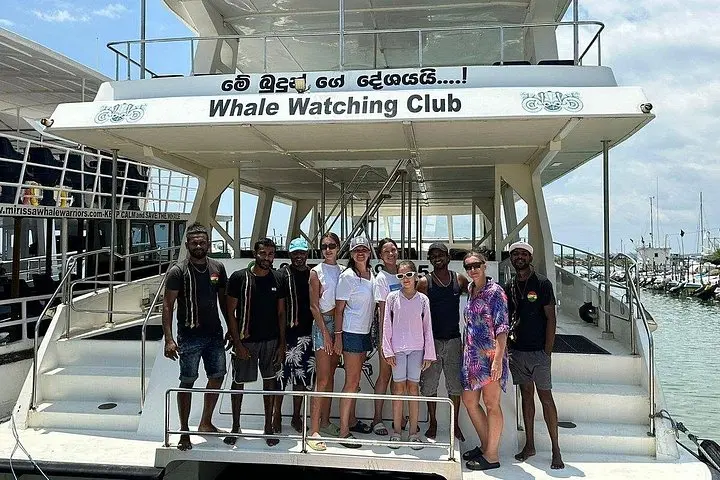
Operated by Whale Watching Club ( WWC ) · Mirissa, Southern Province
The catamaran cleaves the morning like a purposeful animal: Queen Whale’s hull slips through green water as gulls ride the bow wake. Sun lays flat on the horizon and the southern sea pushes the boat forward; guides scan the swell lines for the telltale spout. Guests sip coffee and scan the tightening blue, ready for the big, slow rise of a whale.
Mirissa sits on Sri Lanka’s southern coast—an old fishing stretch that traded some nets for tourism in recent decades. The continental shelf drops off sharply offshore, creating a nutrient-rich canyon that draws sperm whales, blue whales in season, and large pods of dolphins; local captains learned these lines by decades of seamanship rather than GPS. Culturally, Mirissa retains a working-village feel: simple seafood stands, Buddhist shrines, and fishermen repairing nets under the sun.
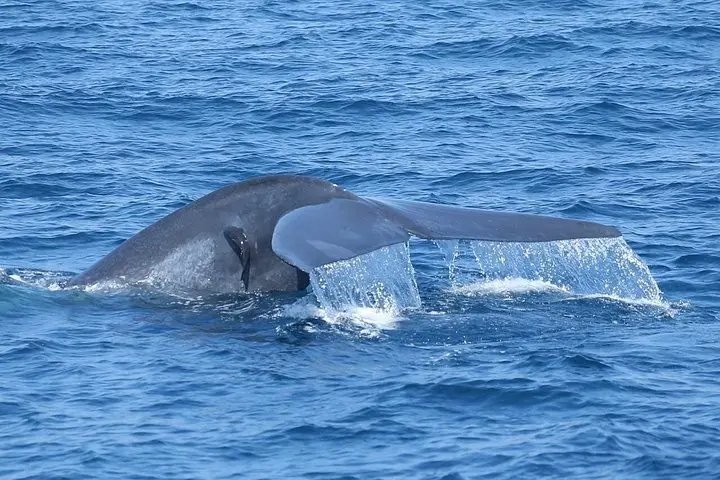
On a typical 5-hour cruise from Mirissa harbor, expect high-probability dolphin encounters and roughly a 50% chance of whale sightings—often sperm whales or Bryde’s whales—plus a planned 30-minute sea-bath stop. Tours emphasize ethical viewing: no chasing, observation at distance, and limiting interaction to protect behavior.
Practical guidance: bring sun protection, a mid-telephoto camera lens, and motion-sickness meds if you’re sensitive. Mornings are calmer and cooler—book the earliest departure for the best light and sea conditions. Wear grippy shoes for wet decks, keep a light waterproof layer handy, and listen to crew briefings about boarding, lifejackets, and wildlife etiquette. This trip is experiential and weather-dependent: patience often delivers the moment everyone remembers.
Dolphin sightings are common (high probability); whale sightings are about 50%—they’re wild animals and sightings depend on season and conditions.
Yes: the boat provides infant seats and is stroller accessible; life jackets are available, but children should be supervised and non-swimmers should remain on deck unless cleared by crew.
Tours include a planned 30-minute sea-bath stop when conditions are safe—bring swimwear and be ready to follow crew directions for boarding and reboarding.
The operator follows ethical guidelines: no chasing, maintain distance, and avoid behavior that alters natural animal movements.
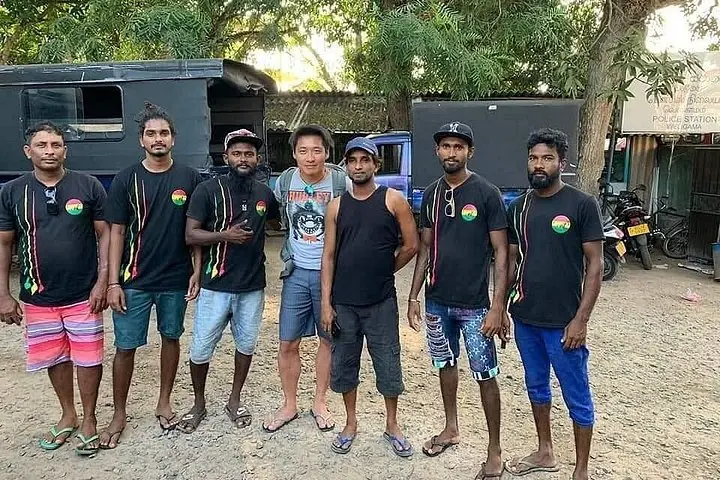
Whale Watching Club ( WWC ) operates guided outdoor trips and adventures with an emphasis on safety, stewardship, and memorable experiences.
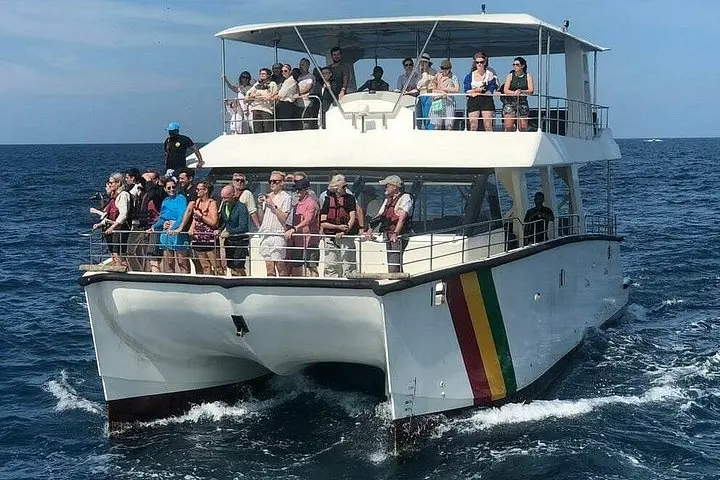
The catamaran cleaves the morning like a purposeful animal: Queen Whale’s hull slips through green water as gulls ride the bow wake. Sun lays flat on the horizon and the southern sea pushes the boat forward; guides scan the swell lines for the telltale spout. Guests sip coffee and scan the tightening blue, ready for the big, slow rise of a whale.
The catamaran cleaves the morning like a purposeful animal: Queen Whale’s hull slips through green water as gulls ride the bow wake. Sun lays flat on the horizon and the southern sea pushes the boat forward; guides scan the swell lines for the telltale spout. Guests sip coffee and scan the tightening blue, ready for the big, slow rise of a whale.
Mirissa sits on Sri Lanka’s southern coast—an old fishing stretch that traded some nets for tourism in recent decades. The continental shelf drops off sharply offshore, creating a nutrient-rich canyon that draws sperm whales, blue whales in season, and large pods of dolphins; local captains learned these lines by decades of seamanship rather than GPS. Culturally, Mirissa retains a working-village feel: simple seafood stands, Buddhist shrines, and fishermen repairing nets under the sun.
On a typical 5-hour cruise from Mirissa harbor, expect high-probability dolphin encounters and roughly a 50% chance of whale sightings—often sperm whales or Bryde’s whales—plus a planned 30-minute sea-bath stop. Tours emphasize ethical viewing: no chasing, observation at distance, and limiting interaction to protect behavior.
Practical guidance: bring sun protection, a mid-telephoto camera lens, and motion-sickness meds if you’re sensitive. Mornings are calmer and cooler—book the earliest departure for the best light and sea conditions. Wear grippy shoes for wet decks, keep a light waterproof layer handy, and listen to crew briefings about boarding, lifejackets, and wildlife etiquette. This trip is experiential and weather-dependent: patience often delivers the moment everyone remembers.