THE ADVENTURE COLLECTIVE® · Independent discovery and booking for outdoor travel

Cross Japan’s longest pedestrian suspension bridge and take in sweeping views of Mt Fuji, Suruga Bay, and the Izu Mountains. This accessible outing mixes short, exposed thrills with easy walking and strong photographic opportunities.
Cross Japan’s longest pedestrian suspension bridge and take in sweeping views of Mt Fuji, Suruga Bay, and the Izu Mountains. This accessible outing mixes short, exposed thrills with easy walking and strong photographic opportunities.
Step onto a span that makes the landscape move beneath your feet: Mishima Skywalk unfolds across a deep valley, the timbered ridge and tea fields falling away as the bridge hums lightly underfoot. On a clear morning Mt Fuji looms like a quiet presence, its snowcap watching the procession of visitors while the wind tugs at jackets and dares you to slow down and stare.
Verified experiences and guided adventures in the surrounding area.
Operated by FawSha Travels · Mishima, Shizuoka Prefecture
Step onto a span that makes the landscape move beneath your feet: Mishima Skywalk unfolds across a deep valley, the timbered ridge and tea fields falling away as the bridge hums lightly underfoot. On a clear morning Mt Fuji looms like a quiet presence, its snowcap watching the procession of visitors while the wind tugs at jackets and dares you to slow down and stare.
The bridge is a modern answer to the region’s volcanic topography — a 400‑meter pedestrian suspension that crosses a ravine carved by past eruptions and river flow. Constructed in the 2010s as a tourism-led infrastructure, it offers panoramic sightlines to Suruga Bay and the Izu Mountains and sits in a landscape shaped by the same tectonic forces that made Mt Fuji. Local culture around Mishima blends Shinto shrine tradition and agricultural life; nearby farms and tea terraces speak to centuries of human adaptation to steep slopes.
Practically, the visit is straightforward: tickets are exchanged at the South Gate and the walk takes 30–60 minutes depending on stops. The Skywalk remains open in light rain (umbrellas are restricted while on the bridge), but high winds or severe weather may close operations. Photography is welcome but keep a solid grip on gear and respect other visitors. Wear closed shoes — sandals are not allowed — and bring a light rain layer in shoulder seasons. Public buses run from JR Mishima Station in about 20 minutes, and there’s parking if you drive.
Expect easy walking, brief thrills from height and some of the clearest Mt Fuji viewpoints south of the mountain — an accessible, scenery-first outing for anyone comfortable with exposed walkways.
Yes — on clear days the Skywalk offers direct, panoramic views of Mt Fuji, Suruga Bay, and the Izu Mountains; visibility depends on season and weather.
Participants must be aged 10 or older; children 10–17 must be accompanied by an adult, with up to three children per guardian.
The area offers paths and viewing areas, but contact the facility in advance for detailed accessibility information as surfaces and gradients vary.
The facility stays open in light rain but will suspend operations in severe conditions like strong winds, hail, or heavy snow for safety.
FawSha Travels operates guided outdoor trips and adventures with an emphasis on safety, stewardship, and memorable experiences.
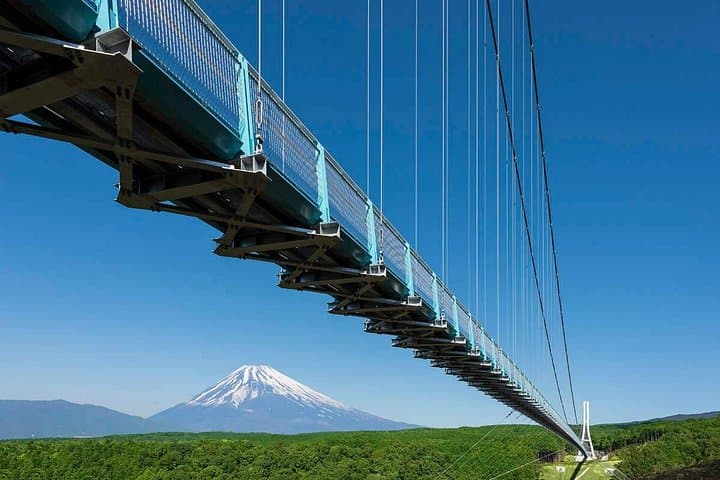
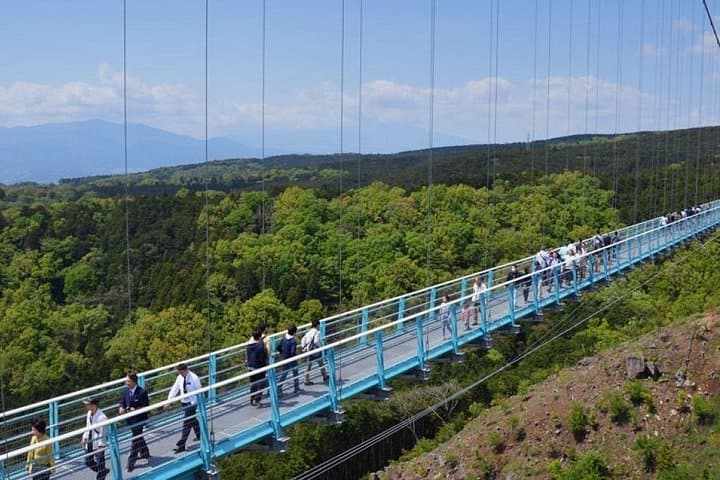
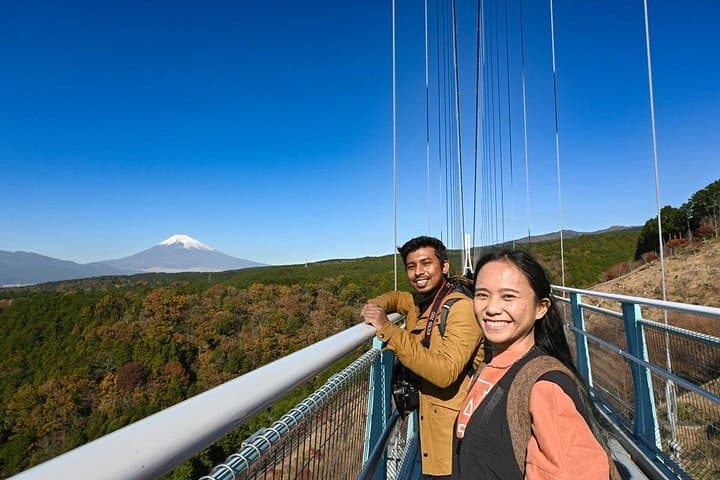
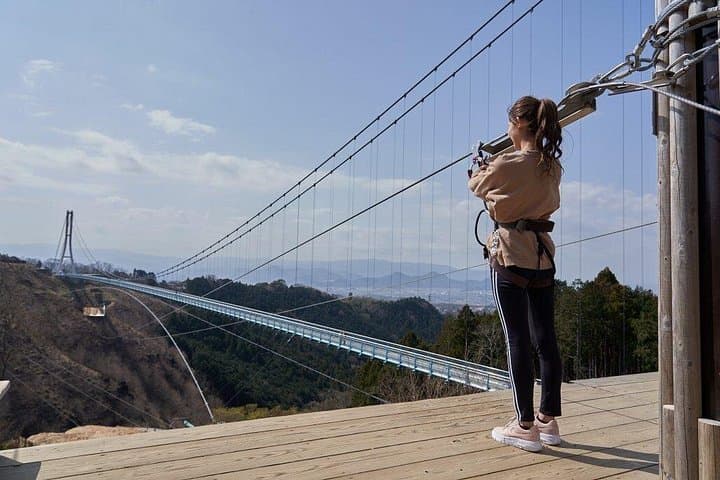
Step onto a span that makes the landscape move beneath your feet: Mishima Skywalk unfolds across a deep valley, the timbered ridge and tea fields falling away as the bridge hums lightly underfoot. On a clear morning Mt Fuji looms like a quiet presence, its snowcap watching the procession of visitors while the wind tugs at jackets and dares you to slow down and stare.
Step onto a span that makes the landscape move beneath your feet: Mishima Skywalk unfolds across a deep valley, the timbered ridge and tea fields falling away as the bridge hums lightly underfoot. On a clear morning Mt Fuji looms like a quiet presence, its snowcap watching the procession of visitors while the wind tugs at jackets and dares you to slow down and stare.
The bridge is a modern answer to the region’s volcanic topography — a 400‑meter pedestrian suspension that crosses a ravine carved by past eruptions and river flow. Constructed in the 2010s as a tourism-led infrastructure, it offers panoramic sightlines to Suruga Bay and the Izu Mountains and sits in a landscape shaped by the same tectonic forces that made Mt Fuji. Local culture around Mishima blends Shinto shrine tradition and agricultural life; nearby farms and tea terraces speak to centuries of human adaptation to steep slopes.
Practically, the visit is straightforward: tickets are exchanged at the South Gate and the walk takes 30–60 minutes depending on stops. The Skywalk remains open in light rain (umbrellas are restricted while on the bridge), but high winds or severe weather may close operations. Photography is welcome but keep a solid grip on gear and respect other visitors. Wear closed shoes — sandals are not allowed — and bring a light rain layer in shoulder seasons. Public buses run from JR Mishima Station in about 20 minutes, and there’s parking if you drive.
Expect easy walking, brief thrills from height and some of the clearest Mt Fuji viewpoints south of the mountain — an accessible, scenery-first outing for anyone comfortable with exposed walkways.