THE ADVENTURE COLLECTIVE® · Independent discovery and booking for outdoor travel

Board a ferry at Canal Street and walk the riverfront to discover New Orleans’ layered history — from First Peoples and French settlers to the port’s immigrant stories. This 1 hour 45 minute guided tour combines riverside views with accessible, context-rich stops.
Board a ferry at Canal Street and walk the riverfront to discover New Orleans’ layered history — from First Peoples and French settlers to the port’s immigrant stories. This 1 hour 45 minute guided tour combines riverside views with accessible, context-rich stops.
You step off the ferry and the river reaches for you — low waves nudging the levee, barges lumbering like slow giants downriver. The guide leads you along the broad riverwalk, where the French Quarter’s edge meets open water and the city exhales salt and spice. Breeze and bellows from passing boats set the pace as stories unfold beneath the skyline.
Verified experiences and guided adventures in the surrounding area.
Operated by The Real: New Orleans · New Orleans, Louisiana
You step off the ferry and the river reaches for you — low waves nudging the levee, barges lumbering like slow giants downriver. The guide leads you along the broad riverwalk, where the French Quarter’s edge meets open water and the city exhales salt and spice. Breeze and bellows from passing boats set the pace as stories unfold beneath the skyline.
This 1 hour 45 minute route traces layers of New Orleans history: the lives of First Peoples who fished these banks, the arrival of French colonists, and the forced labor of enslaved Africans whose labor built the port. Geology here is plain — a delta plain of silt and sediment, land reclaimed and held by levees that shaped commerce and catastrophe alike. Cultural touchpoints — Woldenberg Park, the Holocaust Memorial, and the Monument to the Immigrant — mark the river’s role as a gateway for goods and people.
Expect a mix of paved levee paths and riverfront promenades, interpretive stops, and a short ferry ride included. The tour balances historical context with urban observation: you’ll hear about commerce, hurricanes, and the city’s adaptations to rising water.
Practical guidance: wear sturdy walking shoes, bring a refillable water bottle, and layer for humidity and river breezes. Morning tours are cooler and quieter; late afternoon offers golden light on the water but more crowding. Accessibility: the route and ferry provide wheelchair access, but check with the operator for specific needs. Bring sunscreen and a small rain jacket in summer — storms can arrive quickly.
Meet at the entrance to the Canal Street Ferry; check in before boarding and the guide will provide ferry fare.
Yes, ferry fare is provided as part of the tour and the guide will distribute passes.
Yes—the route, ferry boarding, and riverfront surfaces are wheelchair accessible; contact the operator for specific accommodations.
Expect roughly 1–1.5 miles of walking at an easy to moderate pace; the tour is family-friendly and suitable for most ages.
The Real: New Orleans operates guided outdoor trips and adventures with an emphasis on safety, stewardship, and memorable experiences.
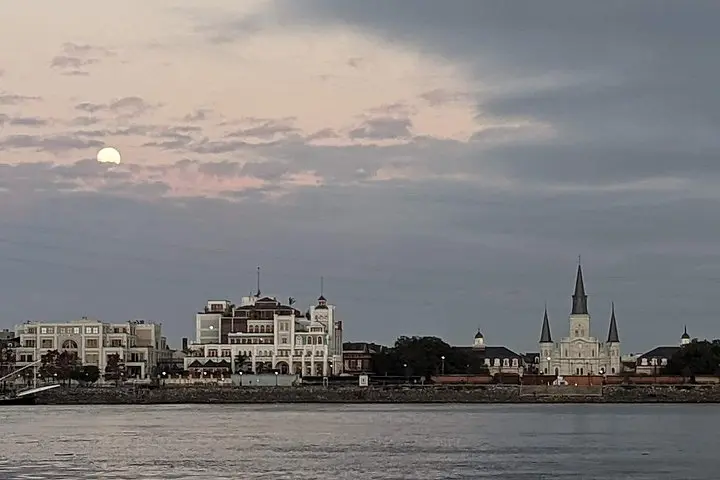
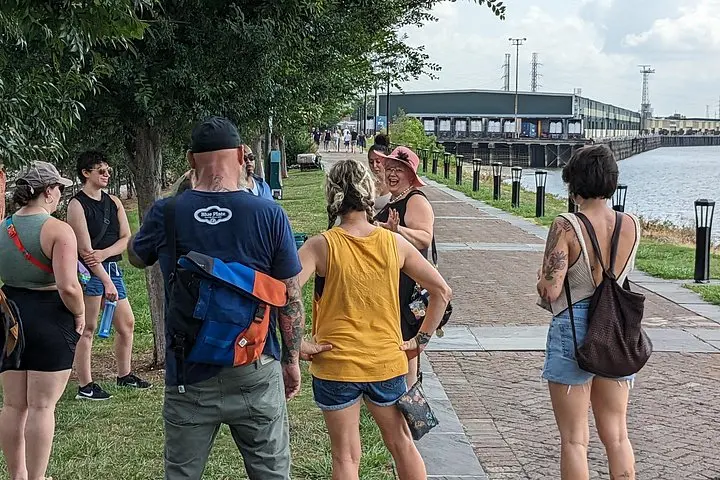
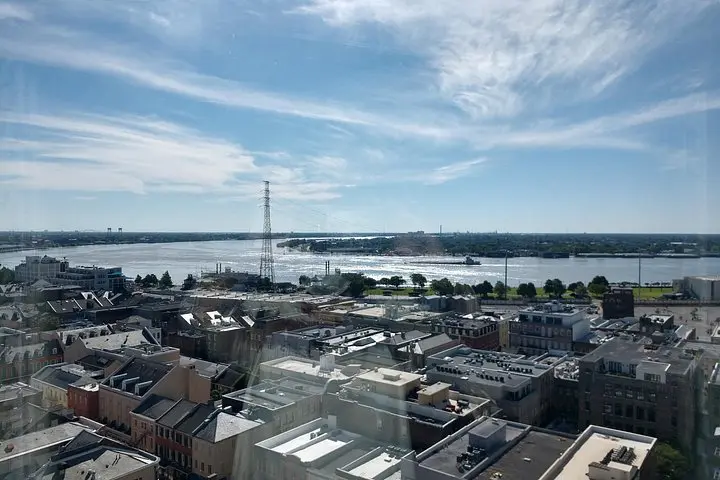
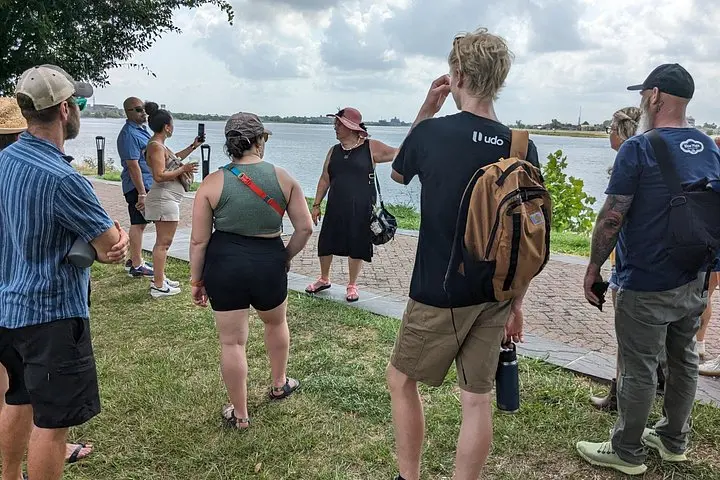
You step off the ferry and the river reaches for you — low waves nudging the levee, barges lumbering like slow giants downriver. The guide leads you along the broad riverwalk, where the French Quarter’s edge meets open water and the city exhales salt and spice. Breeze and bellows from passing boats set the pace as stories unfold beneath the skyline.
You step off the ferry and the river reaches for you — low waves nudging the levee, barges lumbering like slow giants downriver. The guide leads you along the broad riverwalk, where the French Quarter’s edge meets open water and the city exhales salt and spice. Breeze and bellows from passing boats set the pace as stories unfold beneath the skyline.
This 1 hour 45 minute route traces layers of New Orleans history: the lives of First Peoples who fished these banks, the arrival of French colonists, and the forced labor of enslaved Africans whose labor built the port. Geology here is plain — a delta plain of silt and sediment, land reclaimed and held by levees that shaped commerce and catastrophe alike. Cultural touchpoints — Woldenberg Park, the Holocaust Memorial, and the Monument to the Immigrant — mark the river’s role as a gateway for goods and people.
Expect a mix of paved levee paths and riverfront promenades, interpretive stops, and a short ferry ride included. The tour balances historical context with urban observation: you’ll hear about commerce, hurricanes, and the city’s adaptations to rising water.
Practical guidance: wear sturdy walking shoes, bring a refillable water bottle, and layer for humidity and river breezes. Morning tours are cooler and quieter; late afternoon offers golden light on the water but more crowding. Accessibility: the route and ferry provide wheelchair access, but check with the operator for specific needs. Bring sunscreen and a small rain jacket in summer — storms can arrive quickly.