THE ADVENTURE COLLECTIVE® · Independent discovery and booking for outdoor travel

A concise 90-minute private tour combining silent e-Tuk drives and short boat rides, visiting Polače’s Roman remains, St. Mary Island’s monastery, and the saltwater lakes in Mljet National Park.
A concise 90-minute private tour combining silent e-Tuk drives and short boat rides, visiting Polače’s Roman remains, St. Mary Island’s monastery, and the saltwater lakes in Mljet National Park.
The tour opens with a slow roll through Pomena’s quiet harbor, the e-Tuk humming like a polite companion as the Adriatic light slides across the water. Within minutes the guide unrolls the map and the story: Roman ruins at Polače, saltwater lakes that drink the sea, and St. Mary Island with its compact Benedictine monastery. The itinerary moves fast but deliberately — short drives along narrow island roads, brief shoreline strolls, and a few minutes on a small boat cutting a bright path between shore and island.
Verified experiences and guided adventures in the surrounding area.
Operated by Prozura Travel · Pomena, Dubrovnik-Neretva County
The tour opens with a slow roll through Pomena’s quiet harbor, the e-Tuk humming like a polite companion as the Adriatic light slides across the water. Within minutes the guide unrolls the map and the story: Roman ruins at Polače, saltwater lakes that drink the sea, and St. Mary Island with its compact Benedictine monastery. The itinerary moves fast but deliberately — short drives along narrow island roads, brief shoreline strolls, and a few minutes on a small boat cutting a bright path between shore and island.
Mljet’s geology is mostly karst limestone, smoothed into low cliffs and shallow coves; elevation gain during this experience is negligible (under 50 m), and trails are short, mostly paved or crushed-stone. Polače reveals late-Roman masonry and a small harbor that hints at centuries of coastal trade. The twin lakes, Veliko and Malo Jezero, are saline inlets that have their own microclimate; the monastery on St. Mary Island dates to the medieval Benedictine period and is the cultural focal point of the visit.
Practical detail: the tour lasts about 90 minutes, combines private e-Tuk transport with two short boat hops, and includes guided stops with free time on the island. Expect flat walking, uneven stone steps at historic sites, and narrow paths where footwear with good grip helps. Bring sun protection, a light layer for sea breezes, and a small bottle of water — the park limits commercial impacts, so pack-in, pack-out etiquette is appreciated. This is an easy, high-value intro to Mljet for visitors short on time.
This tour provides guided transport and boat transfers; park entrance fees may be separate—confirm with the operator before booking.
Walking is light and short—expect 10–20 minute strolls at sites and on St. Mary Island with a few stone steps.
Yes; the itinerary is rated easy and vehicles are eco-friendly, but individuals with mobility issues should check step access on the monastery and boats.
Guides typically speak English and may offer other European languages—verify language preferences when booking.
Prozura Travel operates guided outdoor trips and adventures with an emphasis on safety, stewardship, and memorable experiences.
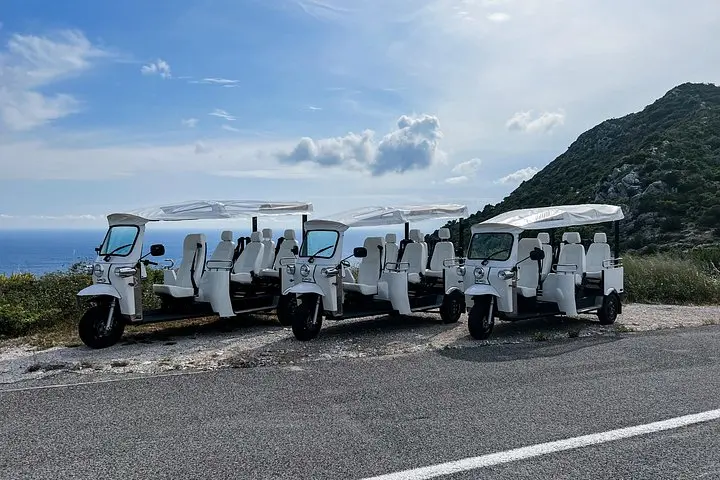
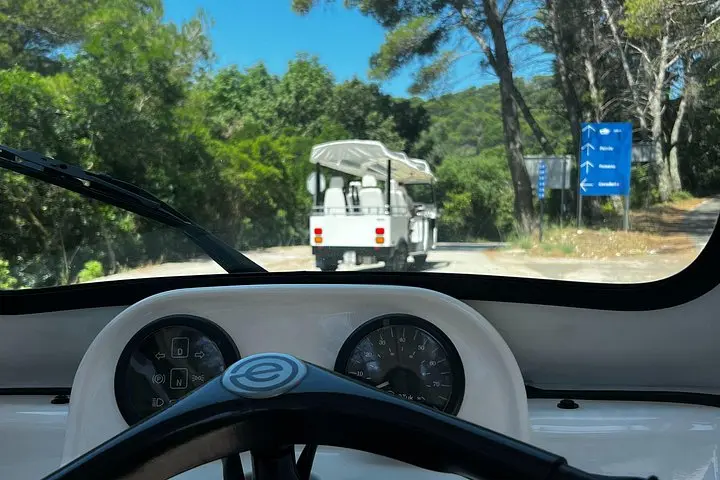
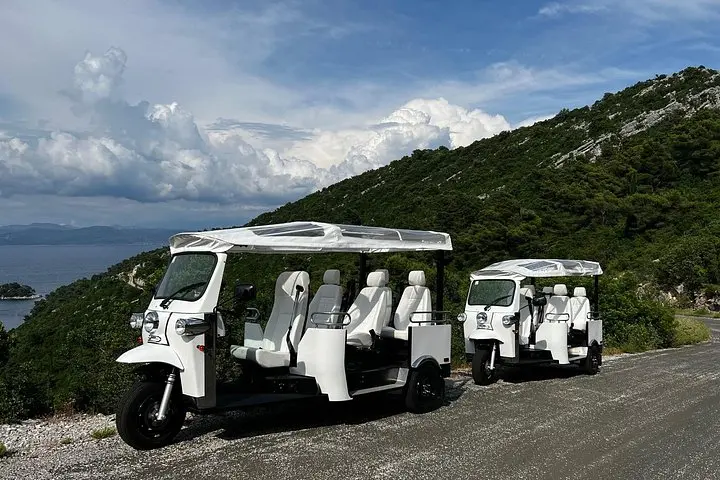
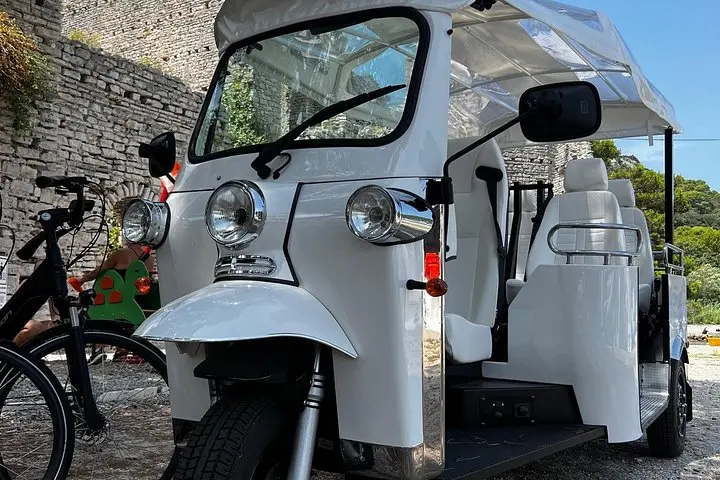
The tour opens with a slow roll through Pomena’s quiet harbor, the e-Tuk humming like a polite companion as the Adriatic light slides across the water. Within minutes the guide unrolls the map and the story: Roman ruins at Polače, saltwater lakes that drink the sea, and St. Mary Island with its compact Benedictine monastery. The itinerary moves fast but deliberately — short drives along narrow island roads, brief shoreline strolls, and a few minutes on a small boat cutting a bright path between shore and island.
The tour opens with a slow roll through Pomena’s quiet harbor, the e-Tuk humming like a polite companion as the Adriatic light slides across the water. Within minutes the guide unrolls the map and the story: Roman ruins at Polače, saltwater lakes that drink the sea, and St. Mary Island with its compact Benedictine monastery. The itinerary moves fast but deliberately — short drives along narrow island roads, brief shoreline strolls, and a few minutes on a small boat cutting a bright path between shore and island.
Mljet’s geology is mostly karst limestone, smoothed into low cliffs and shallow coves; elevation gain during this experience is negligible (under 50 m), and trails are short, mostly paved or crushed-stone. Polače reveals late-Roman masonry and a small harbor that hints at centuries of coastal trade. The twin lakes, Veliko and Malo Jezero, are saline inlets that have their own microclimate; the monastery on St. Mary Island dates to the medieval Benedictine period and is the cultural focal point of the visit.
Practical detail: the tour lasts about 90 minutes, combines private e-Tuk transport with two short boat hops, and includes guided stops with free time on the island. Expect flat walking, uneven stone steps at historic sites, and narrow paths where footwear with good grip helps. Bring sun protection, a light layer for sea breezes, and a small bottle of water — the park limits commercial impacts, so pack-in, pack-out etiquette is appreciated. This is an easy, high-value intro to Mljet for visitors short on time.