THE ADVENTURE COLLECTIVE® · Independent discovery and booking for outdoor travel

Board a traditional dhow and head to Mnemba Atoll for a five-hour snorkel trip that targets dolphins, vibrant reef life and a turtle lagoon. Expect multiple snorkel stops, a sandbank picnic and close—respectful—encounters with marine wildlife.
Board a traditional dhow and head to Mnemba Atoll for a five-hour snorkel trip that targets dolphins, vibrant reef life and a turtle lagoon. Expect multiple snorkel stops, a sandbank picnic and close—respectful—encounters with marine wildlife.
You push off from a low wooden dhow as the coastline of Unguja slides away—palm-fringed villages shrinking to a thin ribbon while the sea opens into bands of turquoise. Waves chatter against the hull and, minutes later, a shoal of reef fish parts like a curtain: clownfish tucked among anemones, Picasso triggerfish patrolling ledges. Dolphins arc on the horizon, often curious enough to meet the boat.
Verified experiences and guided adventures in the surrounding area.
Operated by Nungwi Aquarium Adventures · Mnemba Atoll, Zanzibar
You push off from a low wooden dhow as the coastline of Unguja slides away—palm-fringed villages shrinking to a thin ribbon while the sea opens into bands of turquoise. Waves chatter against the hull and, minutes later, a shoal of reef fish parts like a curtain: clownfish tucked among anemones, Picasso triggerfish patrolling ledges. Dolphins arc on the horizon, often curious enough to meet the boat.
Mnemba Atoll sits off Zanzibar’s northeast coast, born of coral growth on an offshore volcanic platform. The reef has long supported local fishing communities in Matemwe and Nungwi; conservation efforts in recent decades have focused on protecting turtles and the spawning grounds that make this atoll a hotspot. Culturally, the day-tour economy is a meeting point of Swahili hospitality and marine stewardship—expect local skippers and guides who read currents as well as tides.
Practically, the standard excursion runs about five hours with roughly four hours on the water, including multiple snorkel stops, a sandbank picnic and a swim at a nearby turtle lagoon. Visibility is usually good in the morning; currents can strengthen later so operators often plan the deeper sites early. Bring a well-fitting mask, reef-safe sunscreen, a rash guard and a light waterproof bag for phones.
On the water, move deliberately: let the reef invite you rather than forcing contact. Respect designated channels and follow your guide’s briefings—turtles and dolphins are protected and approachable, not props. Timing your visit outside the heaviest rains improves visibility and makes the sandbank stop more enjoyable. This is sea travel that balances spectacle with stewardship—expect bright reefs, inquisitive dolphins and the slow, patient presence of sea turtles in their natural aquarium.
Mnemba Atoll reports high sighting rates—operators often quote around 80–85%—but sightings depend on season, tide and luck; morning trips increase chances.
No expert skill is required, but you should be comfortable in open water and able to swim short distances with a snorkel; life jackets are provided on request.
Children are allowed; infants must sit on a lap and operators set age limits depending on safety and boat policy—check with the operator when booking.
Tours are typically canceled for high winds, poor visibility or dangerous sea conditions; operators usually offer full refunds if canceled at least 24 hours ahead for bad weather.
Nungwi Aquarium Adventures operates guided outdoor trips and adventures with an emphasis on safety, stewardship, and memorable experiences.
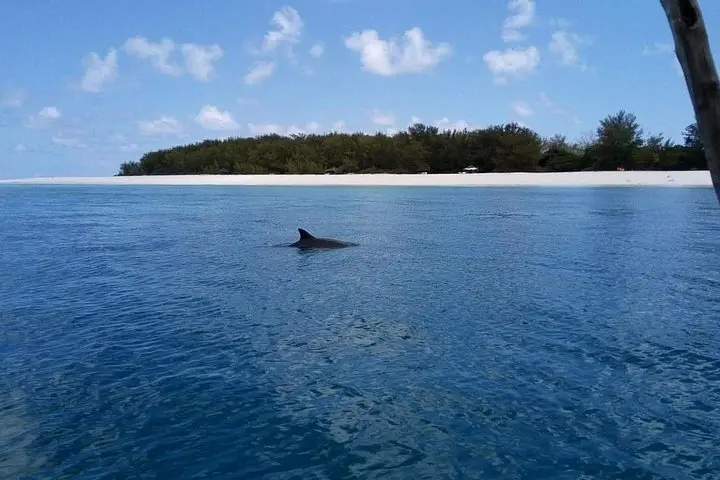
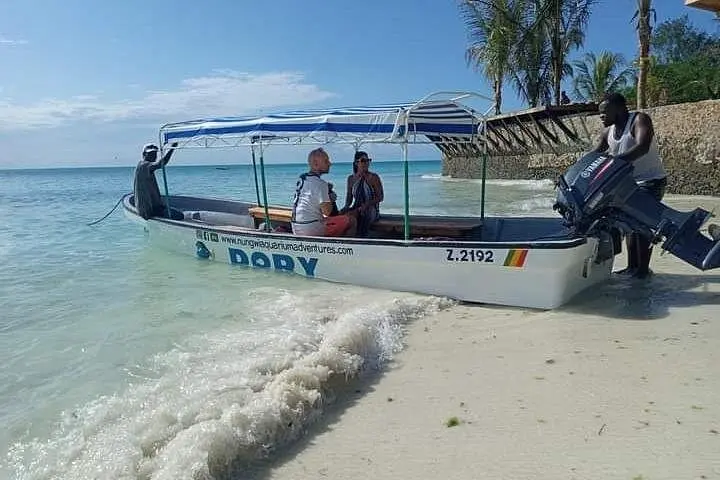
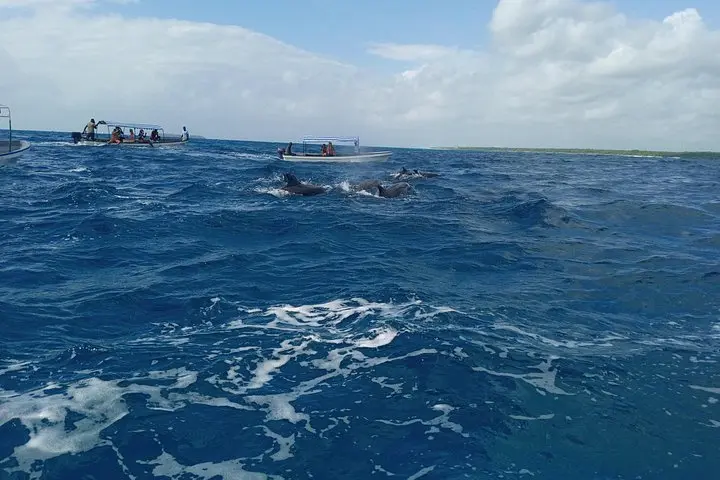
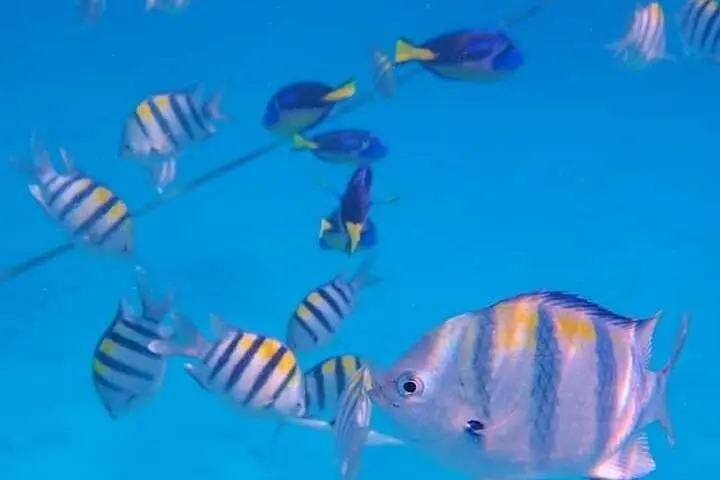
You push off from a low wooden dhow as the coastline of Unguja slides away—palm-fringed villages shrinking to a thin ribbon while the sea opens into bands of turquoise. Waves chatter against the hull and, minutes later, a shoal of reef fish parts like a curtain: clownfish tucked among anemones, Picasso triggerfish patrolling ledges. Dolphins arc on the horizon, often curious enough to meet the boat.
You push off from a low wooden dhow as the coastline of Unguja slides away—palm-fringed villages shrinking to a thin ribbon while the sea opens into bands of turquoise. Waves chatter against the hull and, minutes later, a shoal of reef fish parts like a curtain: clownfish tucked among anemones, Picasso triggerfish patrolling ledges. Dolphins arc on the horizon, often curious enough to meet the boat.
Mnemba Atoll sits off Zanzibar’s northeast coast, born of coral growth on an offshore volcanic platform. The reef has long supported local fishing communities in Matemwe and Nungwi; conservation efforts in recent decades have focused on protecting turtles and the spawning grounds that make this atoll a hotspot. Culturally, the day-tour economy is a meeting point of Swahili hospitality and marine stewardship—expect local skippers and guides who read currents as well as tides.
Practically, the standard excursion runs about five hours with roughly four hours on the water, including multiple snorkel stops, a sandbank picnic and a swim at a nearby turtle lagoon. Visibility is usually good in the morning; currents can strengthen later so operators often plan the deeper sites early. Bring a well-fitting mask, reef-safe sunscreen, a rash guard and a light waterproof bag for phones.
On the water, move deliberately: let the reef invite you rather than forcing contact. Respect designated channels and follow your guide’s briefings—turtles and dolphins are protected and approachable, not props. Timing your visit outside the heaviest rains improves visibility and makes the sandbank stop more enjoyable. This is sea travel that balances spectacle with stewardship—expect bright reefs, inquisitive dolphins and the slow, patient presence of sea turtles in their natural aquarium.