THE ADVENTURE COLLECTIVE® · Independent discovery and booking for outdoor travel

Spend an evening under Moab’s dark skies learning to photograph the Milky Way above red‑rock cliffs and slickrock panoramas. This hands‑on workshop teaches camera settings, composition, and basic post‑processing at roadside overlooks suitable for all skill levels.
Spend an evening under Moab’s dark skies learning to photograph the Milky Way above red‑rock cliffs and slickrock panoramas. This hands‑on workshop teaches camera settings, composition, and basic post‑processing at roadside overlooks suitable for all skill levels.
The first breath of Moab night cools the desert, and the Milky Way rises like a slow-burning river over mesas and spires. You meet in a hotel parking lot, load gear into a vehicle, and drive a few miles beyond town where sodium lights fall away and the sky opens wide. The landscape—slickrock, mesas, and canyon rims—frames long exposures and gives scale to pinprick constellations.
Verified experiences and guided adventures in the surrounding area.
Operated by Matt DeWitt Photography · Moab, Utah
The first breath of Moab night cools the desert, and the Milky Way rises like a slow-burning river over mesas and spires. You meet in a hotel parking lot, load gear into a vehicle, and drive a few miles beyond town where sodium lights fall away and the sky opens wide. The landscape—slickrock, mesas, and canyon rims—frames long exposures and gives scale to pinprick constellations.
Geology here is an invitation: the Permian and Jurassic sandstone cliffs that define the area are the same layers that make Moab’s vistas so photogenic by day and so dramatic at night. The region sits in the Colorado Plateau, where faulting and erosion shaped broad plateaus and steep cliffs, creating viewpoints that face south—ideal for Milky Way photography in spring and summer.
Culturally, Moab blends Native American history, frontier mining, and a modern outdoor-recreation scene; expect quiet reverence for dark skies among locals and guides who understand how fragile night environments are. Guides will coach camera settings, composition, and basic post-processing while you work from roadside overlooks and stable ledges—no technical climbs required.
Practically, bring a sturdy tripod, wide-fast lens, remote trigger, and layered clothing: desert nights drop quickly. Aim to arrive 60–90 minutes before your planned exposures to compose in fading light. Use a red-headlamp to preserve night vision, keep batteries warm, and park on stable ground away from cliff edges. The workshop is entry-level—ideal for photographers wanting guided, hands-on instruction beneath some of the darkest skies in the continental U.S.
No—this is entry level; basic familiarity with your camera helps, but the guide covers settings, composition, and simple post‑processing.
Meet in Moab and drive to nearby overlooks—typical drives are 10–25 minutes on paved or well‑graded dirt roads depending on the chosen location.
High winds, storms, or heavy cloud cover can lead to cancellation for safety and image quality; check the 24‑hour cancellation policy for refunds.
Meeting is at the SpringHill Suites parking lot; the guide transports participants to chosen viewpoints in a suitable vehicle.
Matt DeWitt Photography operates guided outdoor trips and adventures with an emphasis on safety, stewardship, and memorable experiences.
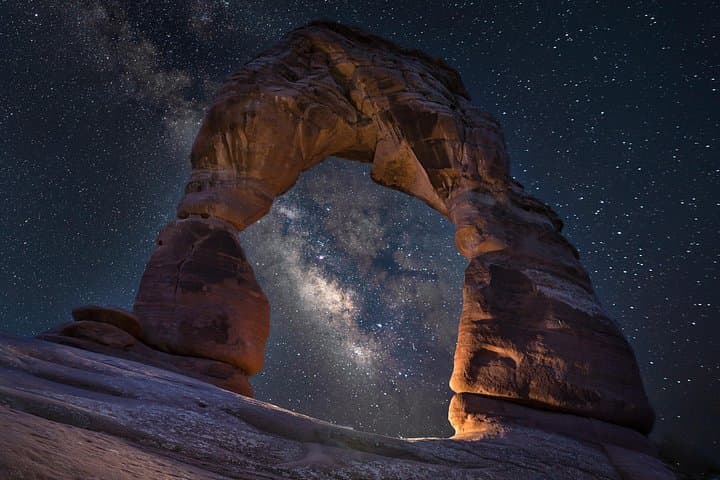
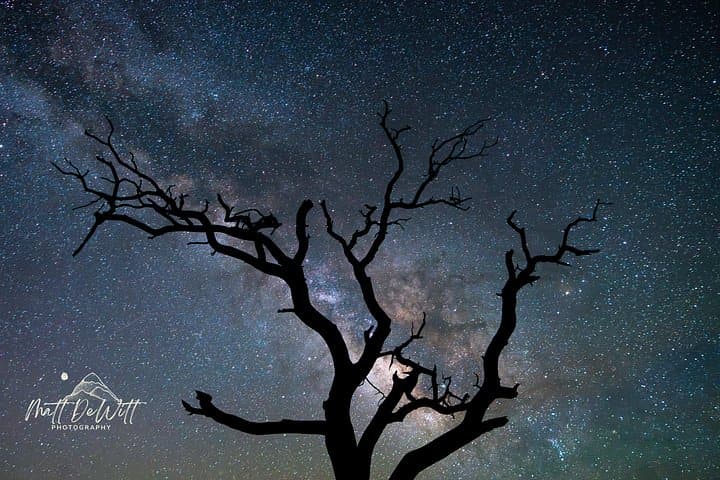
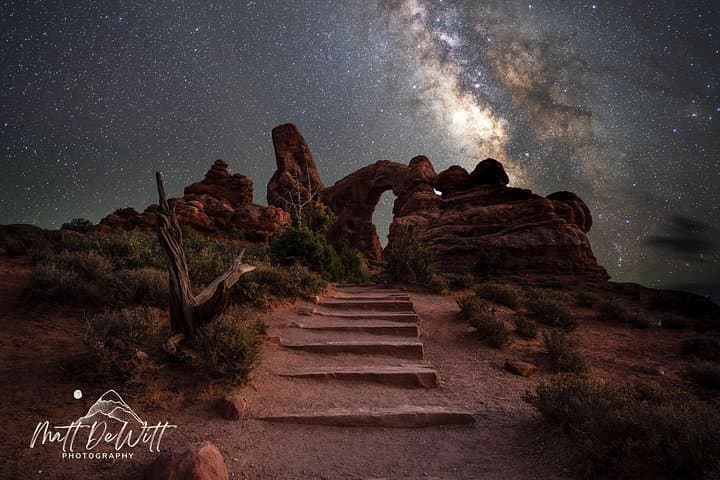
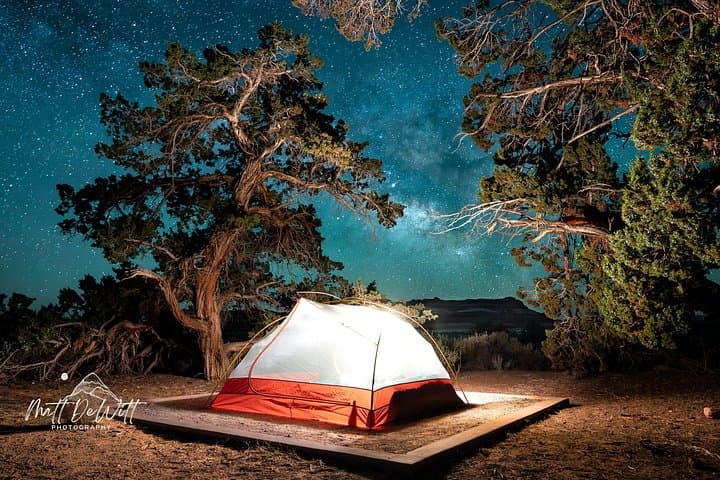
The first breath of Moab night cools the desert, and the Milky Way rises like a slow-burning river over mesas and spires. You meet in a hotel parking lot, load gear into a vehicle, and drive a few miles beyond town where sodium lights fall away and the sky opens wide. The landscape—slickrock, mesas, and canyon rims—frames long exposures and gives scale to pinprick constellations.
The first breath of Moab night cools the desert, and the Milky Way rises like a slow-burning river over mesas and spires. You meet in a hotel parking lot, load gear into a vehicle, and drive a few miles beyond town where sodium lights fall away and the sky opens wide. The landscape—slickrock, mesas, and canyon rims—frames long exposures and gives scale to pinprick constellations.
Geology here is an invitation: the Permian and Jurassic sandstone cliffs that define the area are the same layers that make Moab’s vistas so photogenic by day and so dramatic at night. The region sits in the Colorado Plateau, where faulting and erosion shaped broad plateaus and steep cliffs, creating viewpoints that face south—ideal for Milky Way photography in spring and summer.
Culturally, Moab blends Native American history, frontier mining, and a modern outdoor-recreation scene; expect quiet reverence for dark skies among locals and guides who understand how fragile night environments are. Guides will coach camera settings, composition, and basic post-processing while you work from roadside overlooks and stable ledges—no technical climbs required.
Practically, bring a sturdy tripod, wide-fast lens, remote trigger, and layered clothing: desert nights drop quickly. Aim to arrive 60–90 minutes before your planned exposures to compose in fading light. Use a red-headlamp to preserve night vision, keep batteries warm, and park on stable ground away from cliff edges. The workshop is entry-level—ideal for photographers wanting guided, hands-on instruction beneath some of the darkest skies in the continental U.S.