THE ADVENTURE COLLECTIVE® · Independent discovery and booking for outdoor travel

Ease into whitewater on Moab’s Fisher Towers section, a half-day float with splashy Class I–II rapids and blockbuster canyon views. It’s family-friendly, guide-led, and packed with geology, film history, and just enough adrenaline to keep everyone grinning.
Ease into whitewater on Moab’s Fisher Towers section, a half-day float with splashy Class I–II rapids and blockbuster canyon views. It’s family-friendly, guide-led, and packed with geology, film history, and just enough adrenaline to keep everyone grinning.
Sun warms the canyon walls as the raft noses off the sandy bank near Hittle Bottom, the Colorado River catching the hull and tugging it downstream. Ahead, the Fisher Towers stand like rust-red fins, needling the sky while the current nudges you into easy wave trains. A guide calls, “Forward two,” and paddles bite; the river answers with a friendly push, then relaxes into a glassy glide where swallows skim the surface and cottonwoods whisper along the shore.
Don't worry — we've hand-picked similar verified experiences nearby so you can keep exploring.
Sun warms the canyon walls as the raft noses off the sandy bank near Hittle Bottom, the Colorado River catching the hull and tugging it downstream. Ahead, the Fisher Towers stand like rust-red fins, needling the sky while the current nudges you into easy wave trains. A guide calls, “Forward two,” and paddles bite; the river answers with a friendly push, then relaxes into a glassy glide where swallows skim the surface and cottonwoods whisper along the shore.
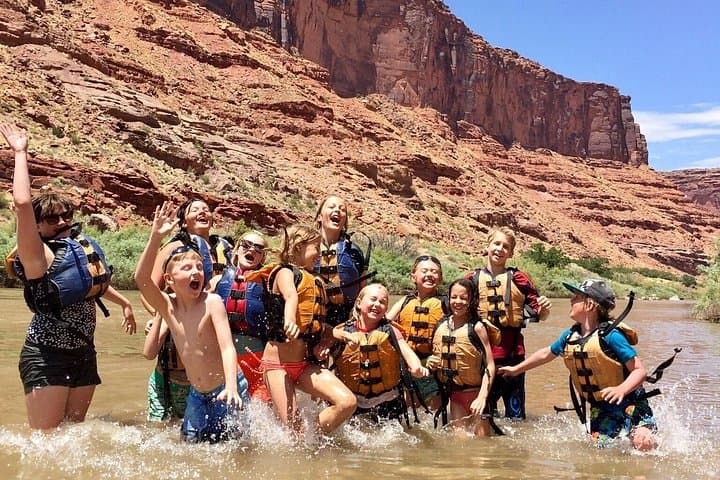
This half-day run follows the Fisher Towers section—roughly 7–9 river miles depending on flows—an iconic stretch of the Upper Colorado that threads through Professor Valley. The geology is front-row geology class: sculpted spires of the Cutler Formation, carved by freeze-thaw and time, hem in a corridor of red sandstone and shadow. Ute and Paiute peoples moved through this country long before prospectors and filmmakers arrived; in the mid-20th century, the valley became a set for Hollywood Westerns, and the river still wears its star power well. You’ll spot Castle Valley’s profile and the swooping line of Onion Creek, where the water likes to flex a little muscle.
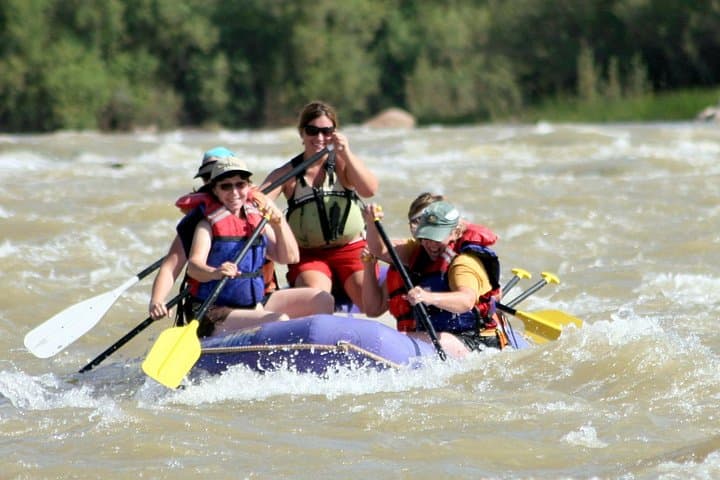
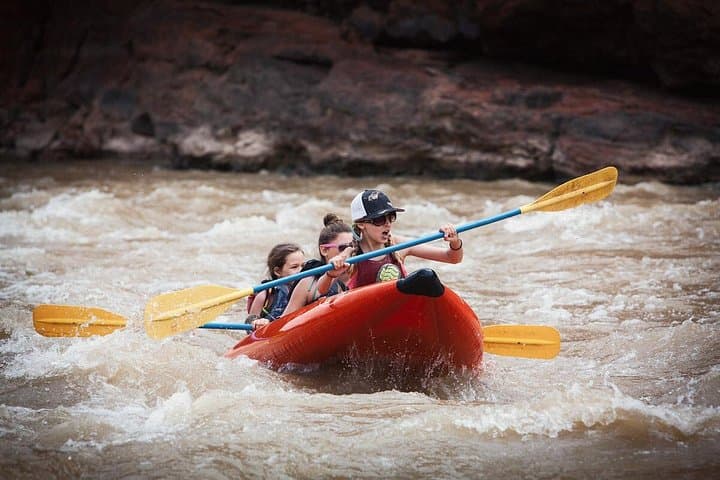
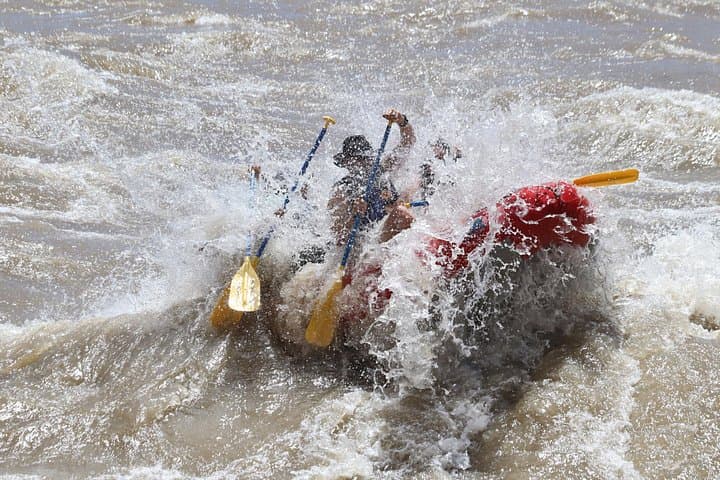
Expect mostly Class I–II rapids—splashy, forgiving, and perfect for families or first-timers—with names like Onion Creek Rapid and Rocky Rapid that wake up with spring snowmelt. Between riffles, the river invites a quick swim, its cool bite bracing against desert heat. The outing runs about four hours door to door: meet in Moab, shuttle the scenic SR-128 river road to the put-in, paddle a handful of playful features, and step off at the takeout with sand on your calves and that canyon glow in your head.
Guides fit you with a PFD and provide paddles and dry bags; you bring sun sense and curiosity. Quick-dry layers perform better than cotton, and secure footwear beats flip-flops if you hop in for a swim. Spring water can be chilly even when the air bakes, and summer brings intense sun and the chance of brief monsoon storms. Morning departures often mean calmer winds and cooler temps; afternoons can see the canyon breathe harder, sending tailwinds—or occasionally headwinds—that make paddling a team sport.
It’s an easy entry into desert river life: big scenery, manageable whitewater, and a pace that lets you look around. The Colorado keeps time here, unhurried yet insistent, inviting you to lean into each bend. By the takeout, the Fisher Towers have changed color twice, the river has told a few stories, and you’ve learned its language—forward two, easy all, and let the current carry the rest.
The Fisher Towers section is typically Class I–II, with occasional II+ waves at higher flows—ideal for beginners and families.
No. Guides provide safety briefings and on-water instruction. Basic comfort in water and the ability to paddle on command are sufficient.
Yes, children must be at least 5 years old to participate.
Wear quick-dry clothing, secure sandals or water shoes, a hat, and sunscreen. Bring a full water bottle; PFDs, paddles, and dry bags are provided.
Trips operate in most conditions; brief desert storms are common in summer. Operations may adjust for safety depending on wind, lightning, or high flows.
Yes. You’ll meet in Moab and shuttle with the outfitter to the put-in and from the takeout back to town.
Red River Adventures operates guided outdoor trips and adventures with an emphasis on safety, stewardship, and memorable experiences.
Sun warms the canyon walls as the raft noses off the sandy bank near Hittle Bottom, the Colorado River catching the hull and tugging it downstream. Ahead, the Fisher Towers stand like rust-red fins, needling the sky while the current nudges you into easy wave trains. A guide calls, “Forward two,” and paddles bite; the river answers with a friendly push, then relaxes into a glassy glide where swallows skim the surface and cottonwoods whisper along the shore.
Sun warms the canyon walls as the raft noses off the sandy bank near Hittle Bottom, the Colorado River catching the hull and tugging it downstream. Ahead, the Fisher Towers stand like rust-red fins, needling the sky while the current nudges you into easy wave trains. A guide calls, “Forward two,” and paddles bite; the river answers with a friendly push, then relaxes into a glassy glide where swallows skim the surface and cottonwoods whisper along the shore.
This half-day run follows the Fisher Towers section—roughly 7–9 river miles depending on flows—an iconic stretch of the Upper Colorado that threads through Professor Valley. The geology is front-row geology class: sculpted spires of the Cutler Formation, carved by freeze-thaw and time, hem in a corridor of red sandstone and shadow. Ute and Paiute peoples moved through this country long before prospectors and filmmakers arrived; in the mid-20th century, the valley became a set for Hollywood Westerns, and the river still wears its star power well. You’ll spot Castle Valley’s profile and the swooping line of Onion Creek, where the water likes to flex a little muscle.
Expect mostly Class I–II rapids—splashy, forgiving, and perfect for families or first-timers—with names like Onion Creek Rapid and Rocky Rapid that wake up with spring snowmelt. Between riffles, the river invites a quick swim, its cool bite bracing against desert heat. The outing runs about four hours door to door: meet in Moab, shuttle the scenic SR-128 river road to the put-in, paddle a handful of playful features, and step off at the takeout with sand on your calves and that canyon glow in your head.
Guides fit you with a PFD and provide paddles and dry bags; you bring sun sense and curiosity. Quick-dry layers perform better than cotton, and secure footwear beats flip-flops if you hop in for a swim. Spring water can be chilly even when the air bakes, and summer brings intense sun and the chance of brief monsoon storms. Morning departures often mean calmer winds and cooler temps; afternoons can see the canyon breathe harder, sending tailwinds—or occasionally headwinds—that make paddling a team sport.
It’s an easy entry into desert river life: big scenery, manageable whitewater, and a pace that lets you look around. The Colorado keeps time here, unhurried yet insistent, inviting you to lean into each bend. By the takeout, the Fisher Towers have changed color twice, the river has told a few stories, and you’ve learned its language—forward two, easy all, and let the current carry the rest.