THE ADVENTURE COLLECTIVE® · Independent discovery and booking for outdoor travel

Spend two days driving into Vietnam’s highlands to cross the record-breaking Bach Long glass bridge, wander plum-scented tea slopes and visit Thai stilt villages in Mai Chau. This private 2D/1N from Hanoi pairs engineered thrills with quiet cultural stops.
Spend two days driving into Vietnam’s highlands to cross the record-breaking Bach Long glass bridge, wander plum-scented tea slopes and visit Thai stilt villages in Mai Chau. This private 2D/1N from Hanoi pairs engineered thrills with quiet cultural stops.
The road unspools north from Hanoi in a slow ribbon of rice fields and limestone ridges, and by late morning the air has thinned and cooled. You arrive on the Moc Chau plateau—clouds sit low, tea terraces roll like waves, and the glass of Bach Long Bridge appears to float between two gorges, a clear nervous system stretching across the canyon. Standing on the bridge, the valley seems to breathe: a river daring you to look down, towers of steel holding the glass like a steady hand.
Verified experiences and guided adventures in the surrounding area.
Operated by Local Tours ASIA · Moc Chau, Son La
The road unspools north from Hanoi in a slow ribbon of rice fields and limestone ridges, and by late morning the air has thinned and cooled. You arrive on the Moc Chau plateau—clouds sit low, tea terraces roll like waves, and the glass of Bach Long Bridge appears to float between two gorges, a clear nervous system stretching across the canyon. Standing on the bridge, the valley seems to breathe: a river daring you to look down, towers of steel holding the glass like a steady hand.
Moc Chau sits at roughly 1,050–1,200 meters above sea level, carved out by tectonic uplift and centuries of erosion that left broad plateaus interrupted by sheer gorges. Historically the district has been a crossroads for ethnic Thai, Hmong and Muong communities; traditional stilt houses and market routes remain part of daily life. The area’s tea hills and plum orchards are relatively recent additions to its tourism identity, but they grow on slopes that have supported shifting cultivation and upland trade for generations.
Bach Long glass bridge is a modern feat—multiple Guinness and world record recognitions for length and cliffside construction—built with super-tempered glass and imported cable systems. Below, limestone caves and stalactites mark older geology; the contrast between engineered transparency and ancient stone makes the spot uniquely cinematic.
Beyond engineering and geology, the tour threads culture into the landscape. You’ll pass Thung Khe (White Stone) Pass—where weather can flip like a pocketknife, giving you four seasons in a single day—and visit Ang’s pine village and Mai Chau valley, where white-clad Thai women keep weaving and stilt-house homestays serve local dishes. The second day’s route is quieter: a stroll through pine-shaded lakes and small craft villages before the return highway hums you back to Hanoi.
Practical notes: the roundtrip from Hanoi is about 200 km each way; expect 4–5 hours driving one-way depending on stops. Elevation makes mornings cool: pack layers. The itinerary covers a mix of paved driving and short walks (moderate fitness recommended). Entrance fees, two lunches, dinner and one night’s accommodation are included; the private-car transfer and English-speaking guide simplify logistics.
Timing matters—early spring and late autumn offer plum and tea blooms, while summer is lush but wetter. For photographers, golden hour on the plateau and sunrise from the bridge platform deliver the best light. Finally, tread lightly: the plateau is fragile—stick to paths, refuse single-use plastics, and consider choosing homestays and vendors that support local communities. The Moc Chau loop rewards patient travelers: a mix of engineered thrill, slow cultural rhythms, and landscapes that keep changing as the road climbs.
About 200 km; expect 4–5 hours depending on traffic and stops along the way.
Yes — it is built with super-tempered glass and certified systems; follow staff instructions and weight limits.
Moderate fitness — mostly easy walking and short uphill sections; no technical skills required.
This tour includes an English-speaking guide; local staff may speak Vietnamese or local dialects.
One night’s accommodation is included as selected at booking; confirm type (hotel or homestay) when you reserve.
Spring (blossoms) and fall (mild weather) offer the most comfortable conditions and best visibility.
Local Tours ASIA operates guided outdoor trips and adventures with an emphasis on safety, stewardship, and memorable experiences.
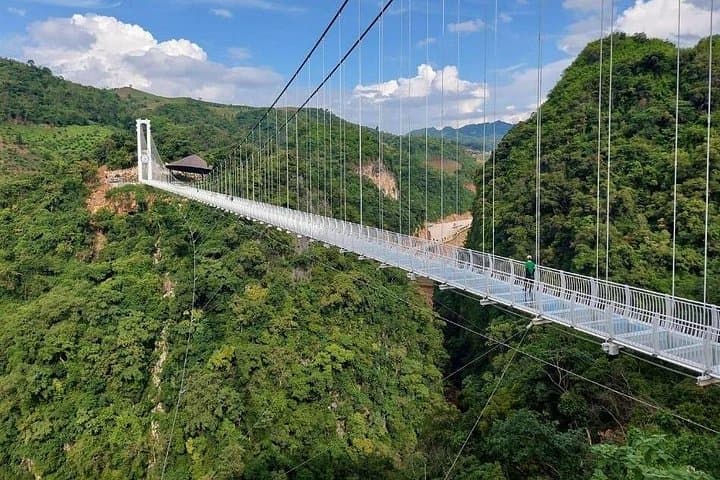
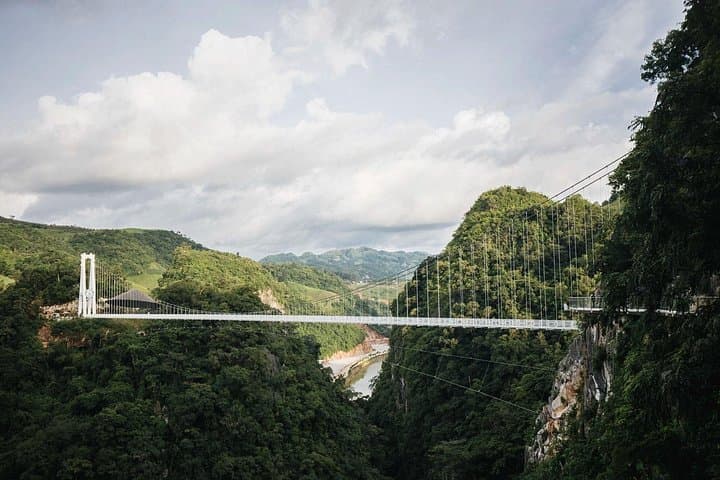
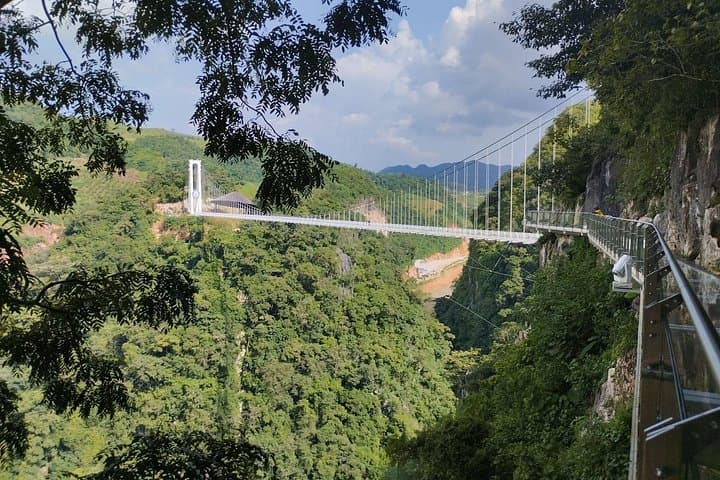
The road unspools north from Hanoi in a slow ribbon of rice fields and limestone ridges, and by late morning the air has thinned and cooled. You arrive on the Moc Chau plateau—clouds sit low, tea terraces roll like waves, and the glass of Bach Long Bridge appears to float between two gorges, a clear nervous system stretching across the canyon. Standing on the bridge, the valley seems to breathe: a river daring you to look down, towers of steel holding the glass like a steady hand.
The road unspools north from Hanoi in a slow ribbon of rice fields and limestone ridges, and by late morning the air has thinned and cooled. You arrive on the Moc Chau plateau—clouds sit low, tea terraces roll like waves, and the glass of Bach Long Bridge appears to float between two gorges, a clear nervous system stretching across the canyon. Standing on the bridge, the valley seems to breathe: a river daring you to look down, towers of steel holding the glass like a steady hand.
Moc Chau sits at roughly 1,050–1,200 meters above sea level, carved out by tectonic uplift and centuries of erosion that left broad plateaus interrupted by sheer gorges. Historically the district has been a crossroads for ethnic Thai, Hmong and Muong communities; traditional stilt houses and market routes remain part of daily life. The area’s tea hills and plum orchards are relatively recent additions to its tourism identity, but they grow on slopes that have supported shifting cultivation and upland trade for generations.
Bach Long glass bridge is a modern feat—multiple Guinness and world record recognitions for length and cliffside construction—built with super-tempered glass and imported cable systems. Below, limestone caves and stalactites mark older geology; the contrast between engineered transparency and ancient stone makes the spot uniquely cinematic.
Beyond engineering and geology, the tour threads culture into the landscape. You’ll pass Thung Khe (White Stone) Pass—where weather can flip like a pocketknife, giving you four seasons in a single day—and visit Ang’s pine village and Mai Chau valley, where white-clad Thai women keep weaving and stilt-house homestays serve local dishes. The second day’s route is quieter: a stroll through pine-shaded lakes and small craft villages before the return highway hums you back to Hanoi.
Practical notes: the roundtrip from Hanoi is about 200 km each way; expect 4–5 hours driving one-way depending on stops. Elevation makes mornings cool: pack layers. The itinerary covers a mix of paved driving and short walks (moderate fitness recommended). Entrance fees, two lunches, dinner and one night’s accommodation are included; the private-car transfer and English-speaking guide simplify logistics.
Timing matters—early spring and late autumn offer plum and tea blooms, while summer is lush but wetter. For photographers, golden hour on the plateau and sunrise from the bridge platform deliver the best light. Finally, tread lightly: the plateau is fragile—stick to paths, refuse single-use plastics, and consider choosing homestays and vendors that support local communities. The Moc Chau loop rewards patient travelers: a mix of engineered thrill, slow cultural rhythms, and landscapes that keep changing as the road climbs.