THE ADVENTURE COLLECTIVE® · Independent discovery and booking for outdoor travel

Climb from Pokhara’s subtropical valleys into alpine ridgelines on the 6-day Mohare Danda ECO Trek. Expect forested trails, tea-house nights, panoramic Annapurna and Dhaulagiri views, and community-run stays that support local projects.
Climb from Pokhara’s subtropical valleys into alpine ridgelines on the 6-day Mohare Danda ECO Trek. Expect forested trails, tea-house nights, panoramic Annapurna and Dhaulagiri views, and community-run stays that support local projects.
A low ridge of grass and rhododendron opens under your boots and the first jagged teeth of Annapurna and Dhaulagiri appear, sudden and enormous, as you climb toward Mohare Danda at 3,300 m. Wind slices across the open hill station; prayer flags snap and the valley below folds into terraced fields and scattered stone villages.
Verified experiences and guided adventures in the surrounding area.
Operated by Swissa Adventure Travel & Treks · Pokhara, Gandaki Province
A low ridge of grass and rhododendron opens under your boots and the first jagged teeth of Annapurna and Dhaulagiri appear, sudden and enormous, as you climb toward Mohare Danda at 3,300 m. Wind slices across the open hill station; prayer flags snap and the valley below folds into terraced fields and scattered stone villages.
This newly promoted ECO route threads traditional villages—home to Gurung and Magar communities—through mixed cedar and rhododendron forest, moving from Nayapul’s lower subtropical slopes up into the cool alpine edge. Geologically you’re hiking across uplifted metamorphic rock of the Greater Himalaya; the long vistas here are the exposed flanks of two of Nepal’s highest massifs.
Locals keep tea houses and orange gardens on ridgelines like Kaphal Danda, and the trek explicitly supports community tourism and ACAP-managed conservation in the Annapurna foothills. Expect single-track trails, stone staircases through villages, occasional grassy meadows, and a steady elevation gain of roughly 1,100 m on the key ascent to Mohare.
Practical guidance: plan 4–6 hours of hiking most days on trails that are steep but well-trod; pack layers for sharp temperature swings and acclimatize as you climb. Permits (ACAP/TIMS) and a certified English-speaking guide are standard; tea-house accommodation and three meals are included. Water should be treated above 2,500 m; start early for sunrise views and avoid monsoon months for the clearest panoramas.
Yes—ACAP and TIMS permits are required for treks in the Annapurna area and are normally handled by the guide/operator.
Accommodation is tea-house style—basic twin rooms with shared bathrooms; hot showers are sometimes available for a fee.
Yes—altitude to 3,300 m can cause mild AMS; ascend gradually, drink water, and notify your guide of symptoms.
Best windows are spring (March–May) for rhododendrons and autumn (September–November) for clear views and stable weather.
Swissa Adventure Travel & Treks operates guided outdoor trips and adventures with an emphasis on safety, stewardship, and memorable experiences.
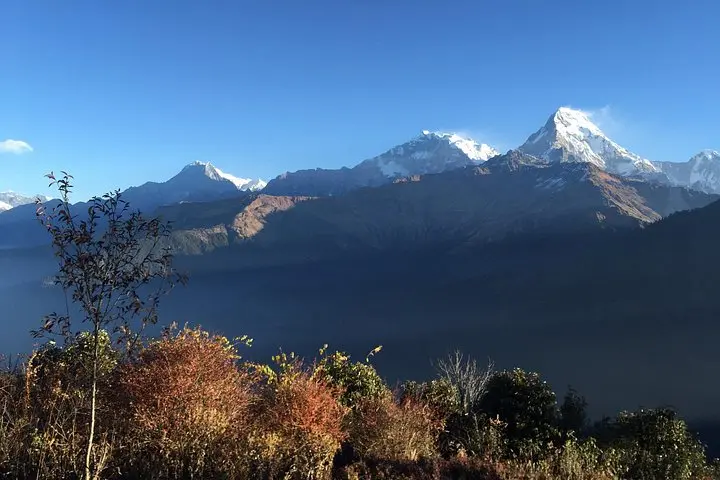
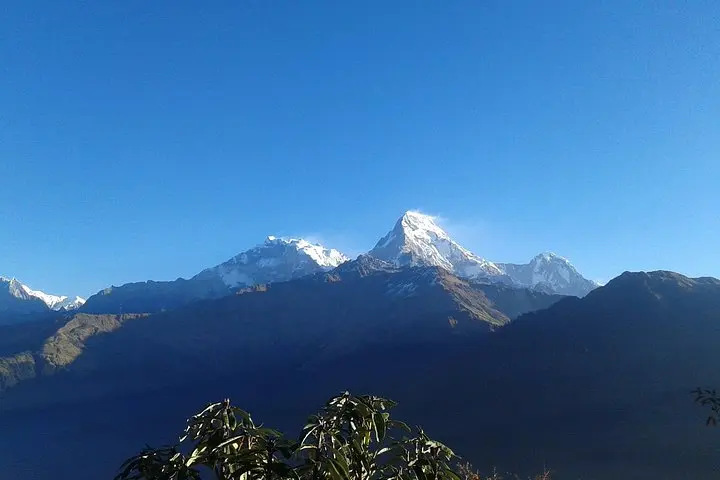
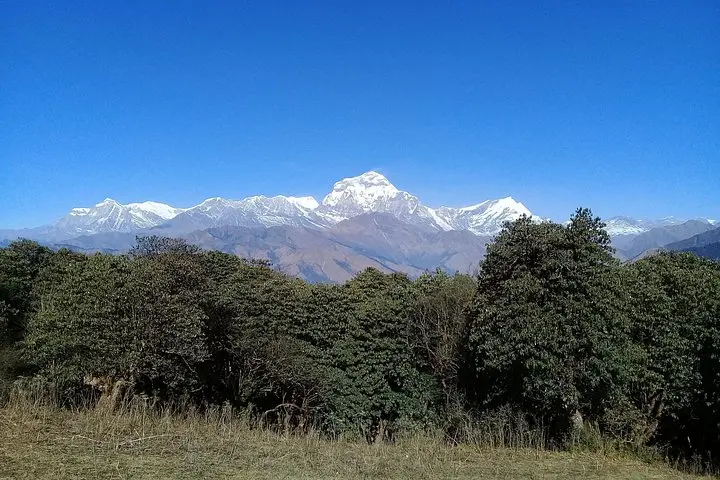
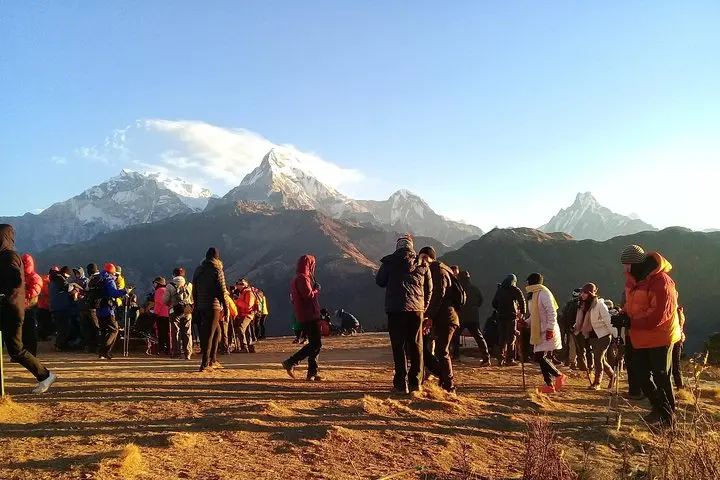
A low ridge of grass and rhododendron opens under your boots and the first jagged teeth of Annapurna and Dhaulagiri appear, sudden and enormous, as you climb toward Mohare Danda at 3,300 m. Wind slices across the open hill station; prayer flags snap and the valley below folds into terraced fields and scattered stone villages.
A low ridge of grass and rhododendron opens under your boots and the first jagged teeth of Annapurna and Dhaulagiri appear, sudden and enormous, as you climb toward Mohare Danda at 3,300 m. Wind slices across the open hill station; prayer flags snap and the valley below folds into terraced fields and scattered stone villages.
This newly promoted ECO route threads traditional villages—home to Gurung and Magar communities—through mixed cedar and rhododendron forest, moving from Nayapul’s lower subtropical slopes up into the cool alpine edge. Geologically you’re hiking across uplifted metamorphic rock of the Greater Himalaya; the long vistas here are the exposed flanks of two of Nepal’s highest massifs.
Locals keep tea houses and orange gardens on ridgelines like Kaphal Danda, and the trek explicitly supports community tourism and ACAP-managed conservation in the Annapurna foothills. Expect single-track trails, stone staircases through villages, occasional grassy meadows, and a steady elevation gain of roughly 1,100 m on the key ascent to Mohare.
Practical guidance: plan 4–6 hours of hiking most days on trails that are steep but well-trod; pack layers for sharp temperature swings and acclimatize as you climb. Permits (ACAP/TIMS) and a certified English-speaking guide are standard; tea-house accommodation and three meals are included. Water should be treated above 2,500 m; start early for sunrise views and avoid monsoon months for the clearest panoramas.