THE ADVENTURE COLLECTIVE® · Independent discovery and booking for outdoor travel

Spend an hour with experienced carers and a resident herd near Victoria Falls. This close-up, conservation-focused encounter combines tactile learning about elephant senses with reliable viewing at waterholes.
Spend an hour with experienced carers and a resident herd near Victoria Falls. This close-up, conservation-focused encounter combines tactile learning about elephant senses with reliable viewing at waterholes.
You step off the vehicle and the air thickens with the low, rumbling presence of giants. Dust lifts as an elephant approaches, trunk exploring the scent of your clothing and the fine lines of your shoe — a tactile greeting from a creature that reads the world by touch.
Verified experiences and guided adventures in the surrounding area.
Operated by Amulonga Travel and Tours · Victoria Falls, Matabeleland North
You step off the vehicle and the air thickens with the low, rumbling presence of giants. Dust lifts as an elephant approaches, trunk exploring the scent of your clothing and the fine lines of your shoe — a tactile greeting from a creature that reads the world by touch.
Set on the edge of the Zambezi floodplain near Victoria Falls, this hour-long encounter focuses on direct, respectful engagement with a resident herd under the guidance of experienced carers. The geology here is ancient basalt and sandstone scarps carved by the Zambezi; the elephants know the seasonal rhythms of waterholes and mopane woodland and move with purpose across them. Culturally, the experience ties into local conservation and community livelihoods: carers often combine traditional knowledge with modern husbandry.
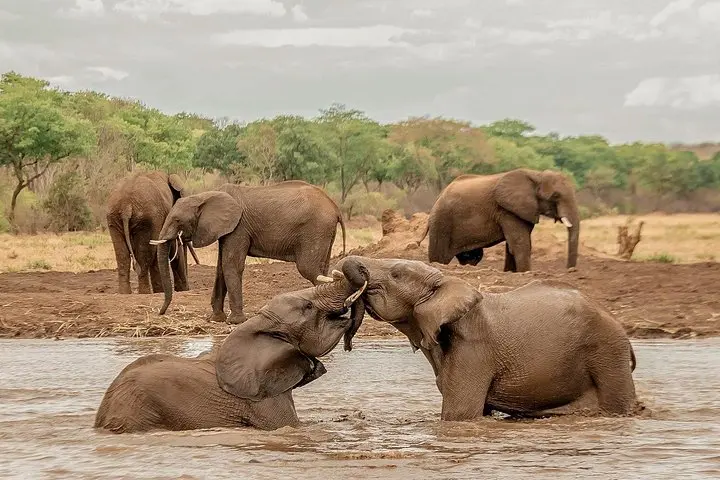
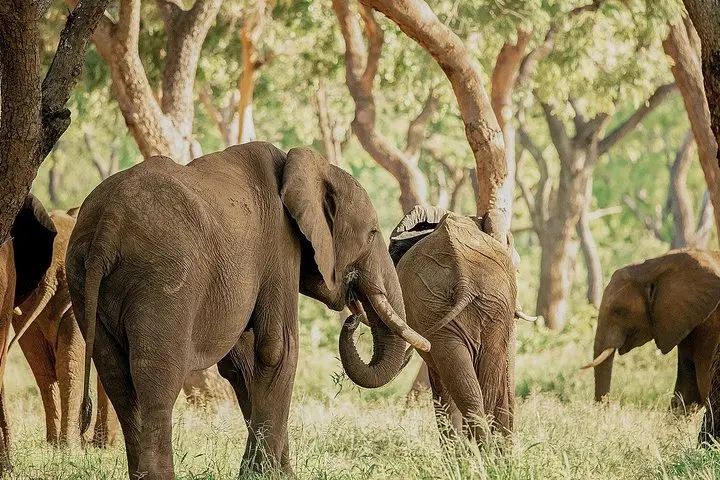
Expect interpretive talks about elephant cognition, social structure and sensory abilities, followed by close observation as animals bathe, mud-roll and forage. The environment is open and accessible — paths are level and the activity is advertised as wheelchair-friendly, but visibility varies with herd movement.
Practical guidance: arrive hydrated and sun-protected, keep voices low and movements deliberate, and follow carers’ instructions about touching and feeding. Photography is encouraged but avoid flash and sudden gestures. The best time for active displays is mid-morning when animals visit water. This is an educational, conservation-minded encounter rather than a ride or performance — plan for meaningful observation and hands-on learning within a controlled, ethical setting.
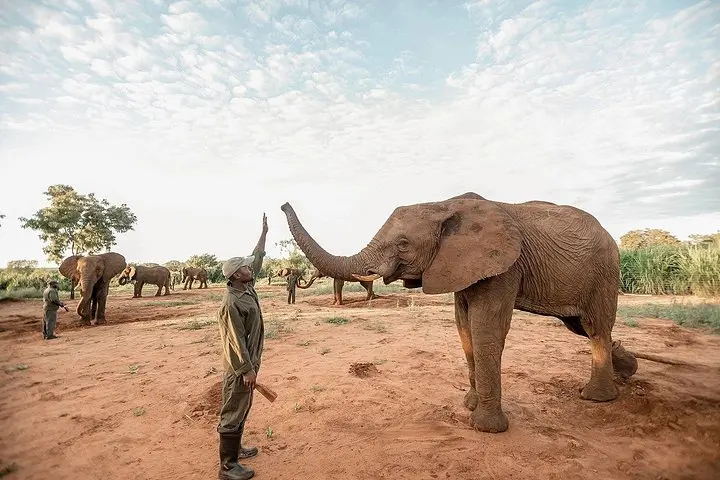
Carers manage proximity; visitors can often stand within a few meters for supervised touches, but exact distance depends on each elephant’s comfort.
Yes—activity notes indicate suitability for all fitness levels and wheelchair accessibility, though supervision and lap seating are required for infants.
Feeding policies vary; any feeding is controlled and supervised by carers to protect animal health and safety.
Most operators include private transport pickup or local taxis can reach the sanctuary in 10–20 minutes depending on your location in town.
Amulonga Travel and Tours operates guided outdoor trips and adventures with an emphasis on safety, stewardship, and memorable experiences.
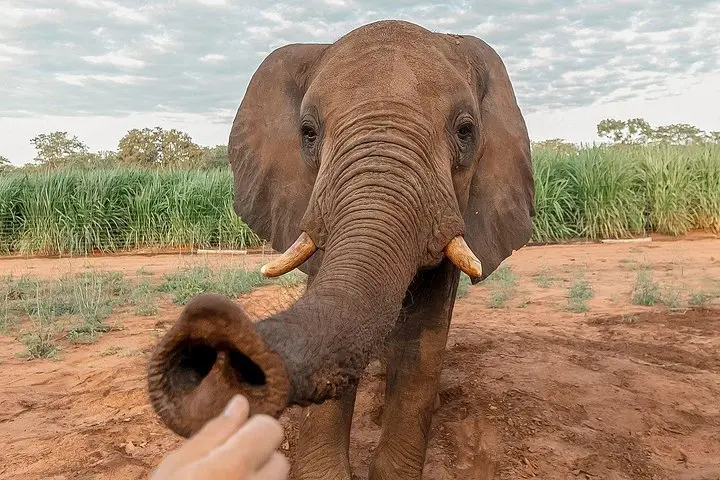
You step off the vehicle and the air thickens with the low, rumbling presence of giants. Dust lifts as an elephant approaches, trunk exploring the scent of your clothing and the fine lines of your shoe — a tactile greeting from a creature that reads the world by touch.
You step off the vehicle and the air thickens with the low, rumbling presence of giants. Dust lifts as an elephant approaches, trunk exploring the scent of your clothing and the fine lines of your shoe — a tactile greeting from a creature that reads the world by touch.
Set on the edge of the Zambezi floodplain near Victoria Falls, this hour-long encounter focuses on direct, respectful engagement with a resident herd under the guidance of experienced carers. The geology here is ancient basalt and sandstone scarps carved by the Zambezi; the elephants know the seasonal rhythms of waterholes and mopane woodland and move with purpose across them. Culturally, the experience ties into local conservation and community livelihoods: carers often combine traditional knowledge with modern husbandry.
Expect interpretive talks about elephant cognition, social structure and sensory abilities, followed by close observation as animals bathe, mud-roll and forage. The environment is open and accessible — paths are level and the activity is advertised as wheelchair-friendly, but visibility varies with herd movement.
Practical guidance: arrive hydrated and sun-protected, keep voices low and movements deliberate, and follow carers’ instructions about touching and feeding. Photography is encouraged but avoid flash and sudden gestures. The best time for active displays is mid-morning when animals visit water. This is an educational, conservation-minded encounter rather than a ride or performance — plan for meaningful observation and hands-on learning within a controlled, ethical setting.