THE ADVENTURE COLLECTIVE® · Independent discovery and booking for outdoor travel

Climb the dramatic cone of Momotombo with a local guide for a full-day challenge that pairs steep volcanic slopes with a secluded crater lagoon. Learn route specifics, safety measures and what to pack before you go.
Climb the dramatic cone of Momotombo with a local guide for a full-day challenge that pairs steep volcanic slopes with a secluded crater lagoon. Learn route specifics, safety measures and what to pack before you go.
You step out of the van and the cone of Momotombo fills the sky — a near-perfect triangle rising from the Pacific lowlands, its black flanks streaked with old lava and grass.
Verified experiences and guided adventures in the surrounding area.
Operated by Fun ''N'' Sun Travels · León, León Department
You step out of the van and the cone of Momotombo fills the sky — a near-perfect triangle rising from the Pacific lowlands, its black flanks streaked with old lava and grass.
The day begins on rough agricultural roads and quickly turns to volcanic scree and pumice; the guide sets the pace, pointing to the ragged rim and the small, glassy crater lagoon that waits lower on the flank. Momotombo is part of a string of Nicaraguan volcanoes along the Central American volcanic belt and has repeated historic eruptions that shaped the surrounding valley and local livelihoods.
Geologically young at roughly 4,500 years, Momotombo’s steep slopes are volcanic tuff, ash and hardened lava that channel wind and sun in different ways as you climb. Culturally, the volcano is visible from León and figures in regional folklore and maritime navigation — fishermen and farmers still read its smoke and light as signals.
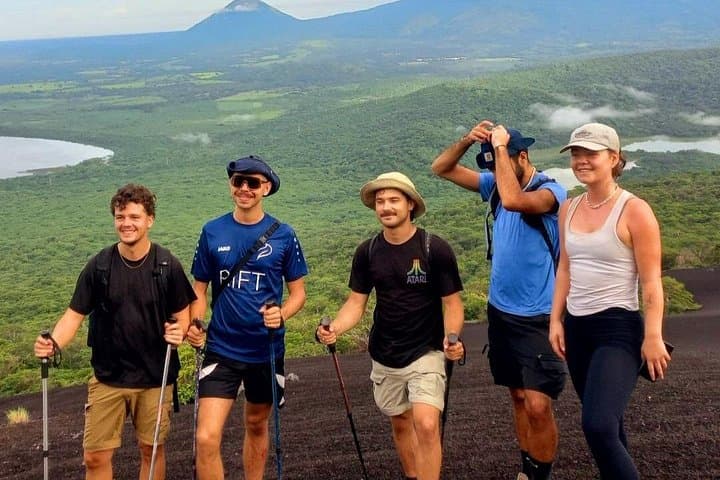
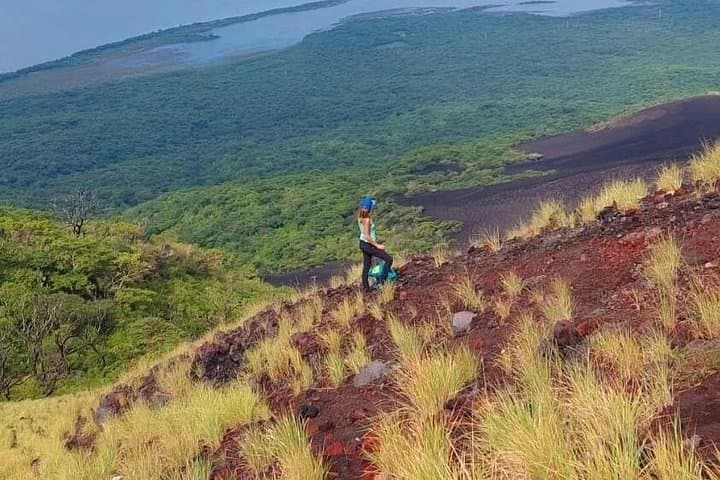
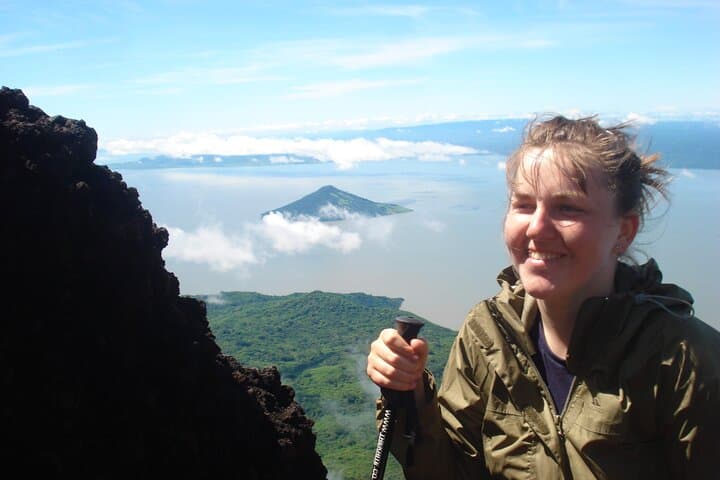
Expect steep, sustained ascents, loose scree that requires careful footing, and exposed sections where wind will push at you. The itinerary often includes photo stops at viewpoints for El Hoyo and Cerro Negro, a walk on the volcano’s flank, and time at a crater lagoon where a short swim or rest is possible.
Practical notes: travel light but bring layers, sturdy boots with traction, sun protection and at least 2–3 liters of water. The operator supplies walking sticks, a permit and a gas mask for ash where needed; guides choose routes based on fitness and volcanic conditions. Plan for 8–10 hours, high exertion, and variable weather — start early to avoid afternoon heat and potential wind on the ridge.
You should be in strong aerobic shape with experience on long steep hikes; guides may modify the route for less experienced hikers but summit attempts are challenging.
Yes, the tour operator handles the reserve permit and entrance fees, which are typically included or collected in advance—confirm at booking.
The operator provides gas masks if ash or fumes are present; follow your guide’s safety recommendations during active conditions.
Many itineraries include a stop at a small crater lagoon where a brief swim or wading is possible when conditions and water quality permit.
Fun ''N'' Sun Travels operates guided outdoor trips and adventures with an emphasis on safety, stewardship, and memorable experiences.
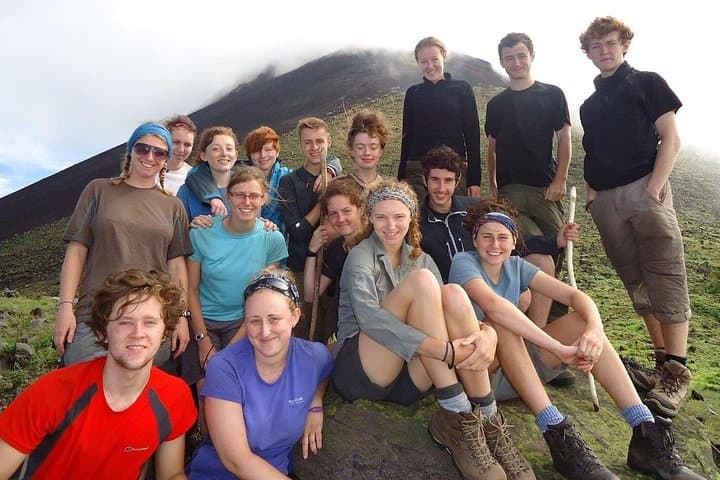
You step out of the van and the cone of Momotombo fills the sky — a near-perfect triangle rising from the Pacific lowlands, its black flanks streaked with old lava and grass.
You step out of the van and the cone of Momotombo fills the sky — a near-perfect triangle rising from the Pacific lowlands, its black flanks streaked with old lava and grass.
The day begins on rough agricultural roads and quickly turns to volcanic scree and pumice; the guide sets the pace, pointing to the ragged rim and the small, glassy crater lagoon that waits lower on the flank. Momotombo is part of a string of Nicaraguan volcanoes along the Central American volcanic belt and has repeated historic eruptions that shaped the surrounding valley and local livelihoods.
Geologically young at roughly 4,500 years, Momotombo’s steep slopes are volcanic tuff, ash and hardened lava that channel wind and sun in different ways as you climb. Culturally, the volcano is visible from León and figures in regional folklore and maritime navigation — fishermen and farmers still read its smoke and light as signals.
Expect steep, sustained ascents, loose scree that requires careful footing, and exposed sections where wind will push at you. The itinerary often includes photo stops at viewpoints for El Hoyo and Cerro Negro, a walk on the volcano’s flank, and time at a crater lagoon where a short swim or rest is possible.
Practical notes: travel light but bring layers, sturdy boots with traction, sun protection and at least 2–3 liters of water. The operator supplies walking sticks, a permit and a gas mask for ash where needed; guides choose routes based on fitness and volcanic conditions. Plan for 8–10 hours, high exertion, and variable weather — start early to avoid afternoon heat and potential wind on the ridge.