THE ADVENTURE COLLECTIVE® · Independent discovery and booking for outdoor travel

A full-day excursion from Nafplion to Monemvasia carries you onto a fortified rock where Byzantine churches and Venetian houses converge on sea-swept ramparts. Explore winding stone alleys, taste local olive oil, and take in panoramic views of the Myrtoan Sea.
A full-day excursion from Nafplion to Monemvasia carries you onto a fortified rock where Byzantine churches and Venetian houses converge on sea-swept ramparts. Explore winding stone alleys, taste local olive oil, and take in panoramic views of the Myrtoan Sea.
You step off the minibus and the rock rises—an island-town clenched to the sea like a fist holding a secret. Narrow alleys funnel you through shadowed stone, where Byzantine chapels, Venetian facades and Ottoman arches press close. The Myrtoan Sea spreads below, wind-torn and daring you to look farther.
Verified experiences and guided adventures in the surrounding area.
Operated by Unique Greek Tours · Monemvasia, Peloponnese
You step off the minibus and the rock rises—an island-town clenched to the sea like a fist holding a secret. Narrow alleys funnel you through shadowed stone, where Byzantine chapels, Venetian facades and Ottoman arches press close. The Myrtoan Sea spreads below, wind-torn and daring you to look farther.
Monemvasia’s origins go back to the early Byzantine period when residents fortified the promontory against raids; successive Venetian and Ottoman occupations left layered architecture and water cisterns that still shape circulation today. Geologically the rock is a limestone outcrop separated from the mainland by a reclaimed causeway; expect cobbles, narrow ramps and short flights of irregular stone steps. The main walking loop inside the castle-town runs roughly 1–2 km with intermittent pitches—plan for the equivalent of 80–150 m of cumulative elevation on uneven surfaces.
Local life is compact: family-run olive oil shops, small kafeneia and a handful of guesthouses. Taste local liqueurs and olives where merchants have traded for generations, and watch fishermen haul lines where the current meets the rock.
Practical guidance: wear sturdy walking shoes with good soles and allow a full day (transport plus 2–3 hours inside the castle). Bring water, sun protection and a light layer for sea breezes. The town’s alleys are pedestrian only and uneven—move deliberately and allow time for photography and brief pauses at the ramparts. If you’re planning a hotel pickup from Nafplion, confirm your pickup point and travel time; the route is scenic but slower than the map implies.
The coach drive is roughly 2–2.5 hours each way depending on traffic and stops; the full tour is scheduled as a day trip (around 8 hours).
Many alleys include steep, uneven stone steps—strollers can be used with difficulty on flatter sections, but the town is largely not wheelchair accessible.
The tour includes a tasting of local olive oil, olives and liqueurs, but full meals and additional purchases are at your expense.
Yes—hotel pickup in Nafplion is offered; confirm your exact pickup location and time when booking.
Unique Greek Tours operates guided outdoor trips and adventures with an emphasis on safety, stewardship, and memorable experiences.
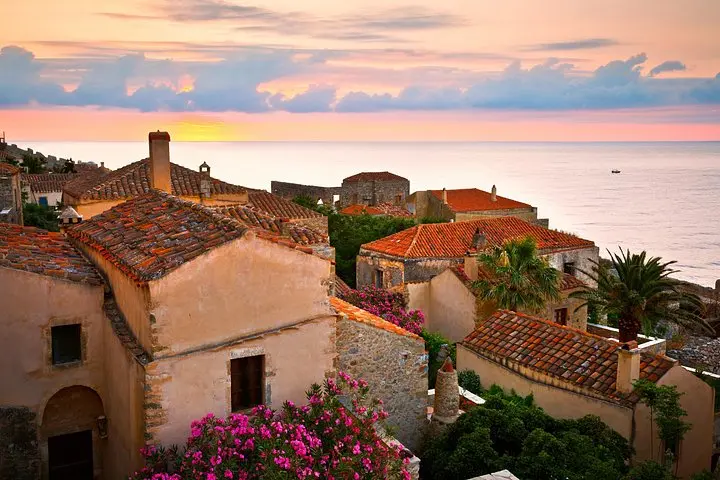
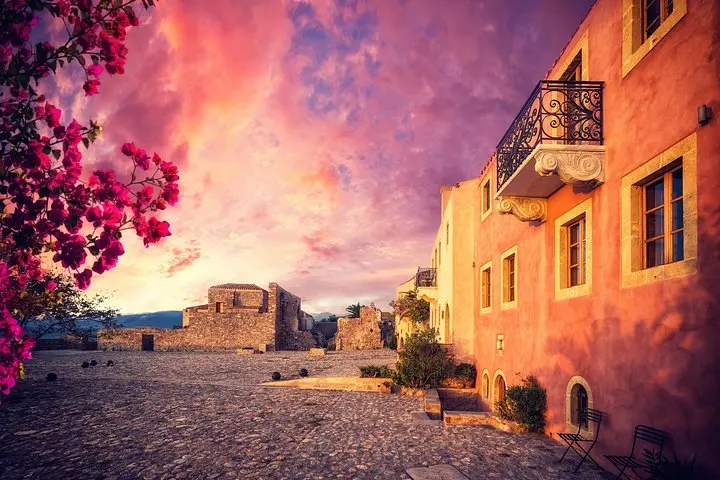
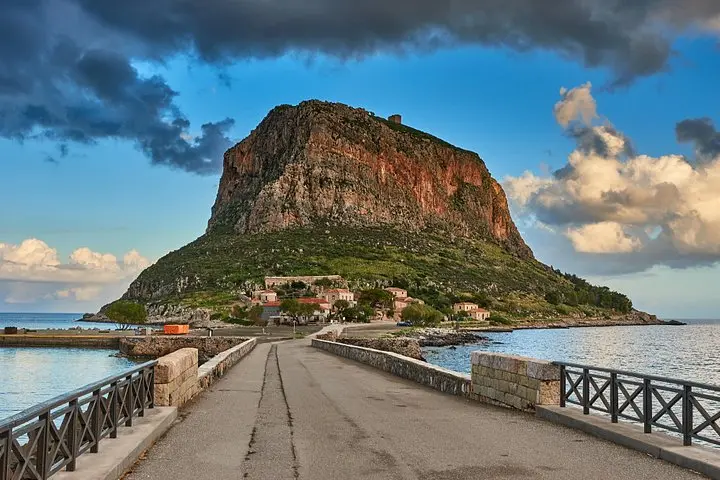
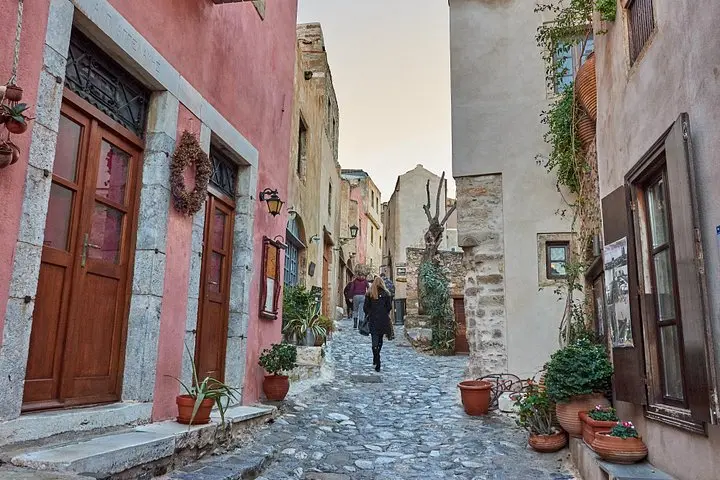
You step off the minibus and the rock rises—an island-town clenched to the sea like a fist holding a secret. Narrow alleys funnel you through shadowed stone, where Byzantine chapels, Venetian facades and Ottoman arches press close. The Myrtoan Sea spreads below, wind-torn and daring you to look farther.
You step off the minibus and the rock rises—an island-town clenched to the sea like a fist holding a secret. Narrow alleys funnel you through shadowed stone, where Byzantine chapels, Venetian facades and Ottoman arches press close. The Myrtoan Sea spreads below, wind-torn and daring you to look farther.
Monemvasia’s origins go back to the early Byzantine period when residents fortified the promontory against raids; successive Venetian and Ottoman occupations left layered architecture and water cisterns that still shape circulation today. Geologically the rock is a limestone outcrop separated from the mainland by a reclaimed causeway; expect cobbles, narrow ramps and short flights of irregular stone steps. The main walking loop inside the castle-town runs roughly 1–2 km with intermittent pitches—plan for the equivalent of 80–150 m of cumulative elevation on uneven surfaces.
Local life is compact: family-run olive oil shops, small kafeneia and a handful of guesthouses. Taste local liqueurs and olives where merchants have traded for generations, and watch fishermen haul lines where the current meets the rock.
Practical guidance: wear sturdy walking shoes with good soles and allow a full day (transport plus 2–3 hours inside the castle). Bring water, sun protection and a light layer for sea breezes. The town’s alleys are pedestrian only and uneven—move deliberately and allow time for photography and brief pauses at the ramparts. If you’re planning a hotel pickup from Nafplion, confirm your pickup point and travel time; the route is scenic but slower than the map implies.