THE ADVENTURE COLLECTIVE® · Independent discovery and booking for outdoor travel

A half-day desert safari to Mons Claudianus takes you to a Roman quarry of hard granite and ruined camps from which imperial columns were cut. Expect sun, packed sand, and a short guided walk among workshops, rooms and a small temple.
A half-day desert safari to Mons Claudianus takes you to a Roman quarry of hard granite and ruined camps from which imperial columns were cut. Expect sun, packed sand, and a short guided walk among workshops, rooms and a small temple.
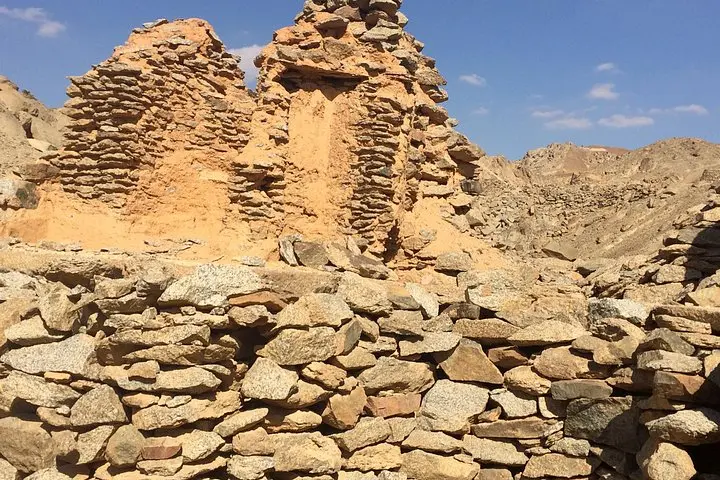
Sand hissed under the tires as the van cut away from the Red Sea plain and into the raw, fluted folds of Egypt’s Eastern Desert. Ahead, a low ridge opens onto ruined stonework—rows of rooms, collapsed towers and the stubby remains of temples—quiet evidence of a workplace where men hewed imperial columns from living rock.
Verified experiences and guided adventures in the surrounding area.
Operated by Sjptour.com · Hurghada, Red Sea Governorate
Sand hissed under the tires as the van cut away from the Red Sea plain and into the raw, fluted folds of Egypt’s Eastern Desert. Ahead, a low ridge opens onto ruined stonework—rows of rooms, collapsed towers and the stubby remains of temples—quiet evidence of a workplace where men hewed imperial columns from living rock.
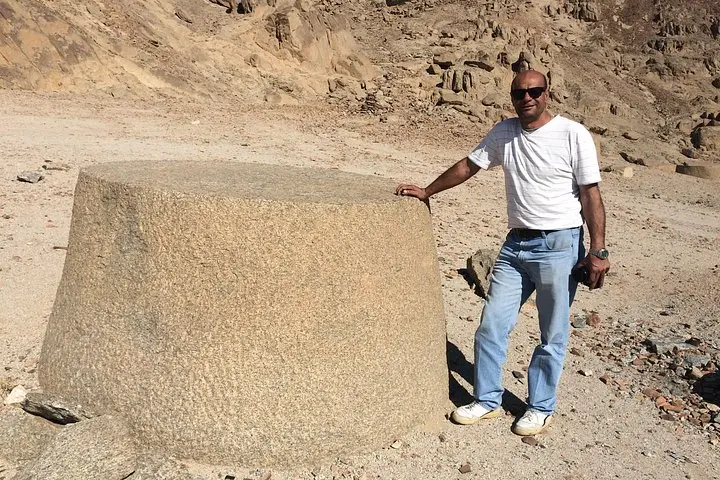
Mons Claudianus was a Roman imperial quarry and logistical hub in the desert, the source of hard red and grey granites that built temples, monuments and columns across the empire. Geologically the site sits on Precambrian crystalline rock; the stone here takes a clean, polished finish and resisted centuries of weathering, which is why Roman engineers dragged transport roads and staging camps far from the Nile.
Culturally the remains mix practical camp architecture with formal religious spaces—shrines to Isis and carved inscriptions—reminding visitors that quarry life combined labor, faith and military oversight.
Expect a mostly dry, sun-exposed walk of roughly 1–2 miles across packed sand and fractured bedrock; guides will point out working platforms, splitting marks and reuse of stone. Practical planning: bring 2–3 liters of water, sun protection and closed-toe hiking shoes. The trip is usually a private transfer of 5–7 hours from Hurghada (or nearby Safaga), with 1–2 hours spent exploring ruins on foot.
Respect fragile masonry—avoid climbing on columns—and leave no trace: the desert preserves inscriptions and petroglyphs that are easily damaged. With a little preparation, Mons Claudianus is a compact, surprisingly evocative slice of Roman engineering in an uncompromising landscape.
The guided on-site exploration is typically 1–2 hours, covering about 1–2 miles across mostly flat but uneven ground.
The tour is listed as accessible, but some surfaces are rough and require care—contact the operator about specific mobility needs before booking.
Visits are usually organized through licensed tour operators who handle permits and access; independent access into the desert is not recommended.
Shade is limited to scattered ruined shelters; there are no public facilities on-site, so plan accordingly with water and restroom stops in Hurghada or your pickup location.
Sjptour.com operates guided outdoor trips and adventures with an emphasis on safety, stewardship, and memorable experiences.
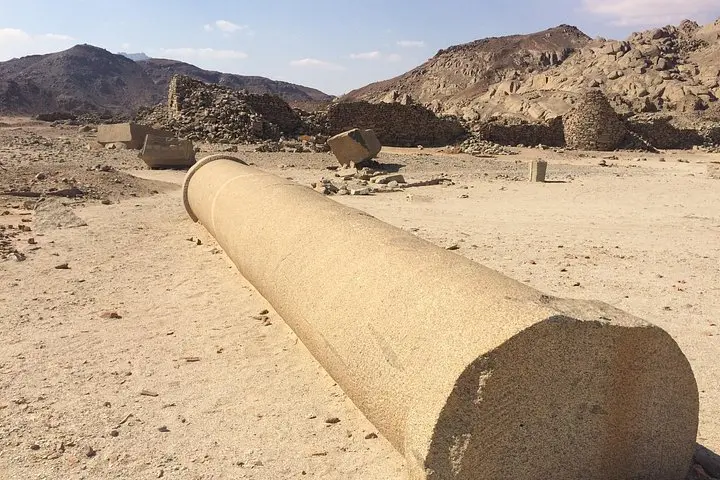
Sand hissed under the tires as the van cut away from the Red Sea plain and into the raw, fluted folds of Egypt’s Eastern Desert. Ahead, a low ridge opens onto ruined stonework—rows of rooms, collapsed towers and the stubby remains of temples—quiet evidence of a workplace where men hewed imperial columns from living rock.
Sand hissed under the tires as the van cut away from the Red Sea plain and into the raw, fluted folds of Egypt’s Eastern Desert. Ahead, a low ridge opens onto ruined stonework—rows of rooms, collapsed towers and the stubby remains of temples—quiet evidence of a workplace where men hewed imperial columns from living rock.
Mons Claudianus was a Roman imperial quarry and logistical hub in the desert, the source of hard red and grey granites that built temples, monuments and columns across the empire. Geologically the site sits on Precambrian crystalline rock; the stone here takes a clean, polished finish and resisted centuries of weathering, which is why Roman engineers dragged transport roads and staging camps far from the Nile.
Culturally the remains mix practical camp architecture with formal religious spaces—shrines to Isis and carved inscriptions—reminding visitors that quarry life combined labor, faith and military oversight.
Expect a mostly dry, sun-exposed walk of roughly 1–2 miles across packed sand and fractured bedrock; guides will point out working platforms, splitting marks and reuse of stone. Practical planning: bring 2–3 liters of water, sun protection and closed-toe hiking shoes. The trip is usually a private transfer of 5–7 hours from Hurghada (or nearby Safaga), with 1–2 hours spent exploring ruins on foot.
Respect fragile masonry—avoid climbing on columns—and leave no trace: the desert preserves inscriptions and petroglyphs that are easily damaged. With a little preparation, Mons Claudianus is a compact, surprisingly evocative slice of Roman engineering in an uncompromising landscape.