THE ADVENTURE COLLECTIVE® · Independent discovery and booking for outdoor travel

Visit Mont‑Saint‑Michel on a private day tour from Bayeux or Caen to walk its medieval lanes, climb to the abbey and watch the tides reshape the bay. This practical guide explains what to expect — history, terrain, and how to plan your visit.
Visit Mont‑Saint‑Michel on a private day tour from Bayeux or Caen to walk its medieval lanes, climb to the abbey and watch the tides reshape the bay. This practical guide explains what to expect — history, terrain, and how to plan your visit.
The causeway appears first as a thin line across the bay, then the island rises — stone ramparts, a clustered village and the abbey crown stepping up from the sands. On a private tour from Bayeux or Caen you arrive with the tide in mind: the sea pushes the edges of the bay close, then withdraws to reveal the vast, wind-swept flats that frame the mount.
Verified experiences and guided adventures in the surrounding area.
Operated by ACSM-Tours · Le Mont-Saint-Michel, Manche (Normandy)
The causeway appears first as a thin line across the bay, then the island rises — stone ramparts, a clustered village and the abbey crown stepping up from the sands. On a private tour from Bayeux or Caen you arrive with the tide in mind: the sea pushes the edges of the bay close, then withdraws to reveal the vast, wind-swept flats that frame the mount.
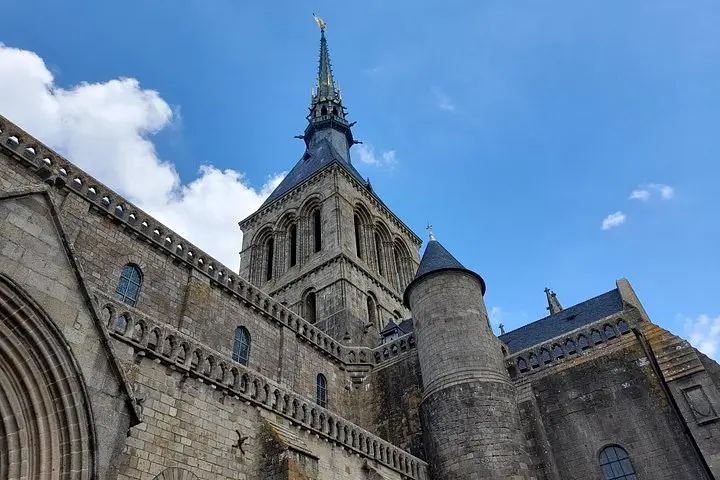
Mont-Saint-Michel’s story begins in 708 when Bishop Aubert established a sanctuary after a vision of the archangel Michael. Over the next millennium romanesque crypts gave way to soaring Gothic vaults as Benedictine monks transformed the site into a pilgrimage magnet. Military engineers later fortified it; its isolation helped it withstand sieges during the Hundred Years’ War and, famously, it was used as a prison after the Revolution until mid-19th century reforms restored its status.
Geologically the bay is defined by fast-moving tides and fine silty sands — crossing them was historically hazardous and the landscape continues to shift with human-engineered causeways and tidal restoration projects.
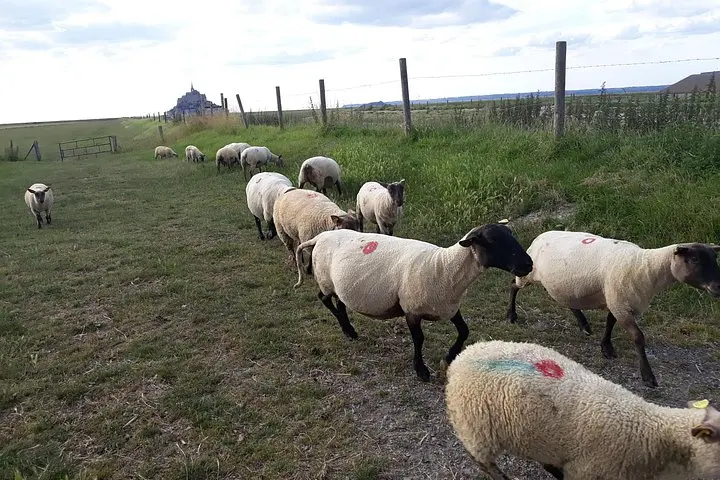
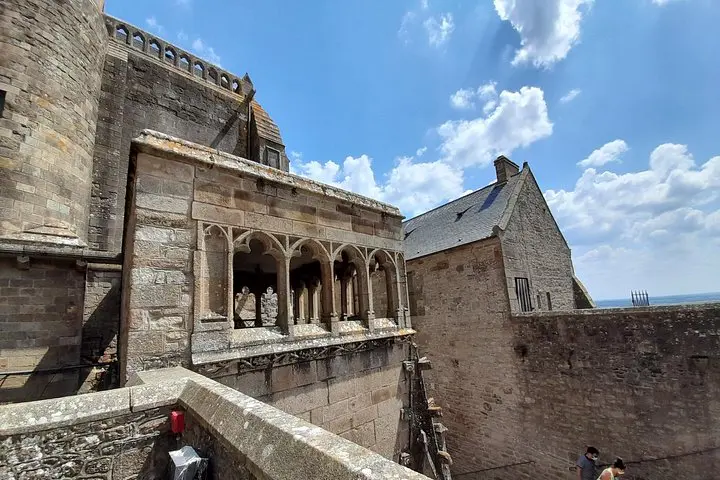
On the ground expect narrow medieval streets, steep stone steps up to the abbey, interpretive exhibits, and dramatic viewpoints overlooking the marshes. Practicalities matter: tide charts, comfortable shoes, and a plan for the abbey visit. Local specialties — soufflé omelet, Normandy lamb, and mussels — are good reasons to linger in a village café. A private transfer from Bayeux or Caen compresses logistics into a single day, giving time to learn architecture, legends, and how nature still shapes this island’s future.
Abbey admission is not always included—confirm with the operator. If entry is included, a scheduled timeslot may be provided; otherwise you can purchase tickets onsite subject to availability.
Drive times are roughly 1.5–2 hours from Caen and about 1.5 hours from Bayeux depending on traffic; private transfers in the tour typically include round-trip transport.
The village and abbey have steep, uneven steps and narrow lanes; access is limited for those with reduced mobility—contact the operator for specific accessibility options.
Walking the bay is possible but can be dangerous because of quicksand and fast tides; join a licensed guide for any bay crossing and never go alone.
ACSM-Tours operates guided outdoor trips and adventures with an emphasis on safety, stewardship, and memorable experiences.
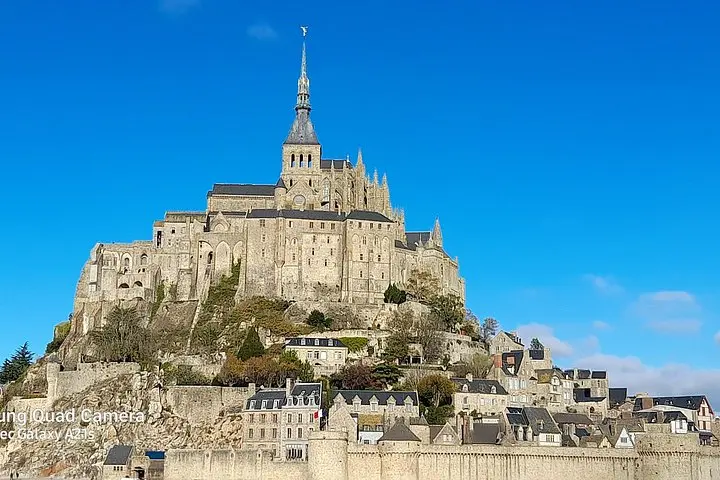
The causeway appears first as a thin line across the bay, then the island rises — stone ramparts, a clustered village and the abbey crown stepping up from the sands. On a private tour from Bayeux or Caen you arrive with the tide in mind: the sea pushes the edges of the bay close, then withdraws to reveal the vast, wind-swept flats that frame the mount.
The causeway appears first as a thin line across the bay, then the island rises — stone ramparts, a clustered village and the abbey crown stepping up from the sands. On a private tour from Bayeux or Caen you arrive with the tide in mind: the sea pushes the edges of the bay close, then withdraws to reveal the vast, wind-swept flats that frame the mount.
Mont-Saint-Michel’s story begins in 708 when Bishop Aubert established a sanctuary after a vision of the archangel Michael. Over the next millennium romanesque crypts gave way to soaring Gothic vaults as Benedictine monks transformed the site into a pilgrimage magnet. Military engineers later fortified it; its isolation helped it withstand sieges during the Hundred Years’ War and, famously, it was used as a prison after the Revolution until mid-19th century reforms restored its status.
Geologically the bay is defined by fast-moving tides and fine silty sands — crossing them was historically hazardous and the landscape continues to shift with human-engineered causeways and tidal restoration projects.
On the ground expect narrow medieval streets, steep stone steps up to the abbey, interpretive exhibits, and dramatic viewpoints overlooking the marshes. Practicalities matter: tide charts, comfortable shoes, and a plan for the abbey visit. Local specialties — soufflé omelet, Normandy lamb, and mussels — are good reasons to linger in a village café. A private transfer from Bayeux or Caen compresses logistics into a single day, giving time to learn architecture, legends, and how nature still shapes this island’s future.