THE ADVENTURE COLLECTIVE® · Independent discovery and booking for outdoor travel

Cross a tidal causeway to a medieval abbey, walk Saint‑Malo’s corsair ramparts, and taste Cancale oysters on a compact 3‑day coastal loop from Paris. This tour pairs dramatic tides with Breton history and practical coastal travel tips.
Cross a tidal causeway to a medieval abbey, walk Saint‑Malo’s corsair ramparts, and taste Cancale oysters on a compact 3‑day coastal loop from Paris. This tour pairs dramatic tides with Breton history and practical coastal travel tips.
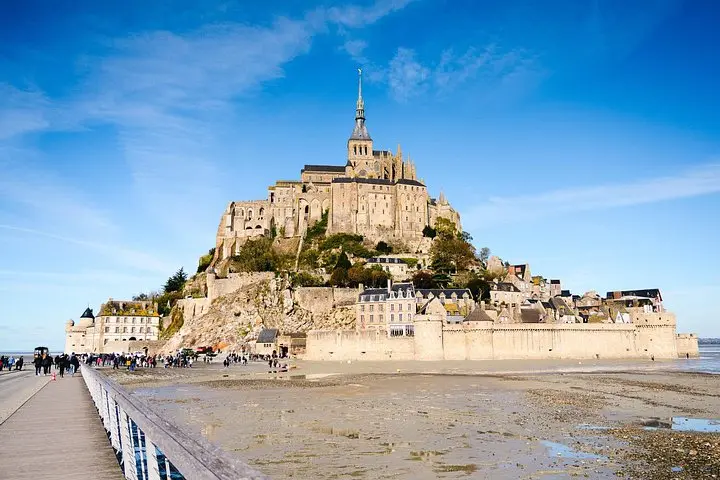
A gray dawn on the Manche coast reveals Mont‑Saint‑Michel rising like a stone ship from the tidal flats; gulls argue with the wind and salt marshes push a briny perfume inland. Travelers approach by road, then cross the modern causeway to a medieval abbey that still looks as if it could slip beneath the incoming tide.
Verified experiences and guided adventures in the surrounding area.
Operated by Come and Go · Le Mont-Saint-Michel, Normandy
A gray dawn on the Manche coast reveals Mont‑Saint‑Michel rising like a stone ship from the tidal flats; gulls argue with the wind and salt marshes push a briny perfume inland. Travelers approach by road, then cross the modern causeway to a medieval abbey that still looks as if it could slip beneath the incoming tide.
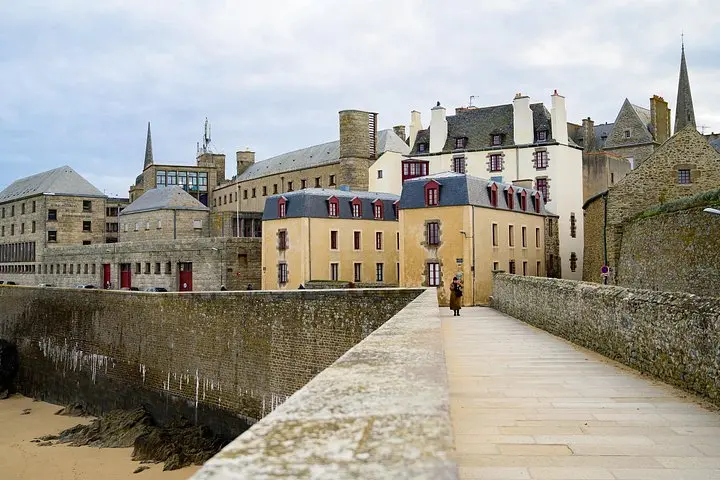
The island’s abbey has occupied this granite outcrop since the 8th century, when a local bishop claimed the archangel Michael instructed him to build a church; fortifications later held firm through the Hundred Years’ War. Saint‑Malo across the bay tells a different story — a fortified port of corsairs and explorers like Jacques Cartier — while nearby Cancale remains Brittany’s oyster capital, where shucked shells glint on wooden shacks.
Geologically the bay is shallow and wide, the tidal range among Europe’s largest; sand and silt move fast, and channels shift with each season. Culturally the area is Breton-speaking country with a fishing and shellfish tradition that still shapes menus and markets.
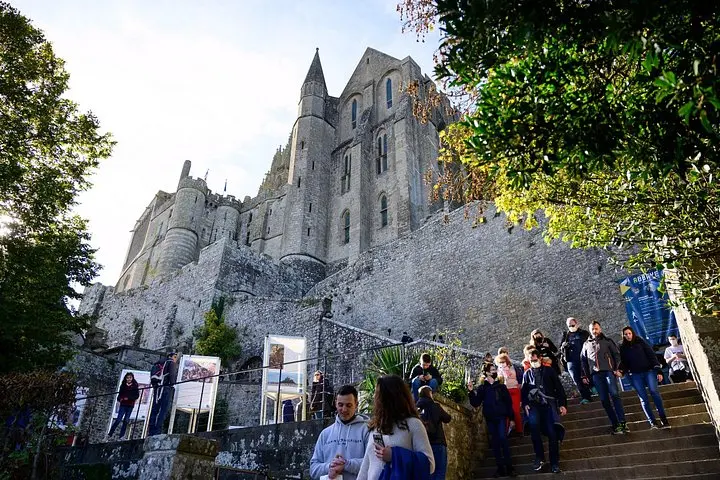
For practical travel: check the tide table and schedule time in Mont‑Saint‑Michel’s narrow streets outside peak hours, wear sturdy shoes for cobbles and hundreds of abbey steps, and bring layers — wind and spray are constant. Allow a full day on the island and an afternoon for Saint‑Malo’s ramparts; plan one meal in Cancale for oysters at low tide. Expect moderate walking, historic architecture, and dramatic coastal weather — the sea here is never passive and will shape your visit.
Yes — the abbey is open to visitors with ticketed entry; expect steep staircases and narrow cloisters, and check opening times seasonally.
The modern causeway is designed for regular access, but historically access was cut by tides; always check tide forecasts before planning walks on surrounding flats.
By road it’s approximately 3.5–4 hours one way; many tours provide pickup or coach transport to simplify logistics.
Yes for school‑age children who can manage stairs and walking; infants may be less comfortable with long drives and cobbled streets.
Come and Go operates guided outdoor trips and adventures with an emphasis on safety, stewardship, and memorable experiences.
A gray dawn on the Manche coast reveals Mont‑Saint‑Michel rising like a stone ship from the tidal flats; gulls argue with the wind and salt marshes push a briny perfume inland. Travelers approach by road, then cross the modern causeway to a medieval abbey that still looks as if it could slip beneath the incoming tide.
A gray dawn on the Manche coast reveals Mont‑Saint‑Michel rising like a stone ship from the tidal flats; gulls argue with the wind and salt marshes push a briny perfume inland. Travelers approach by road, then cross the modern causeway to a medieval abbey that still looks as if it could slip beneath the incoming tide.
The island’s abbey has occupied this granite outcrop since the 8th century, when a local bishop claimed the archangel Michael instructed him to build a church; fortifications later held firm through the Hundred Years’ War. Saint‑Malo across the bay tells a different story — a fortified port of corsairs and explorers like Jacques Cartier — while nearby Cancale remains Brittany’s oyster capital, where shucked shells glint on wooden shacks.
Geologically the bay is shallow and wide, the tidal range among Europe’s largest; sand and silt move fast, and channels shift with each season. Culturally the area is Breton-speaking country with a fishing and shellfish tradition that still shapes menus and markets.
For practical travel: check the tide table and schedule time in Mont‑Saint‑Michel’s narrow streets outside peak hours, wear sturdy shoes for cobbles and hundreds of abbey steps, and bring layers — wind and spray are constant. Allow a full day on the island and an afternoon for Saint‑Malo’s ramparts; plan one meal in Cancale for oysters at low tide. Expect moderate walking, historic architecture, and dramatic coastal weather — the sea here is never passive and will shape your visit.