THE ADVENTURE COLLECTIVE® · Independent discovery and booking for outdoor travel

A full-day road ride from Follina into the Prosecco hills and up Monte Grappa, this tour mixes sustained climbing, war-era history at the Sacrario, and sweeping summit views. Plan for 5–6 hours, technical descents, and rewarding espresso stops in Asolo.
A full-day road ride from Follina into the Prosecco hills and up Monte Grappa, this tour mixes sustained climbing, war-era history at the Sacrario, and sweeping summit views. Plan for 5–6 hours, technical descents, and rewarding espresso stops in Asolo.
You roll out of Follina with gravel under your tires and the vineyards of Valdobbiadene folding away behind you. The road narrows, the air smells of cut grass and fermenting grapes, and the prosecco lanes push you toward the Piave river crossing. Towns—Possagno with its Canova sculptures, the quiet square at Asolo—appear like bookmarks between climbs until Romano d’Ezzelino signals the start of the real climb: Monte Grappa.
Verified experiences and guided adventures in the surrounding area.
Operated by ITALY CYCLING TOUR · Follina, Veneto
You roll out of Follina with gravel under your tires and the vineyards of Valdobbiadene folding away behind you. The road narrows, the air smells of cut grass and fermenting grapes, and the prosecco lanes push you toward the Piave river crossing. Towns—Possagno with its Canova sculptures, the quiet square at Asolo—appear like bookmarks between climbs until Romano d’Ezzelino signals the start of the real climb: Monte Grappa.
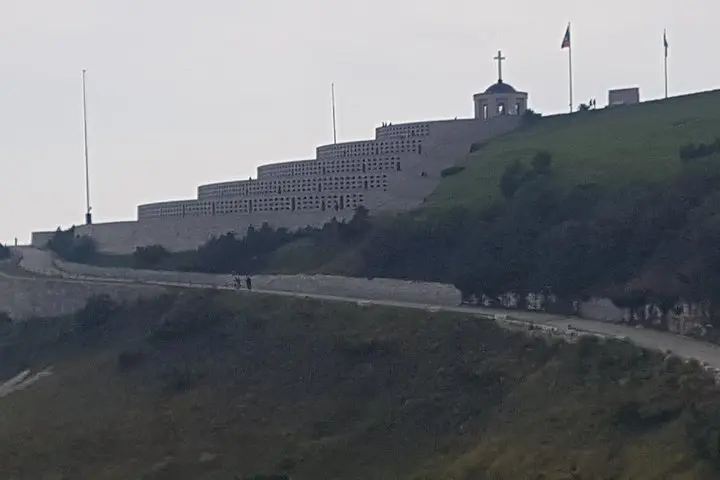
The massif itself is pale limestone—fossil-rich karst carved by glaciers and water—rising abruptly from the plain. The route threads war-era monuments and open ridgelines; the Sacrario del Monte Grappa, a First World War ossuary, anchors the mountain’s modern memory. Local culture here mixes mountain grit with vineyard hospitality: coffee stops in Asolo and roadside trattorie punctuate hard pedals with real food and conversation.
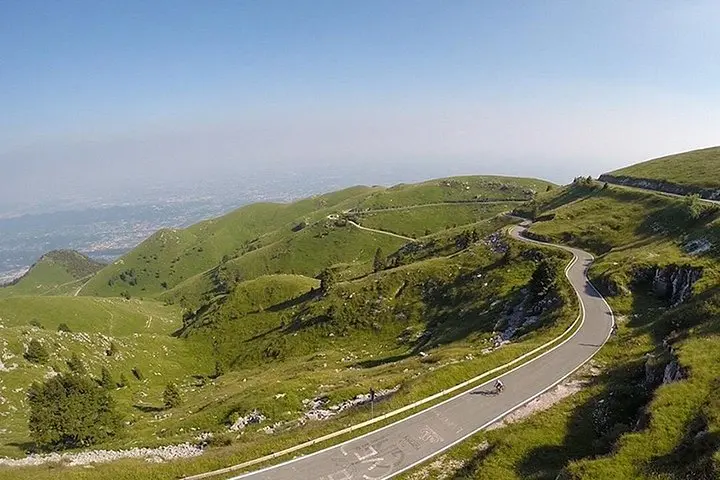
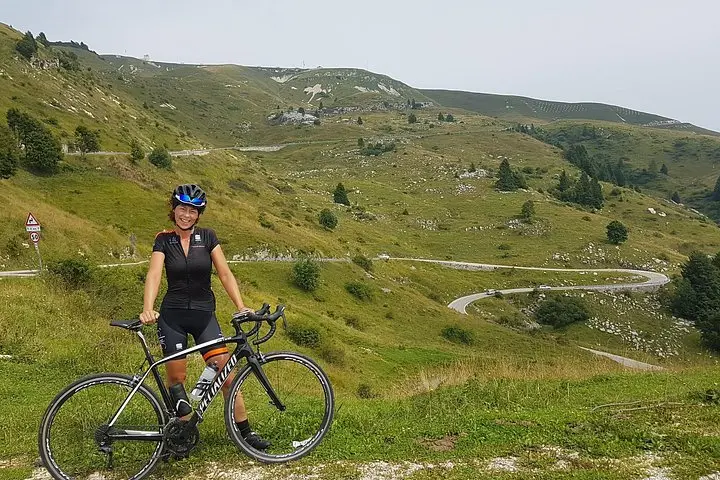
Expect a demanding ascent: sustained gradients, exposed switchbacks, and a summit that rewards effort with broad views over Veneto and the Dolomites on a clear day. Descents through Semonzo and Colbertaldo require confident braking and line choice; the roads can be narrow and occasionally patched.
Practical guidance: plan for a 5–6 hour outing covering roughly 70–90 km with 1,200–1,500 m of climbing, depending on exact route. Bring layered clothing, a compact pump and spare tube, and hydrate—water points are available in towns but carry at least 1.5–2 L. Start early for cooler temps and lighter traffic; if you’re unsure about technical descents, consider riding with the guide and opting for conservative lines. This ride pairs endurance with scenery and history—expect effort, but also the payoff of wide, commanding views and small-town Italian hospitality.
The tour lasts about 5–6 hours, typically covering 70–90 km with roughly 1,200–1,500 m of elevation gain depending on the route.
The climb is demanding and better suited to riders with endurance training; novice cyclists should consider shorter options or an e-bike if available.
The tour includes a coffee stop and access to village cafés, but you should carry water and energy food for the climb between towns.
The itinerary visits the Sacrario del Monte Grappa, a major First World War memorial, plus scenic historic stops like Asolo and Possagno.
ITALY CYCLING TOUR operates guided outdoor trips and adventures with an emphasis on safety, stewardship, and memorable experiences.
You roll out of Follina with gravel under your tires and the vineyards of Valdobbiadene folding away behind you. The road narrows, the air smells of cut grass and fermenting grapes, and the prosecco lanes push you toward the Piave river crossing. Towns—Possagno with its Canova sculptures, the quiet square at Asolo—appear like bookmarks between climbs until Romano d’Ezzelino signals the start of the real climb: Monte Grappa.
You roll out of Follina with gravel under your tires and the vineyards of Valdobbiadene folding away behind you. The road narrows, the air smells of cut grass and fermenting grapes, and the prosecco lanes push you toward the Piave river crossing. Towns—Possagno with its Canova sculptures, the quiet square at Asolo—appear like bookmarks between climbs until Romano d’Ezzelino signals the start of the real climb: Monte Grappa.
The massif itself is pale limestone—fossil-rich karst carved by glaciers and water—rising abruptly from the plain. The route threads war-era monuments and open ridgelines; the Sacrario del Monte Grappa, a First World War ossuary, anchors the mountain’s modern memory. Local culture here mixes mountain grit with vineyard hospitality: coffee stops in Asolo and roadside trattorie punctuate hard pedals with real food and conversation.
Expect a demanding ascent: sustained gradients, exposed switchbacks, and a summit that rewards effort with broad views over Veneto and the Dolomites on a clear day. Descents through Semonzo and Colbertaldo require confident braking and line choice; the roads can be narrow and occasionally patched.
Practical guidance: plan for a 5–6 hour outing covering roughly 70–90 km with 1,200–1,500 m of climbing, depending on exact route. Bring layered clothing, a compact pump and spare tube, and hydrate—water points are available in towns but carry at least 1.5–2 L. Start early for cooler temps and lighter traffic; if you’re unsure about technical descents, consider riding with the guide and opting for conservative lines. This ride pairs endurance with scenery and history—expect effort, but also the payoff of wide, commanding views and small-town Italian hospitality.