THE ADVENTURE COLLECTIVE® · Independent discovery and booking for outdoor travel

Explore Monterrey at your own speed with a private, self-guided audio tour that highlights Macroplaza, Parque Fundidora and Santa Lucía. Flexible and accessible, the tour pairs mapped locations with narrative stories about the city’s industrial and cultural evolution.
Explore Monterrey at your own speed with a private, self-guided audio tour that highlights Macroplaza, Parque Fundidora and Santa Lucía. Flexible and accessible, the tour pairs mapped locations with narrative stories about the city’s industrial and cultural evolution.
You step out onto a broad stone square where traffic hums a respectful distance away and Cerro de la Silla watches the city like an unfinished sculpture. The Macroplaza opens like a map underfoot—forty hectares of monuments, fountains and plazas—and the audio in your ears begins to speak, not as a guide lecturing, but as a local friend pointing out details you would otherwise miss.
Verified experiences and guided adventures in the surrounding area.
Operated by Uvamai Niche Tourism · Monterrey, Nuevo León
You step out onto a broad stone square where traffic hums a respectful distance away and Cerro de la Silla watches the city like an unfinished sculpture. The Macroplaza opens like a map underfoot—forty hectares of monuments, fountains and plazas—and the audio in your ears begins to speak, not as a guide lecturing, but as a local friend pointing out details you would otherwise miss.
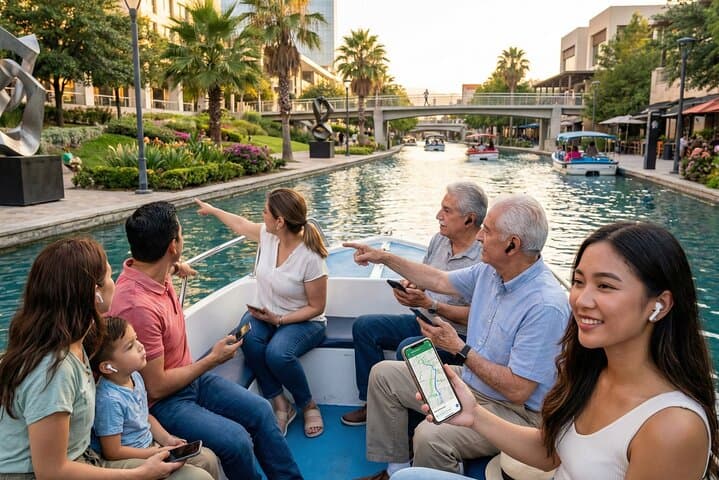
Monterrey grew from a colonial outpost into Mexico’s steel heart; the city’s geology—limestone ridges of the Sierra Madre Oriental—shaped both its skyline and its industry. Walk the boulevard toward Parque Fundidora and you’ll feel the industrial bones repurposed into green space and cultural venues. Follow the artificial waterway of Santa Lucía and the canal seems to dare you to keep walking, revealing sculptures, plazas and the quieter history of labor and innovation that built Nuevo León.
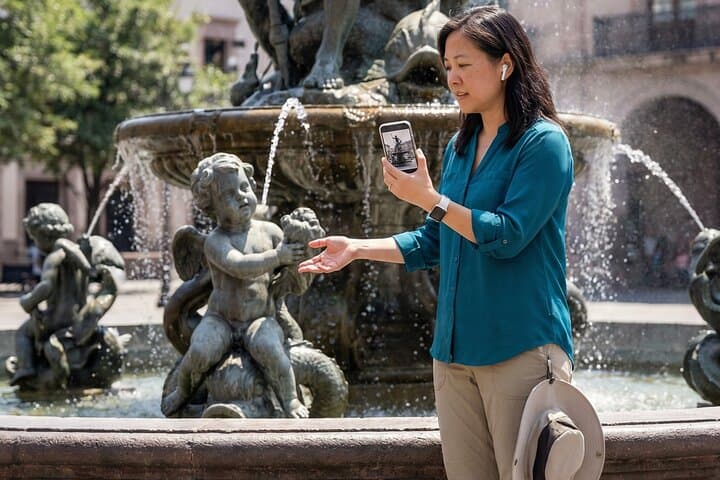
Cultural life here mixes religious devotion with modernist ambition: baroque cathedrals stand opposite mid-century towers that once housed corporate power. The audio tour highlights hidden iconography on fountains, the engineering behind landmark towers, and neighborhood stories in Barrio Antiguo—the kind of local knowledge usually shared over coffee.
Practical edge: plan 3–9 hours depending on stops. Bring comfortable shoes, a charged smartphone and headphones; the guide is designed to be flexible—start and stop as needed and split the route across days. Public transport and wheelchair-accessible points are available, and the audio comes with a mapped itinerary so you never lose direction. This is a walking itinerary for curious travelers who want control over pace and depth without missing the city’s layered history.
You receive private links to a SoundCloud playlist and a Google My Maps itinerary before your start date; open them in your mobile browser to use.
Many central sites and public spaces are accessible, and the provider notes wheelchair access—check specific stops and plan alternative routes if needed.
Yes. Links remain valid for up to six days so you can pause the itinerary and resume later at your convenience.
No guided staff are required; most attractions are public views, though some museums or monuments may have separate admission and hours—verify before visiting.
Uvamai Niche Tourism operates guided outdoor trips and adventures with an emphasis on safety, stewardship, and memorable experiences.

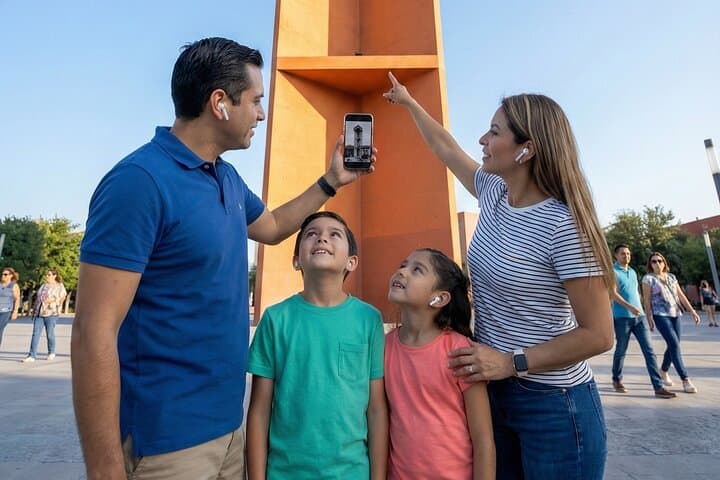
You step out onto a broad stone square where traffic hums a respectful distance away and Cerro de la Silla watches the city like an unfinished sculpture. The Macroplaza opens like a map underfoot—forty hectares of monuments, fountains and plazas—and the audio in your ears begins to speak, not as a guide lecturing, but as a local friend pointing out details you would otherwise miss.
You step out onto a broad stone square where traffic hums a respectful distance away and Cerro de la Silla watches the city like an unfinished sculpture. The Macroplaza opens like a map underfoot—forty hectares of monuments, fountains and plazas—and the audio in your ears begins to speak, not as a guide lecturing, but as a local friend pointing out details you would otherwise miss.
Monterrey grew from a colonial outpost into Mexico’s steel heart; the city’s geology—limestone ridges of the Sierra Madre Oriental—shaped both its skyline and its industry. Walk the boulevard toward Parque Fundidora and you’ll feel the industrial bones repurposed into green space and cultural venues. Follow the artificial waterway of Santa Lucía and the canal seems to dare you to keep walking, revealing sculptures, plazas and the quieter history of labor and innovation that built Nuevo León.
Cultural life here mixes religious devotion with modernist ambition: baroque cathedrals stand opposite mid-century towers that once housed corporate power. The audio tour highlights hidden iconography on fountains, the engineering behind landmark towers, and neighborhood stories in Barrio Antiguo—the kind of local knowledge usually shared over coffee.
Practical edge: plan 3–9 hours depending on stops. Bring comfortable shoes, a charged smartphone and headphones; the guide is designed to be flexible—start and stop as needed and split the route across days. Public transport and wheelchair-accessible points are available, and the audio comes with a mapped itinerary so you never lose direction. This is a walking itinerary for curious travelers who want control over pace and depth without missing the city’s layered history.