THE ADVENTURE COLLECTIVE® · Independent discovery and booking for outdoor travel

Step into the mist of Monteverde’s cloud forest on a small-group guided walk to find quetzals, hummingbirds, and orchids. This practical guide outlines what to expect, when to go, and how to prepare for a 2–3 hour wildlife-focused tour.
Step into the mist of Monteverde’s cloud forest on a small-group guided walk to find quetzals, hummingbirds, and orchids. This practical guide outlines what to expect, when to go, and how to prepare for a 2–3 hour wildlife-focused tour.
Fog drifts through thin-leafed oaks and the forest hums—hummingbirds dart like iridescent punctuation while the canopy holds its breath. On a guided walk through Monteverde’s cloud forest, narrow trails climb and level in quick shifts, each bend revealing orchids clinging to trunks and moss-draped limbs that seem to lean in to listen.
Verified experiences and guided adventures in the surrounding area.
Operated by Roy´s the Monteverde local nature guide´s · Santa Elena, Puntarenas
Fog drifts through thin-leafed oaks and the forest hums—hummingbirds dart like iridescent punctuation while the canopy holds its breath. On a guided walk through Monteverde’s cloud forest, narrow trails climb and level in quick shifts, each bend revealing orchids clinging to trunks and moss-draped limbs that seem to lean in to listen.
The forest sits on a spine of volcanic highlands where orographic lift forces Pacific moisture into a year-round cloud cover. European settlers, Quaker migrants, and local Tico communities shaped the small nearby towns; conservation efforts since the 1970s protected this fragile mosaic of epiphytes, bromeliads, and old-growth patches. Cultural ties to the land show in simple trailside signs and local guides who point out a quetzal’s flash or a two-toed sloth’s slow, deliberate life.
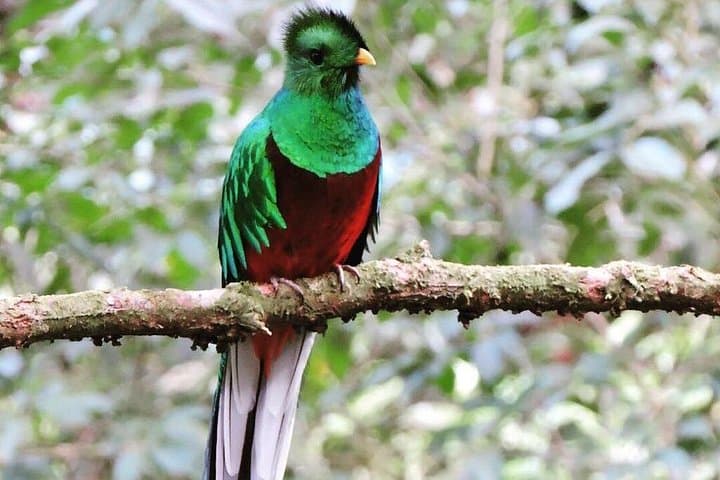
Expect mostly packed-earth paths with occasional roots and short, steep pitches—about 2–3 hours on a typical small-group itinerary. Wildlife sightings vary by season: dawn brings the highest activity, and guides use spotting scopes at clearing edges. Bring a light waterproof layer, midweight footwear with good traction, and binoculars; quiet movement and patience reward you with emerald toucanets, resplendent quetzals, hummingbirds, and orchids clinging like small green sculptures.
Practical notes: reserve time to buy entrance tickets at the official parking lot, meet your guide about 20 minutes early, and plan for mist and muddy sections. Hydrate, wear insect repellent, and move deliberately—the forest rewards slow observation with wildlife that will not be rushed.
No—entrance to Monteverde Cloud Forest Reserve is paid separately at the reserve’s official parking lot before meeting the guide.
Yes—this tour is described as physically easy and suitable for most ages, though those with cardiovascular issues should avoid strenuous sections.
Early morning is best—dawn through mid-morning has higher bird activity, especially during the dry season and fruiting periods.
Trails are maintained but can be uneven and muddy; stroller access is noted for short sections, but some paths require stable mobility.
Roy´s the Monteverde local nature guide´s operates guided outdoor trips and adventures with an emphasis on safety, stewardship, and memorable experiences.

Fog drifts through thin-leafed oaks and the forest hums—hummingbirds dart like iridescent punctuation while the canopy holds its breath. On a guided walk through Monteverde’s cloud forest, narrow trails climb and level in quick shifts, each bend revealing orchids clinging to trunks and moss-draped limbs that seem to lean in to listen.
Fog drifts through thin-leafed oaks and the forest hums—hummingbirds dart like iridescent punctuation while the canopy holds its breath. On a guided walk through Monteverde’s cloud forest, narrow trails climb and level in quick shifts, each bend revealing orchids clinging to trunks and moss-draped limbs that seem to lean in to listen.
The forest sits on a spine of volcanic highlands where orographic lift forces Pacific moisture into a year-round cloud cover. European settlers, Quaker migrants, and local Tico communities shaped the small nearby towns; conservation efforts since the 1970s protected this fragile mosaic of epiphytes, bromeliads, and old-growth patches. Cultural ties to the land show in simple trailside signs and local guides who point out a quetzal’s flash or a two-toed sloth’s slow, deliberate life.
Expect mostly packed-earth paths with occasional roots and short, steep pitches—about 2–3 hours on a typical small-group itinerary. Wildlife sightings vary by season: dawn brings the highest activity, and guides use spotting scopes at clearing edges. Bring a light waterproof layer, midweight footwear with good traction, and binoculars; quiet movement and patience reward you with emerald toucanets, resplendent quetzals, hummingbirds, and orchids clinging like small green sculptures.
Practical notes: reserve time to buy entrance tickets at the official parking lot, meet your guide about 20 minutes early, and plan for mist and muddy sections. Hydrate, wear insect repellent, and move deliberately—the forest rewards slow observation with wildlife that will not be rushed.