THE ADVENTURE COLLECTIVE® · Independent discovery and booking for outdoor travel

Walk Monteverde’s cloud forest after dark with a local guide and search for frogs, kinkajous, tarantulas and sleeping birds. This two-hour night tour uses quiet movement and low light to reveal nocturnal wildlife on easy, damp trails.
Walk Monteverde’s cloud forest after dark with a local guide and search for frogs, kinkajous, tarantulas and sleeping birds. This two-hour night tour uses quiet movement and low light to reveal nocturnal wildlife on easy, damp trails.
A narrow beam of light cuts through low cloud as the trail disappears into the Monteverde canopy. Leaves glisten with mist, and the forest at 1,200–1,600 m exhales a chorus of frogs and insect calls that seem to move with you. Your guide slows, points, and the world rearranges: a pair of glowing eyes, the slow curl of a sleeping toucan, a flashing insect on a leaf.
Verified experiences and guided adventures in the surrounding area.
Operated by Olingo Expeditions Monteverde · Santa Elena, Puntarenas
A narrow beam of light cuts through low cloud as the trail disappears into the Monteverde canopy. Leaves glisten with mist, and the forest at 1,200–1,600 m exhales a chorus of frogs and insect calls that seem to move with you. Your guide slows, points, and the world rearranges: a pair of glowing eyes, the slow curl of a sleeping toucan, a flashing insect on a leaf.
Monteverde sits on the Tilarán highlands and its cloud forest formed where humid Pacific air climbs cooler ridges, creating a persistent mist that feeds moss, epiphytes, and a rich understory. The area’s conservation story is local and global — Quaker settlers and Costa Rican conservationists helped protect tracts that now host an outsized share of biodiversity.
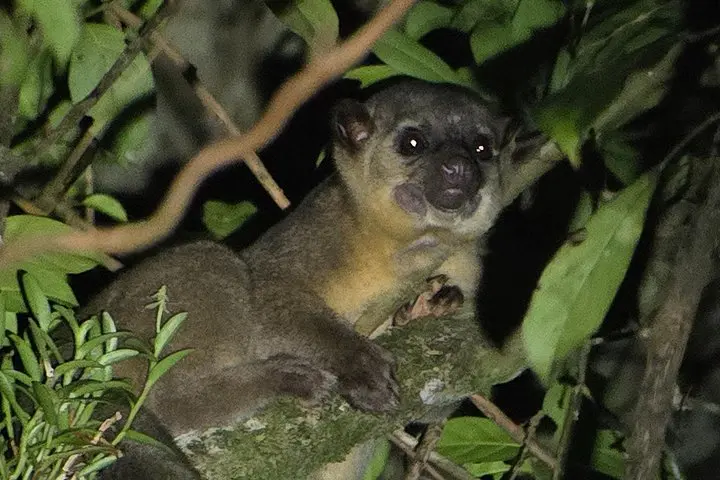
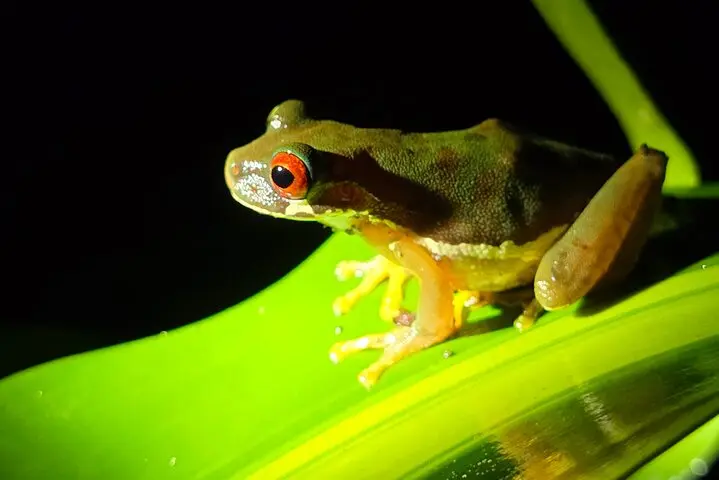
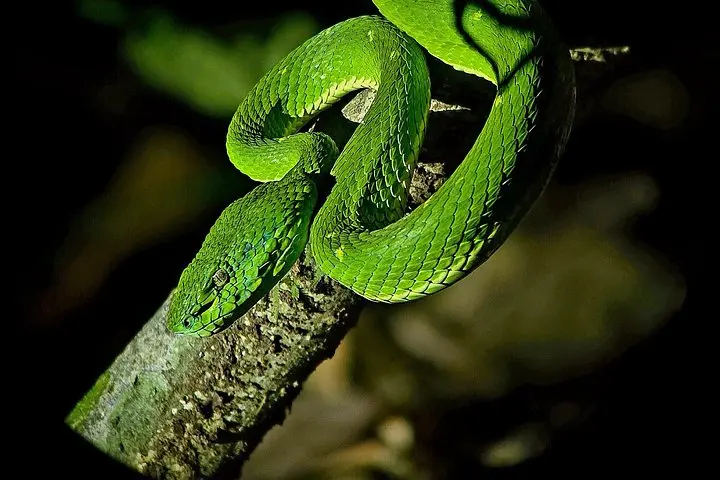
On a night walk you’ll target frogs, nocturnal mammals (kinkajou, olingo), tarantulas and sleeping birds; every tour varies with weather and season. Guides use quiet movement, low light and spotting scopes to reveal creatures that the day hides.
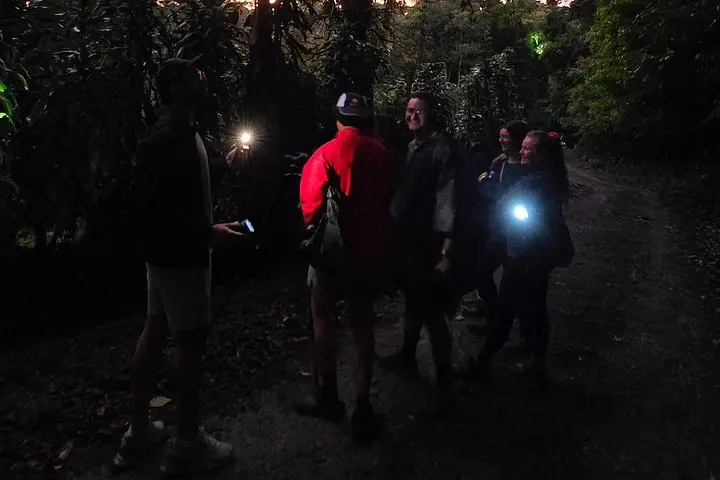
Practical guidance: tours are typically 2 hours on easy, uneven trails — wear waterproof hiking shoes and a light rain shell. Carry a headlamp with a red-light option and insect repellent; avoid flash photography and keep voices low to improve sightings. Check meeting instructions and bring small bills for optional photos or tips. Expect damp footing, cool pockets of air, and sudden bursts of life in the leaf litter. The night walk is as much about listening as seeing — if you move slowly, the forest will show you its secrets.
Yes—tours are marketed as suitable for all ages; trails are easy but can be uneven—strollers are not recommended and guardians should watch children near steep edges.
Wildlife sightings are never guaranteed; nocturnal species like tree frogs, kinkajous, olingos and tarantulas are commonly seen, while larger animals are rarer and unpredictable.
Flash photography is discouraged because it disturbs animals; guides may offer a spotting scope or take photos through optics—confirm options before the tour.
Meeting details vary by operator—bookings typically provide a local trailhead or parking lot meeting point in Santa Elena; confirm pickup options if you need transport.
Olingo Expeditions Monteverde operates guided outdoor trips and adventures with an emphasis on safety, stewardship, and memorable experiences.
A narrow beam of light cuts through low cloud as the trail disappears into the Monteverde canopy. Leaves glisten with mist, and the forest at 1,200–1,600 m exhales a chorus of frogs and insect calls that seem to move with you. Your guide slows, points, and the world rearranges: a pair of glowing eyes, the slow curl of a sleeping toucan, a flashing insect on a leaf.
A narrow beam of light cuts through low cloud as the trail disappears into the Monteverde canopy. Leaves glisten with mist, and the forest at 1,200–1,600 m exhales a chorus of frogs and insect calls that seem to move with you. Your guide slows, points, and the world rearranges: a pair of glowing eyes, the slow curl of a sleeping toucan, a flashing insect on a leaf.
Monteverde sits on the Tilarán highlands and its cloud forest formed where humid Pacific air climbs cooler ridges, creating a persistent mist that feeds moss, epiphytes, and a rich understory. The area’s conservation story is local and global — Quaker settlers and Costa Rican conservationists helped protect tracts that now host an outsized share of biodiversity.
On a night walk you’ll target frogs, nocturnal mammals (kinkajou, olingo), tarantulas and sleeping birds; every tour varies with weather and season. Guides use quiet movement, low light and spotting scopes to reveal creatures that the day hides.
Practical guidance: tours are typically 2 hours on easy, uneven trails — wear waterproof hiking shoes and a light rain shell. Carry a headlamp with a red-light option and insect repellent; avoid flash photography and keep voices low to improve sightings. Check meeting instructions and bring small bills for optional photos or tips. Expect damp footing, cool pockets of air, and sudden bursts of life in the leaf litter. The night walk is as much about listening as seeing — if you move slowly, the forest will show you its secrets.