THE ADVENTURE COLLECTIVE® · Independent discovery and booking for outdoor travel

Pedal from the port up through the 1929 exhibition route to Montjuïc’s viewpoints, Olympic venues and the Joan Miró Foundation. A 3-hour, accessible city ride that blends urban history, coastal panoramas and museum stops.
Pedal from the port up through the 1929 exhibition route to Montjuïc’s viewpoints, Olympic venues and the Joan Miró Foundation. A 3-hour, accessible city ride that blends urban history, coastal panoramas and museum stops.
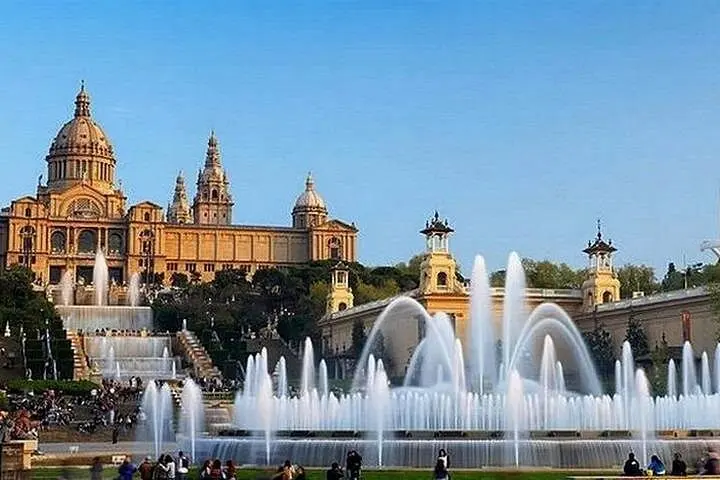
You roll through Barcelona’s port at a steady urban pace, the Mediterranean glinting at the edge of your field of vision, and Montjuïc rises ahead—green slopes punctuated by concrete terraces and museum roofs. The tour starts on flatter streets near Port Vell, then gently climbs Av. Maria Cristina toward the 1929 Plaça d’Espanya, the Magic Fountain’s stone basin humming with memory.
Verified experiences and guided adventures in the surrounding area.
Operated by Born Bike Tours Barcelona · Barcelona, Catalonia
You roll through Barcelona’s port at a steady urban pace, the Mediterranean glinting at the edge of your field of vision, and Montjuïc rises ahead—green slopes punctuated by concrete terraces and museum roofs. The tour starts on flatter streets near Port Vell, then gently climbs Av. Maria Cristina toward the 1929 Plaça d’Espanya, the Magic Fountain’s stone basin humming with memory.
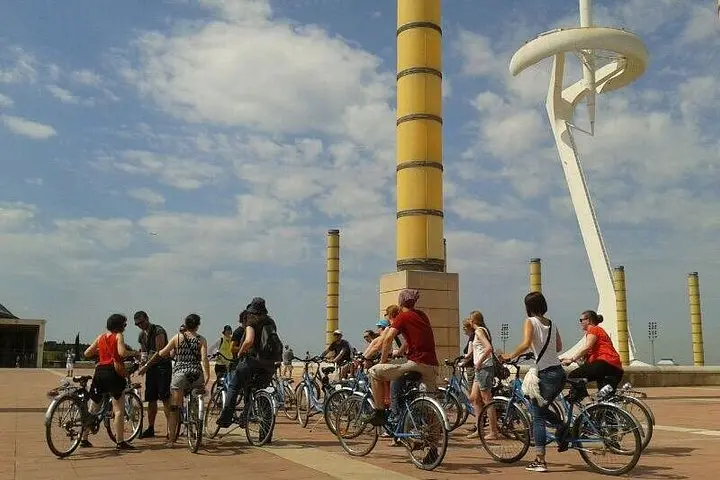
Montjuïc is a layered place: a volcanic outcrop turned strategic fortress, rebuilt for the 1929 International Exposition and reshaped into the Olympic Ring for 1992. Its geology is compact: old volcanic deposits overlain by engineered terraces and gardens, making firm climbs and short, exposed descents. Cultural markers appear in quick succession—Palau Nacional’s palace steps, the Joan Miró Foundation’s low-slung modernism, and the Spanish Village’s craft-lined lanes.
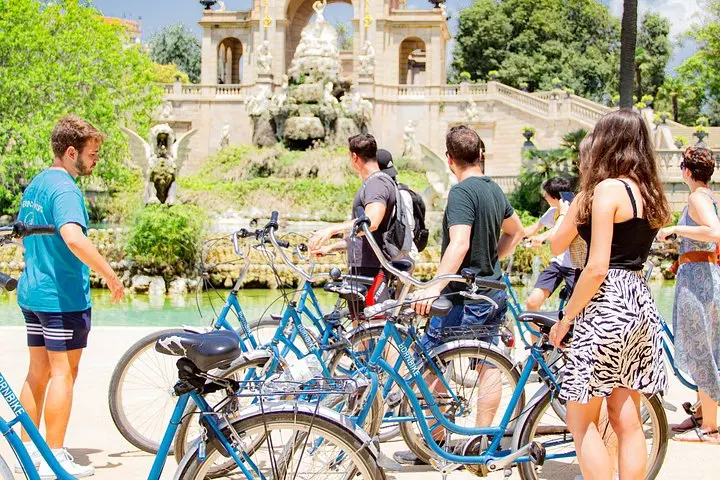
Expect varied surfaces: paved avenues, wide plaza stones and occasional cobbles. Wind off the sea moves through the pines and seems to nudge you onward; in the quieter corners, lizards sun themselves on warm stone.
Practical guidance: the ride is paced for mixed fitness—bring a helmet (provided on the tour), closed-toe shoes and a light layer. Hydrate before the hill and choose a mid-morning or evening slot to avoid the heat and to see the Magic Fountain illuminated after dark. Be ready for brief stops to take in views from Mirador de Montjuïc and to dismount for tighter, pedestrian-heavy sections. Respect museum grounds and local signage: parking the bike and walking short stretches keeps traffic smooth and protects heritage zones.
The route contains steady, short climbs rather than long, steep grades; pace yourself and use provided rest stops—most riders complete it comfortably.
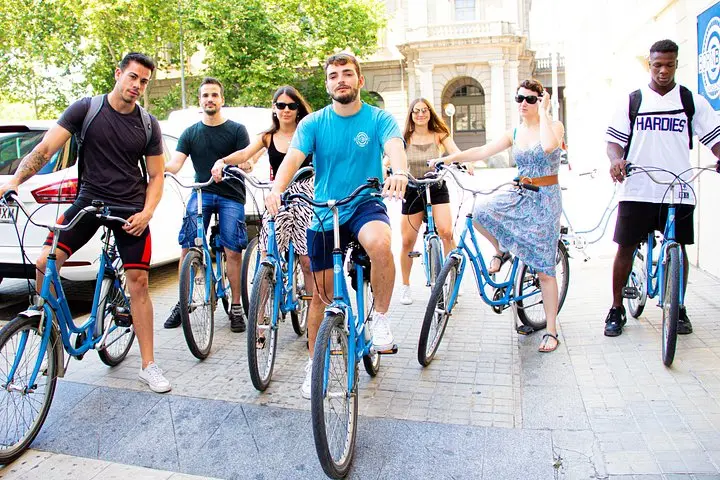
Yes—bicycle use and helmet are included with the tour; confirm sizing needs when you book.
Yes—tour descriptions list the ride as suitable for all fitness levels, though basic bike-handling and confidence in light urban traffic are helpful.
The fountain has scheduled evening light-and-music shows, most frequent in warmer months; check local listings and book an evening departure to see it lit.
Born Bike Tours Barcelona operates guided outdoor trips and adventures with an emphasis on safety, stewardship, and memorable experiences.
You roll through Barcelona’s port at a steady urban pace, the Mediterranean glinting at the edge of your field of vision, and Montjuïc rises ahead—green slopes punctuated by concrete terraces and museum roofs. The tour starts on flatter streets near Port Vell, then gently climbs Av. Maria Cristina toward the 1929 Plaça d’Espanya, the Magic Fountain’s stone basin humming with memory.
You roll through Barcelona’s port at a steady urban pace, the Mediterranean glinting at the edge of your field of vision, and Montjuïc rises ahead—green slopes punctuated by concrete terraces and museum roofs. The tour starts on flatter streets near Port Vell, then gently climbs Av. Maria Cristina toward the 1929 Plaça d’Espanya, the Magic Fountain’s stone basin humming with memory.
Montjuïc is a layered place: a volcanic outcrop turned strategic fortress, rebuilt for the 1929 International Exposition and reshaped into the Olympic Ring for 1992. Its geology is compact: old volcanic deposits overlain by engineered terraces and gardens, making firm climbs and short, exposed descents. Cultural markers appear in quick succession—Palau Nacional’s palace steps, the Joan Miró Foundation’s low-slung modernism, and the Spanish Village’s craft-lined lanes.
Expect varied surfaces: paved avenues, wide plaza stones and occasional cobbles. Wind off the sea moves through the pines and seems to nudge you onward; in the quieter corners, lizards sun themselves on warm stone.
Practical guidance: the ride is paced for mixed fitness—bring a helmet (provided on the tour), closed-toe shoes and a light layer. Hydrate before the hill and choose a mid-morning or evening slot to avoid the heat and to see the Magic Fountain illuminated after dark. Be ready for brief stops to take in views from Mirador de Montjuïc and to dismount for tighter, pedestrian-heavy sections. Respect museum grounds and local signage: parking the bike and walking short stretches keeps traffic smooth and protects heritage zones.