THE ADVENTURE COLLECTIVE® · Independent discovery and booking for outdoor travel

Step off a 30‑m launch and fly across 1,200 feet of cable above Montreal’s Old Port. This brief, expertly run urban zipline delivers a unique city perspective—historic piers, the Clock Tower, and the St. Lawrence—packed into a fast, safe 30‑minute experience.
Step off a 30‑m launch and fly across 1,200 feet of cable above Montreal’s Old Port. This brief, expertly run urban zipline delivers a unique city perspective—historic piers, the Clock Tower, and the St. Lawrence—packed into a fast, safe 30‑minute experience.
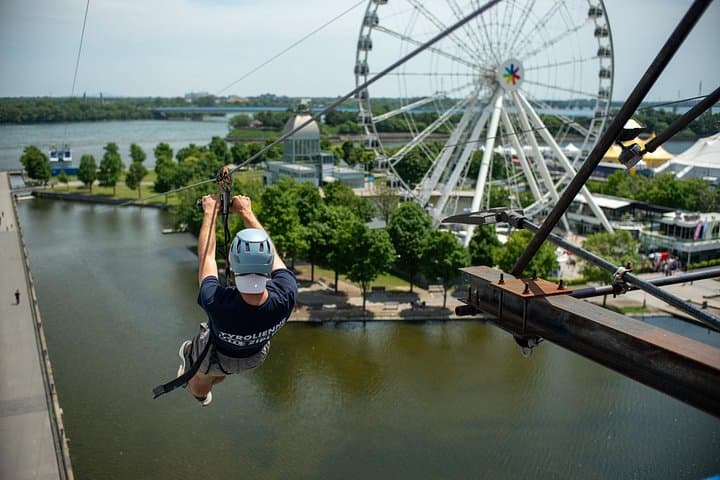
The platform feels improbably small when you're at the top: a red-and-white sign that reads "Zipline" against the gray metal tower, the St. Lawrence unfolding downstream like a long, cool ribbon daring you to cross it. Riders clip in, inhale the river air, and step off a 30‑m-high launch that sends them skimming across approximately 1,200 feet of cable toward Hangar 16, with the Old Port’s slate roofs and the Clock Tower shrinking beneath.
Verified experiences and guided adventures in the surrounding area.
Operated by Tyrolienne MTL Zipline · Montreal, Quebec
The platform feels improbably small when you're at the top: a red-and-white sign that reads "Zipline" against the gray metal tower, the St. Lawrence unfolding downstream like a long, cool ribbon daring you to cross it. Riders clip in, inhale the river air, and step off a 30‑m-high launch that sends them skimming across approximately 1,200 feet of cable toward Hangar 16, with the Old Port’s slate roofs and the Clock Tower shrinking beneath.
This is Canada’s first urban zipline circuit, and it makes sense here. Montreal’s Old Port—once the gritty commercial spine of a bustling colonial harbor—has been refitted over the last half-century into a public waterfront where history and adrenaline coexist. The Clock Tower, completed in the early 20th century as a memorial to sailors, marks the launch site; nearby, Marché Bonsecours and the terraces of rue de la Commune recall the port’s mercantile past while contemporary cafés and floating spas point to its reinvention.
Geologically, the corridor is simple: flat river plain giving way to the engineered quays of the St. Lawrence. That lack of vertical drama is what makes the zipline’s elevation feel bolder — you’re elevated above a human landscape rather than a wilderness one, darting over boats, boardwalks, and gulls that wheel like punctuation marks.
Culturally, Montreal’s bilingual guides often add local color—quick notes about the city’s seafaring history, the changing face of the waterfront, and which festivals animate the quays in summer. Practicalities are equally sharp: the experience is brief (about 30 minutes total), accessible to most fitness levels, and designed for first-timers and thrill-seekers alike, though it’s not recommended for pregnant people or those with certain spinal or cardiovascular conditions.
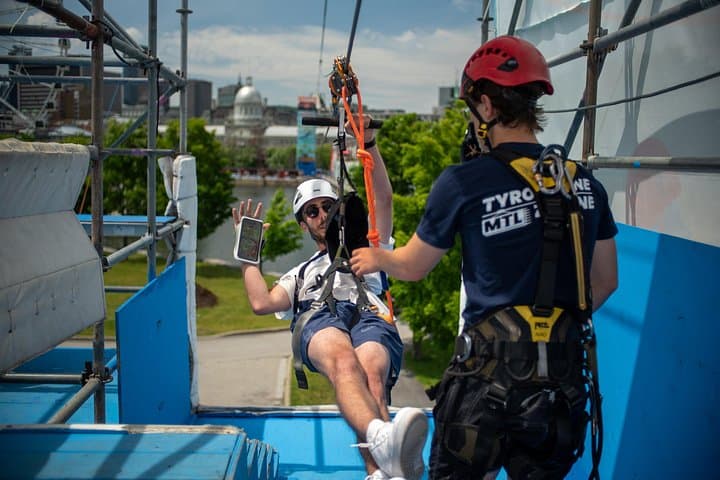
If you go, arrive by métro or bus and plan 20–30 minutes for check-in. Wear secure shoes and a jacket; the wind off the river can bite even in summer. Staff will weigh participants and fit harnesses, and multilingual guides run safety briefings in small groups. Bring a phone or small camera on a wrist strap if you want rider shots, but heed the guide if handheld devices are restricted on your run.
In short: this is an urban sprint of adrenaline—a compact, well-run zipline that offers a rare vantage on Montréal’s waterfront. It’s not about wilderness immersion so much as an elevated city postcard: fleeting, sharp, and unforgettable.
Plan on about 30 minutes from check-in to completion; the actual flight is brief (under a minute) but safety briefing and gearing add time.
Operators require a weight check during booking or at check-in to ensure safety—you’ll be asked to report weight and may be measured staff-side.
Not recommended for pregnant people or guests with recent spinal injuries or serious cardiovascular conditions; children must meet the minimum age and be able to follow instructions.
Meet at Hangar 16 near the Clock Tower Pier in the Old Port (16 rue de la Commune E), in front of Terrasse Bonsecours.
Yes—guides are often multilingual and safety briefings are commonly offered in English and French.
This activity is sold as all sales final; cancellations are non-refundable, so check schedules and weather before booking.
Tyrolienne MTL Zipline operates guided outdoor trips and adventures with an emphasis on safety, stewardship, and memorable experiences.

The platform feels improbably small when you're at the top: a red-and-white sign that reads "Zipline" against the gray metal tower, the St. Lawrence unfolding downstream like a long, cool ribbon daring you to cross it. Riders clip in, inhale the river air, and step off a 30‑m-high launch that sends them skimming across approximately 1,200 feet of cable toward Hangar 16, with the Old Port’s slate roofs and the Clock Tower shrinking beneath.
The platform feels improbably small when you're at the top: a red-and-white sign that reads "Zipline" against the gray metal tower, the St. Lawrence unfolding downstream like a long, cool ribbon daring you to cross it. Riders clip in, inhale the river air, and step off a 30‑m-high launch that sends them skimming across approximately 1,200 feet of cable toward Hangar 16, with the Old Port’s slate roofs and the Clock Tower shrinking beneath.
This is Canada’s first urban zipline circuit, and it makes sense here. Montreal’s Old Port—once the gritty commercial spine of a bustling colonial harbor—has been refitted over the last half-century into a public waterfront where history and adrenaline coexist. The Clock Tower, completed in the early 20th century as a memorial to sailors, marks the launch site; nearby, Marché Bonsecours and the terraces of rue de la Commune recall the port’s mercantile past while contemporary cafés and floating spas point to its reinvention.
Geologically, the corridor is simple: flat river plain giving way to the engineered quays of the St. Lawrence. That lack of vertical drama is what makes the zipline’s elevation feel bolder — you’re elevated above a human landscape rather than a wilderness one, darting over boats, boardwalks, and gulls that wheel like punctuation marks.
Culturally, Montreal’s bilingual guides often add local color—quick notes about the city’s seafaring history, the changing face of the waterfront, and which festivals animate the quays in summer. Practicalities are equally sharp: the experience is brief (about 30 minutes total), accessible to most fitness levels, and designed for first-timers and thrill-seekers alike, though it’s not recommended for pregnant people or those with certain spinal or cardiovascular conditions.
If you go, arrive by métro or bus and plan 20–30 minutes for check-in. Wear secure shoes and a jacket; the wind off the river can bite even in summer. Staff will weigh participants and fit harnesses, and multilingual guides run safety briefings in small groups. Bring a phone or small camera on a wrist strap if you want rider shots, but heed the guide if handheld devices are restricted on your run.
In short: this is an urban sprint of adrenaline—a compact, well-run zipline that offers a rare vantage on Montréal’s waterfront. It’s not about wilderness immersion so much as an elevated city postcard: fleeting, sharp, and unforgettable.