THE ADVENTURE COLLECTIVE® · Independent discovery and booking for outdoor travel

Escape Barcelona for an intimate, late-afternoon visit to Montserrat: fewer crowds, dramatic rock formations, and the chance to hear the famed boys’ choir. This half-day tour focuses on the monastery’s history and views while keeping the logistics simple.
Escape Barcelona for an intimate, late-afternoon visit to Montserrat: fewer crowds, dramatic rock formations, and the chance to hear the famed boys’ choir. This half-day tour focuses on the monastery’s history and views while keeping the logistics simple.
You step off the minivan into thin, dry air and the mountain answers—rock outcrops catching the late-afternoon sun, a church bell calling across a valley of pines. The path to Santa Maria de Montserrat climbs stone steps, passes weathered chapels and opens onto terraces where views unfurl toward the Llobregat plain and the jagged peaks that define this massif.
Verified experiences and guided adventures in the surrounding area.
You step off the minivan into thin, dry air and the mountain answers—rock outcrops catching the late-afternoon sun, a church bell calling across a valley of pines. The path to Santa Maria de Montserrat climbs stone steps, passes weathered chapels and opens onto terraces where views unfurl toward the Llobregat plain and the jagged peaks that define this massif.
Montserrat is both a geological oddity and a spiritual landmark: its serrated conglomerate cliffs formed from ancient river deposits that hardened into rounded towers. The Benedictine abbey established here in the 11th century grew into Catalonia’s religious center; its Black Madonna and the Escolania boys’ choir are cultural touchstones. Local shepherding and charcoal-making shaped valley life, while pilgrimage converted a wild ridge into a place of ritual.
On a small-group afternoon tour you’ll bypass the busiest morning crowds, move through the basilica with a quieter, more intimate pace, and often catch a short choir performance (not on Fridays, Saturdays, or special holidays). Expect paved ramparts, uneven steps, and short uphill walks between viewpoints and monastery buildings.
Plan for sun, wind, and a drop in temperature as elevation gains. Wear sturdy walking shoes, bring water, and leave time to explore the museum or hike a short ridge trail if you have the energy. Transport runs from central Barcelona; this tour compresses the mountain’s history, geology, and ritual into an accessible half-day that feels both timeless and immediate.
The tour runs about 4–5 hours and typically includes round-trip transport from Barcelona, guided time at the monastery, and time for viewpoints and the basilica; choir performances may be included depending on schedule.
Often, yes—small tours aim to include a short choir performance when available, but performances are not held on Fridays, Saturdays, or certain holidays.
This afternoon itinerary provides short walking opportunities around the monastery and viewpoints; longer hikes up the massif are possible but may require extra time or a separate excursion.
Modest dress and quiet behavior are expected inside the basilica; photography may be restricted in some areas during services or performances.
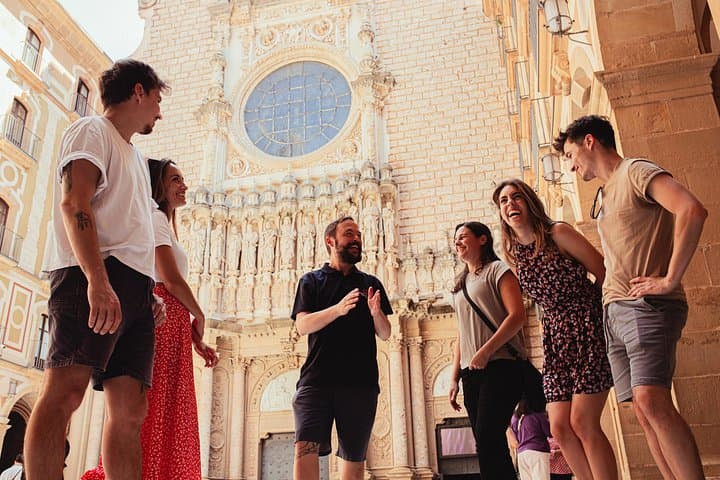
You step off the minivan into thin, dry air and the mountain answers—rock outcrops catching the late-afternoon sun, a church bell calling across a valley of pines. The path to Santa Maria de Montserrat climbs stone steps, passes weathered chapels and opens onto terraces where views unfurl toward the Llobregat plain and the jagged peaks that define this massif.
You step off the minivan into thin, dry air and the mountain answers—rock outcrops catching the late-afternoon sun, a church bell calling across a valley of pines. The path to Santa Maria de Montserrat climbs stone steps, passes weathered chapels and opens onto terraces where views unfurl toward the Llobregat plain and the jagged peaks that define this massif.
Montserrat is both a geological oddity and a spiritual landmark: its serrated conglomerate cliffs formed from ancient river deposits that hardened into rounded towers. The Benedictine abbey established here in the 11th century grew into Catalonia’s religious center; its Black Madonna and the Escolania boys’ choir are cultural touchstones. Local shepherding and charcoal-making shaped valley life, while pilgrimage converted a wild ridge into a place of ritual.
On a small-group afternoon tour you’ll bypass the busiest morning crowds, move through the basilica with a quieter, more intimate pace, and often catch a short choir performance (not on Fridays, Saturdays, or special holidays). Expect paved ramparts, uneven steps, and short uphill walks between viewpoints and monastery buildings.
Plan for sun, wind, and a drop in temperature as elevation gains. Wear sturdy walking shoes, bring water, and leave time to explore the museum or hike a short ridge trail if you have the energy. Transport runs from central Barcelona; this tour compresses the mountain’s history, geology, and ritual into an accessible half-day that feels both timeless and immediate.