THE ADVENTURE COLLECTIVE® · Independent discovery and booking for outdoor travel

Scale seafront limestone at Moody Beach in Lan Ha Bay on a guided half‑day climb that pairs a morning paddle with afternoon routes up to 22 meters. Small groups, experienced bilingual guides, and dramatic coastal views make this a compact, high-value adventure.
Scale seafront limestone at Moody Beach in Lan Ha Bay on a guided half‑day climb that pairs a morning paddle with afternoon routes up to 22 meters. Small groups, experienced bilingual guides, and dramatic coastal views make this a compact, high-value adventure.
You push off the wooden skiff and the limestone karsts of Lan Ha Bay rearrange themselves around you: sheer faces rising like pages torn from the earth. The boat slips into a quiet cove and you step onto coarse sand at Moody Beach, where a line of routes climbs directly out of the water. Guides clip ropes and talk in measured English and Vietnamese; gear glints in the humid light. Within minutes you’re on the wall, fingers hunting for edges in warm, sea-slick limestone while wind and waves mark time below. It feels risky and precise in the same breath — the bay is both audience and partner.
Verified experiences and guided adventures in the surrounding area.
Operated by Langur's Adventures · Cat Ba Town, Hai Phong
You push off the wooden skiff and the limestone karsts of Lan Ha Bay rearrange themselves around you: sheer faces rising like pages torn from the earth. The boat slips into a quiet cove and you step onto coarse sand at Moody Beach, where a line of routes climbs directly out of the water. Guides clip ropes and talk in measured English and Vietnamese; gear glints in the humid light. Within minutes you’re on the wall, fingers hunting for edges in warm, sea-slick limestone while wind and waves mark time below. It feels risky and precise in the same breath — the bay is both audience and partner.
Lan Ha Bay is the quieter sibling of Halong, but its karst calendar is the same: millions of years of marine sediment folded and uplifted into the vertical cliffs that define the region. The area around Cat Ba Island has long been a maritime crossroads; small floating villages still live by fishing and aquaculture, and the presence of climbers has added a new chapter to that coastal economy. Local guides trained in both Western techniques and Vietnamese sea-smarts run these half-day climbs, and the slate of multi-pitch and single-pitch lines reflects how the rock erodes and resists — pockets, tufas and sharp crimps shaped by rain and tide.
Expect a day that mixes motion and stillness: a morning paddle through mangrove channels or a lagoon, then a focused afternoon on routes up to 22 meters. The physical demands are moderate but specific — the climbs require balance, finger strength, and comfort on exposed faces. Guides handle technical rigging and lowering, so even novices can experience the vertical without blind faith.
Practical notes: the tour runs about five hours and usually departs from Cat Ba; meet at a central hotel in town for a transfer. Wear quick-dry clothing, shoes that can handle wet rock, and a light waterproof layer in shoulder seasons. Hydrate before and after climbs; the salt air and exertion sneak up on you. If you plan to extend to a full day, swap in a kayak or SUP morning — paddling by floating villages gives context to the geography and slows the pace between climbs.
Safety and sustainability matter here. Guides keep groups small (typically under eight) and provide all climbing equipment, but you should be honest about injuries, pregnancy, or heart conditions. Respect the local community: leave no gear on rock, avoid chalking routes excessively, and follow guide instructions around anchoring and tide windows. The result is straightforward — a short, sharp taste of limestone climbing with the sea as your audience, and enough local color to make the day feel like a real place rather than a route on a map.
No — guides handle all technical rigging and provide instruction for beginners; basic mobility and willingness to get vertical are enough.
The trip typically includes boat transfers, climbing equipment, a bilingual guide, lunch, and sometimes a morning kayak or SUP session for full‑day options.
Yes — some routes hang over water; guides control lowering so you won’t rappel alone, but expect damp rock and splash zones.
Yes, personal shoes are fine and may be more comfortable; harnesses and ropes are usually supplied but confirm with the operator if you plan to use personal gear.
Participants should be in moderate physical health; the operator typically restricts those with serious back, heart conditions, or pregnancy—disclose medical concerns at booking.
Trips are cancelled for heavy rain, high winds, or unsafe sea states; cancellation policies usually allow a full refund if made at least 24 hours before departure.
Langur's Adventures operates guided outdoor trips and adventures with an emphasis on safety, stewardship, and memorable experiences.
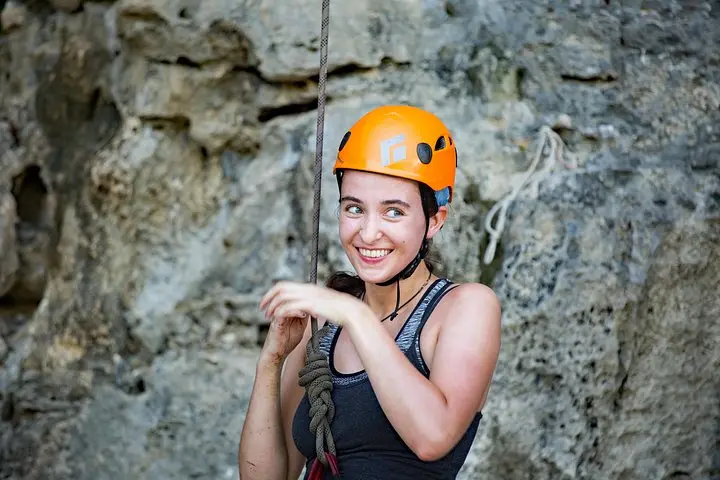
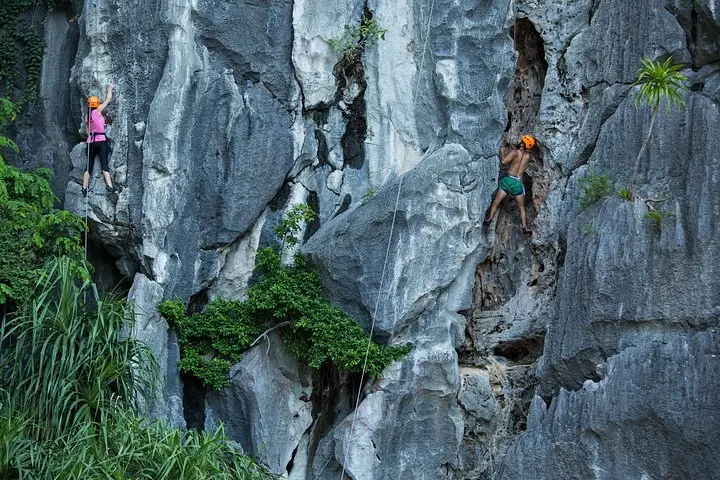
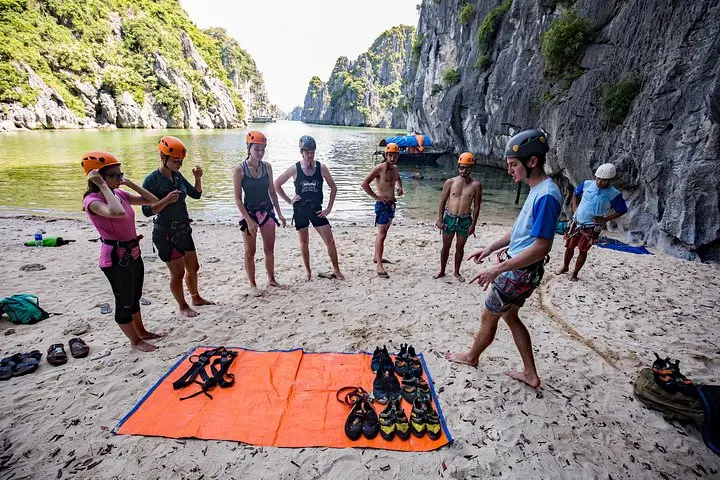
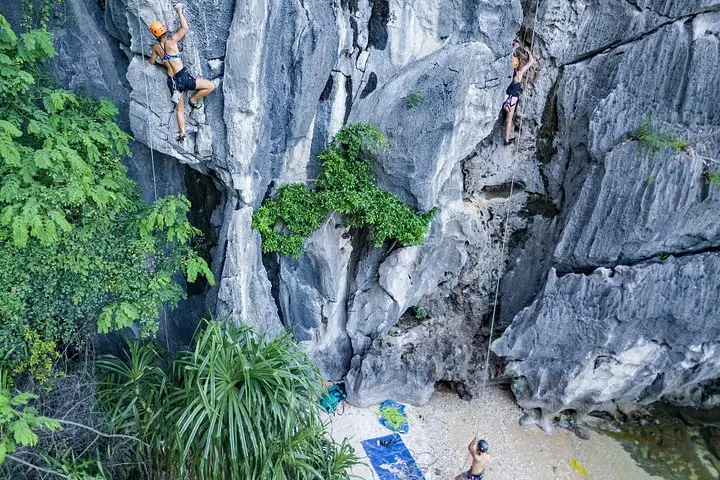
You push off the wooden skiff and the limestone karsts of Lan Ha Bay rearrange themselves around you: sheer faces rising like pages torn from the earth. The boat slips into a quiet cove and you step onto coarse sand at Moody Beach, where a line of routes climbs directly out of the water. Guides clip ropes and talk in measured English and Vietnamese; gear glints in the humid light. Within minutes you’re on the wall, fingers hunting for edges in warm, sea-slick limestone while wind and waves mark time below. It feels risky and precise in the same breath — the bay is both audience and partner.
You push off the wooden skiff and the limestone karsts of Lan Ha Bay rearrange themselves around you: sheer faces rising like pages torn from the earth. The boat slips into a quiet cove and you step onto coarse sand at Moody Beach, where a line of routes climbs directly out of the water. Guides clip ropes and talk in measured English and Vietnamese; gear glints in the humid light. Within minutes you’re on the wall, fingers hunting for edges in warm, sea-slick limestone while wind and waves mark time below. It feels risky and precise in the same breath — the bay is both audience and partner.
Lan Ha Bay is the quieter sibling of Halong, but its karst calendar is the same: millions of years of marine sediment folded and uplifted into the vertical cliffs that define the region. The area around Cat Ba Island has long been a maritime crossroads; small floating villages still live by fishing and aquaculture, and the presence of climbers has added a new chapter to that coastal economy. Local guides trained in both Western techniques and Vietnamese sea-smarts run these half-day climbs, and the slate of multi-pitch and single-pitch lines reflects how the rock erodes and resists — pockets, tufas and sharp crimps shaped by rain and tide.
Expect a day that mixes motion and stillness: a morning paddle through mangrove channels or a lagoon, then a focused afternoon on routes up to 22 meters. The physical demands are moderate but specific — the climbs require balance, finger strength, and comfort on exposed faces. Guides handle technical rigging and lowering, so even novices can experience the vertical without blind faith.
Practical notes: the tour runs about five hours and usually departs from Cat Ba; meet at a central hotel in town for a transfer. Wear quick-dry clothing, shoes that can handle wet rock, and a light waterproof layer in shoulder seasons. Hydrate before and after climbs; the salt air and exertion sneak up on you. If you plan to extend to a full day, swap in a kayak or SUP morning — paddling by floating villages gives context to the geography and slows the pace between climbs.
Safety and sustainability matter here. Guides keep groups small (typically under eight) and provide all climbing equipment, but you should be honest about injuries, pregnancy, or heart conditions. Respect the local community: leave no gear on rock, avoid chalking routes excessively, and follow guide instructions around anchoring and tide windows. The result is straightforward — a short, sharp taste of limestone climbing with the sea as your audience, and enough local color to make the day feel like a real place rather than a route on a map.