THE ADVENTURE COLLECTIVE® · Independent discovery and booking for outdoor travel

Walk from San Leo's historic gate into the hush of night woods and arrive at the 13th‑century monastery of Sant'Igne. This guided three‑hour loop pairs a gentle ridge climb with a quiet cloister visit and panoramic views over the Apennine foothills.
Walk from San Leo's historic gate into the hush of night woods and arrive at the 13th‑century monastery of Sant'Igne. This guided three‑hour loop pairs a gentle ridge climb with a quiet cloister visit and panoramic views over the Apennine foothills.
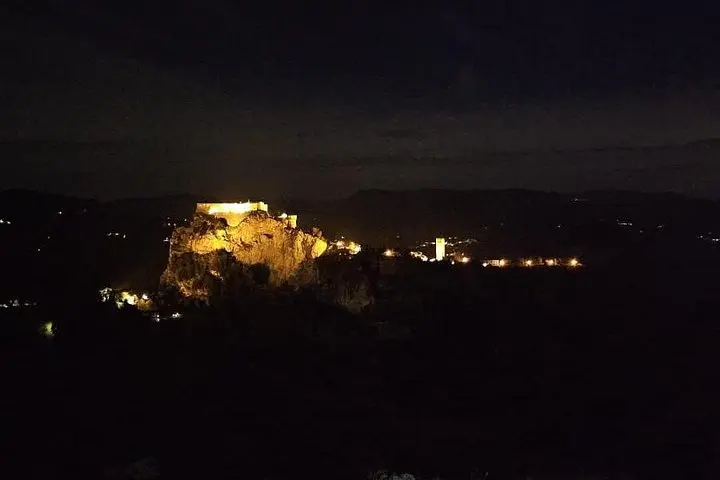
The walk begins in San Leo's stone-paved core, where the fortress looms darker than the sky and the town's single gate offers a quiet promise of leaving modern noise behind.
Verified experiences and guided adventures in the surrounding area.
Operated by History trekking · San Leo, Emilia-Romagna
The walk begins in San Leo's stone-paved core, where the fortress looms darker than the sky and the town's single gate offers a quiet promise of leaving modern noise behind.
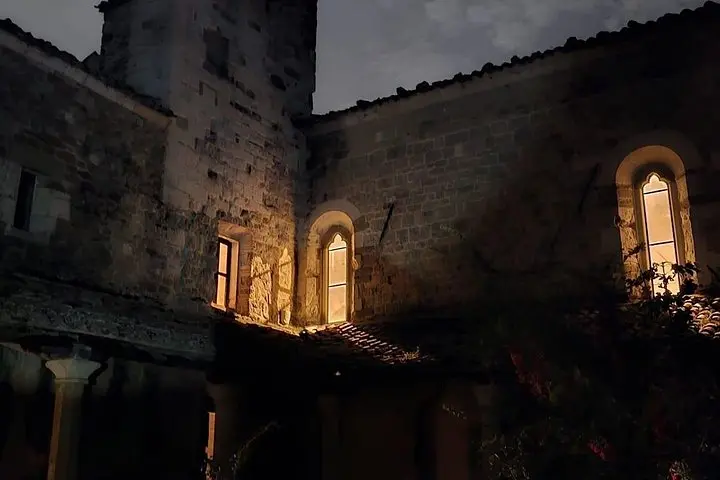
You descend through oak and chestnut that sharpen at night — leaves whisper like a guide — then follow a woodland trail that pushes you toward the small 13th‑century Franciscan complex of Sant'Igne. The monastery's simple church, cloister and chapter room hold an austere medieval calm that feels amplified after sunset; the stones seem to remember centuries of pilgrims.
Geologically the route traces Apennine ridges carved of limestone and marl; the climb onto Monte San Severino gives a final, starlit vantage where San Leo's lights spill across the valley. Culturally this is boundary country between Emilia‑Romagna and the Marche, a landscape shaped by shepherding, monastic orders and frontier fortifications.
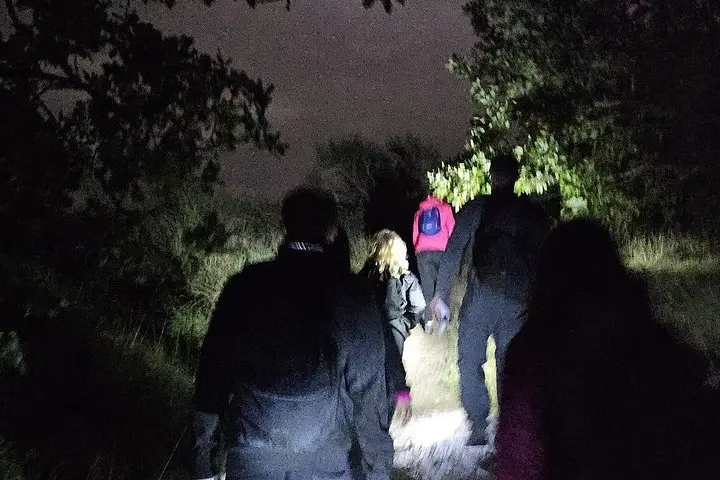
Practical guidance: the guided loop is about three hours of steady walking on dirt paths and ridge tracks with short stone steps. A good headlamp, steady footwear and a warm midlayer change the night from uncomfortable to memorable. Move deliberately on uneven ground and keep voices low in the monastery — respect for a sacred site matters.
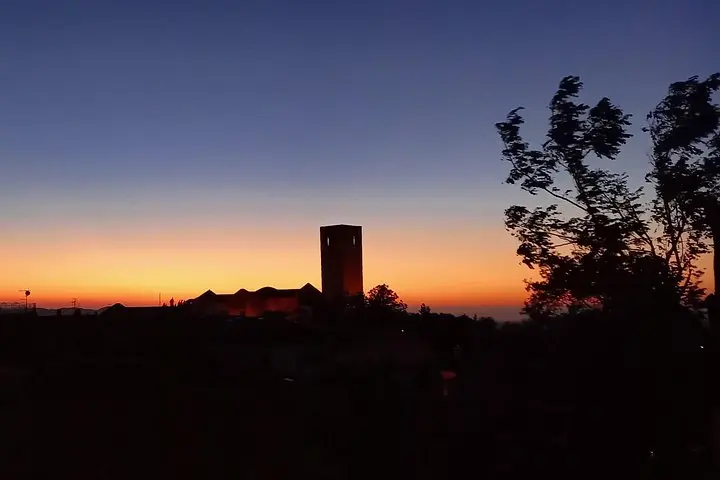
Timing matters: start after dusk to watch town lights emerge, and plan visits outside heavy rain (paths get slippery). This night hike pairs compact history with quiet wilderness, ideal for hikers who want an accessible after-dark experience that blends landscape, stone architecture and simple nocturnal ritual.
The guided route is moderate: steady walking on dirt and limestone tracks with short climbs; no technical climbing, but uneven terrain requires attention.
The loop starts and finishes in San Leo's historic center near the fortress gate; exact meeting point is given at booking confirmation.
The guide arranges access to the church, cloister and chapter room during the visit; visitors should follow rules and remain quiet inside.
The tour is listed as suitable for all fitness levels, but not recommended for people with serious heart or spinal problems, or for pregnant travelers; check with the operator for age limits.
History trekking operates guided outdoor trips and adventures with an emphasis on safety, stewardship, and memorable experiences.
The walk begins in San Leo's stone-paved core, where the fortress looms darker than the sky and the town's single gate offers a quiet promise of leaving modern noise behind.
The walk begins in San Leo's stone-paved core, where the fortress looms darker than the sky and the town's single gate offers a quiet promise of leaving modern noise behind.
You descend through oak and chestnut that sharpen at night — leaves whisper like a guide — then follow a woodland trail that pushes you toward the small 13th‑century Franciscan complex of Sant'Igne. The monastery's simple church, cloister and chapter room hold an austere medieval calm that feels amplified after sunset; the stones seem to remember centuries of pilgrims.
Geologically the route traces Apennine ridges carved of limestone and marl; the climb onto Monte San Severino gives a final, starlit vantage where San Leo's lights spill across the valley. Culturally this is boundary country between Emilia‑Romagna and the Marche, a landscape shaped by shepherding, monastic orders and frontier fortifications.
Practical guidance: the guided loop is about three hours of steady walking on dirt paths and ridge tracks with short stone steps. A good headlamp, steady footwear and a warm midlayer change the night from uncomfortable to memorable. Move deliberately on uneven ground and keep voices low in the monastery — respect for a sacred site matters.
Timing matters: start after dusk to watch town lights emerge, and plan visits outside heavy rain (paths get slippery). This night hike pairs compact history with quiet wilderness, ideal for hikers who want an accessible after-dark experience that blends landscape, stone architecture and simple nocturnal ritual.