THE ADVENTURE COLLECTIVE® · Independent discovery and booking for outdoor travel
Circle Moorea by private buggy, from lagoon cruisers and black-sand coves to the pineapple rows and marae of Opunohu Valley. With a local guide setting the pace, you’ll climb to the island’s best viewpoints and hear the stories written into its volcanic bones.
Circle Moorea by private buggy, from lagoon cruisers and black-sand coves to the pineapple rows and marae of Opunohu Valley. With a local guide setting the pace, you’ll climb to the island’s best viewpoints and hear the stories written into its volcanic bones.
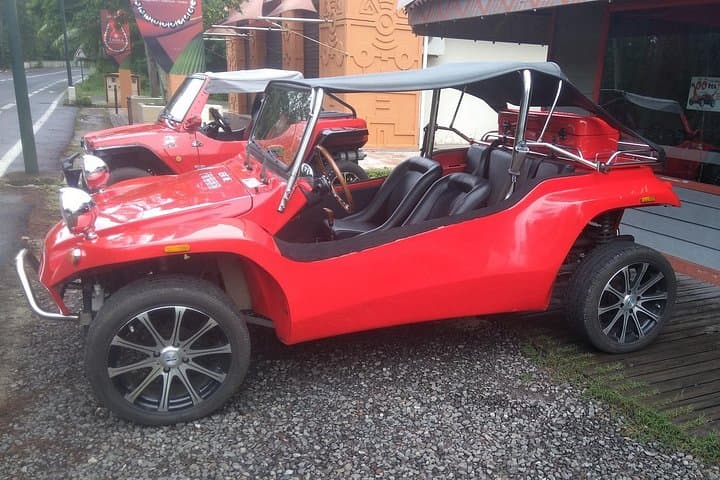
Trade winds comb the palms as the coastal road unspools around Moorea’s serrated silhouette. In front, the buggy hums, eager, while the lagoon flashes turquoise to indigo with each bend. Your guide leads the way in a separate vehicle, the island’s stories riding shotgun—volcanic origins, ancient marae stonework, and the daily rhythm of life where reef and rainforest meet.
Verified experiences and guided adventures in the surrounding area.
Operated by Moorea Fun Roadster · Moorea, Windward Islands
Trade winds comb the palms as the coastal road unspools around Moorea’s serrated silhouette. In front, the buggy hums, eager, while the lagoon flashes turquoise to indigo with each bend. Your guide leads the way in a separate vehicle, the island’s stories riding shotgun—volcanic origins, ancient marae stonework, and the daily rhythm of life where reef and rainforest meet.
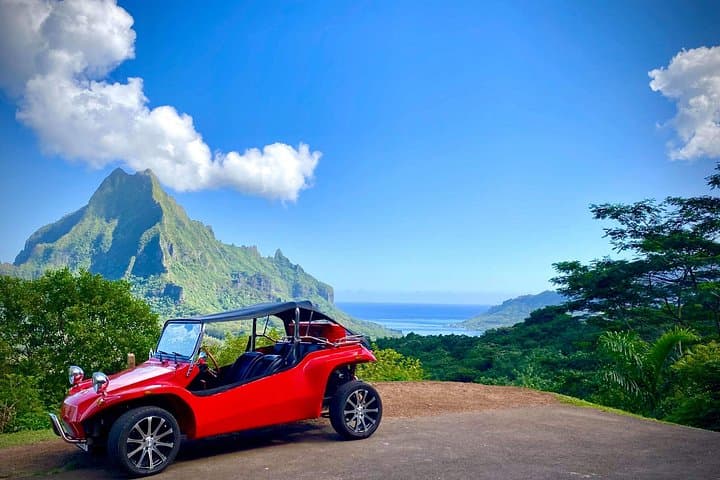
This half-day circuit (about 4.5 hours) loops the 62-kilometer ring road and cuts inland toward Belvedere Lookout, the island’s balcony above Cook’s and Opunohu Bays. The buggy nudges uphill, tires crunching as the valley narrows and the air cools. Mount Rotui stands like a watchful neighbor, its lava-carved ridges steep and stubborn. Below, a mosaic of pineapple fields fans out—spiky crowns that helped write Moorea’s modern agricultural chapter.
It’s hard not to linger at Belvedere. Both bays spread like open hands, the old caldera line easy to trace once a guide points your eye. Geology here is recent in Earth terms: a shield volcano gone quiet, its crater partly collapsed, ocean gnawing the edges into the twin harbors you see now. History is layered into the landscape too. A short stroll away, the Opunohu Valley shelters marae—Polynesian temple platforms—where community, ceremony, and navigation knowledge once anchored daily life. Step lightly and show respect; these are living sites, not ruins.
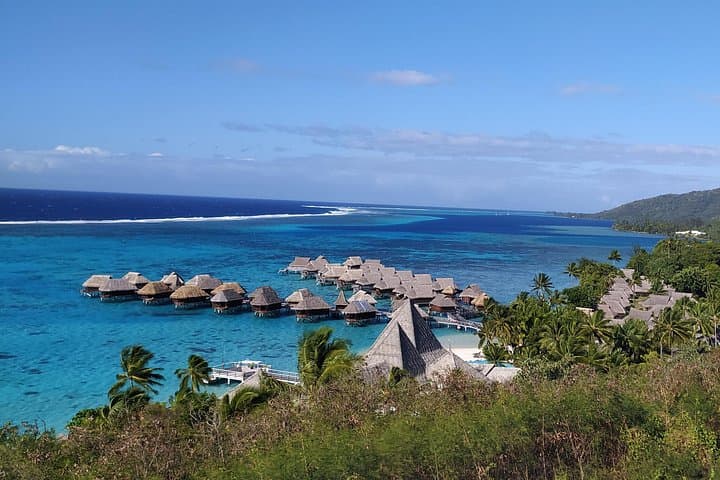
Back on the coast, the buggy settles into a comfortable pace. The lagoon keeps tossing glints of Tahiti on the horizon, daring you to count the shades of blue. Viewpoints stack up: Toatea’s overlook above Temae’s pale sand, shady pull-offs where the reef line breathes with the swell, and a dark crescent of volcanic sand that reminds you the island’s bones are basalt. A stop at the Rotui juice factory and distillery is a sensory reset—local juices and tropical liqueurs that taste like the valley smells.
This tour favors curiosity over speed. Expect frequent photo stops, short walks over uneven ground, and a little grit from wind and road. Mornings often deliver the sharpest views; afternoons glow softer and run warmer. Closed-toe footwear helps at overlooks and marae. Hydration matters in this climate—carry a bottle and refill when you can.
Culture threads through the drive as your guide names peaks and plants, shares legends of Rotui, and corrects a common footnote: Captain Cook never anchored in the bay that bears his name, though his voyages left their mark on the map. By the time you pull back onto the main road for the final stretch, Moorea feels less like a postcard and more like a place that moves—ocean breathing, mountains holding, valleys growing—and invites you to move with it.
Yes. A valid driver’s license and basic driving experience are required to operate the buggy on public roads.
Yes. Each buggy can carry two adults and two children, within the stated weight limits (about 100–110 kg per person). Ask about child seats in advance.
Hotel pickup and drop-off, insurance, and fuel are included. Food, drinks, and personal purchases (e.g., tastings) are not.
Tours run in light rain; heavy weather can delay or cancel for safety, with flexible policies. Bring a light shell during the wet season.
It’s mostly seated driving with short walks at scenic and cultural stops. Travelers with moderate mobility can participate comfortably.
Pickup vehicles can accommodate, and the route can be adjusted, but some lookouts and marae paths are uneven. Coordinate needs with the operator in advance.
Moorea Fun Roadster operates guided outdoor trips and adventures with an emphasis on safety, stewardship, and memorable experiences.

Trade winds comb the palms as the coastal road unspools around Moorea’s serrated silhouette. In front, the buggy hums, eager, while the lagoon flashes turquoise to indigo with each bend. Your guide leads the way in a separate vehicle, the island’s stories riding shotgun—volcanic origins, ancient marae stonework, and the daily rhythm of life where reef and rainforest meet.
Trade winds comb the palms as the coastal road unspools around Moorea’s serrated silhouette. In front, the buggy hums, eager, while the lagoon flashes turquoise to indigo with each bend. Your guide leads the way in a separate vehicle, the island’s stories riding shotgun—volcanic origins, ancient marae stonework, and the daily rhythm of life where reef and rainforest meet.
This half-day circuit (about 4.5 hours) loops the 62-kilometer ring road and cuts inland toward Belvedere Lookout, the island’s balcony above Cook’s and Opunohu Bays. The buggy nudges uphill, tires crunching as the valley narrows and the air cools. Mount Rotui stands like a watchful neighbor, its lava-carved ridges steep and stubborn. Below, a mosaic of pineapple fields fans out—spiky crowns that helped write Moorea’s modern agricultural chapter.
It’s hard not to linger at Belvedere. Both bays spread like open hands, the old caldera line easy to trace once a guide points your eye. Geology here is recent in Earth terms: a shield volcano gone quiet, its crater partly collapsed, ocean gnawing the edges into the twin harbors you see now. History is layered into the landscape too. A short stroll away, the Opunohu Valley shelters marae—Polynesian temple platforms—where community, ceremony, and navigation knowledge once anchored daily life. Step lightly and show respect; these are living sites, not ruins.
Back on the coast, the buggy settles into a comfortable pace. The lagoon keeps tossing glints of Tahiti on the horizon, daring you to count the shades of blue. Viewpoints stack up: Toatea’s overlook above Temae’s pale sand, shady pull-offs where the reef line breathes with the swell, and a dark crescent of volcanic sand that reminds you the island’s bones are basalt. A stop at the Rotui juice factory and distillery is a sensory reset—local juices and tropical liqueurs that taste like the valley smells.
This tour favors curiosity over speed. Expect frequent photo stops, short walks over uneven ground, and a little grit from wind and road. Mornings often deliver the sharpest views; afternoons glow softer and run warmer. Closed-toe footwear helps at overlooks and marae. Hydration matters in this climate—carry a bottle and refill when you can.
Culture threads through the drive as your guide names peaks and plants, shares legends of Rotui, and corrects a common footnote: Captain Cook never anchored in the bay that bears his name, though his voyages left their mark on the map. By the time you pull back onto the main road for the final stretch, Moorea feels less like a postcard and more like a place that moves—ocean breathing, mountains holding, valleys growing—and invites you to move with it.
