THE ADVENTURE COLLECTIVE® · Independent discovery and booking for outdoor travel
Board a small boat off Moorea for a guided whale-watch and snorkel with humpbacks. This four-hour, small-group excursion prioritizes safety and respect while offering close, unforgettable marine encounters.
Board a small boat off Moorea for a guided whale-watch and snorkel with humpbacks. This four-hour, small-group excursion prioritizes safety and respect while offering close, unforgettable marine encounters.
The boat slips from Moorea's lagoon before dawn, engines a steady hum under a sky that lightens from indigo to turquoise. Salt spray cools your face as the reef drops away and the open sea opens up — a horizon where breath and tail can suddenly announce themselves.
Verified experiences and guided adventures in the surrounding area.
Operated by Temoana Tours · Moorea, Society Islands
The boat slips from Moorea's lagoon before dawn, engines a steady hum under a sky that lightens from indigo to turquoise. Salt spray cools your face as the reef drops away and the open sea opens up — a horizon where breath and tail can suddenly announce themselves.
This is the language of humpbacks: songs carried across thousands of miles from Antarctic feeding grounds to the warm lagoons of the Society Islands. Moorea itself is a jagged remnant of volcanic uplift, ringed by coral flats and pierced by ridges that fishermen and navigators have known for generations. Whales have threaded these waters for centuries; local guides combine modern cetacean science with Polynesian respect for the ocean when deciding whether and how to approach.
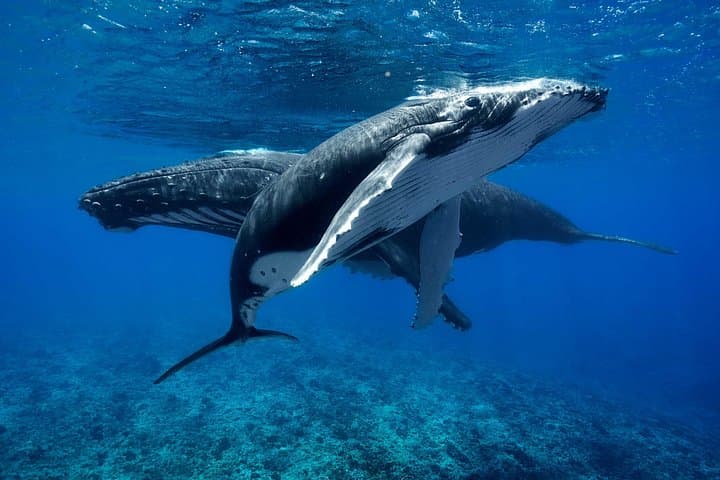
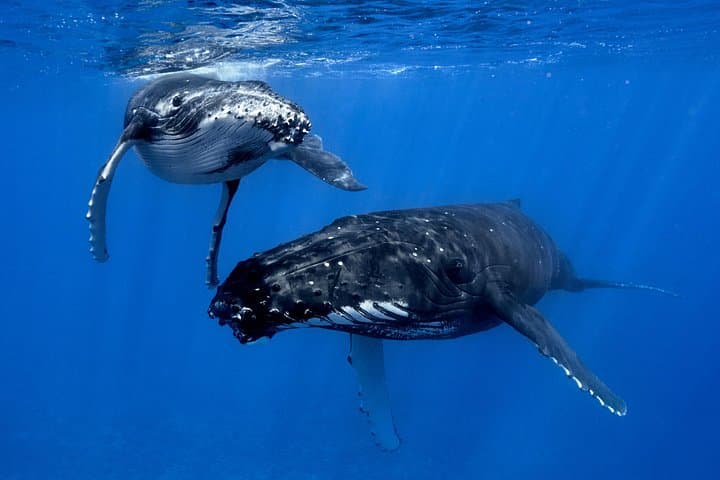
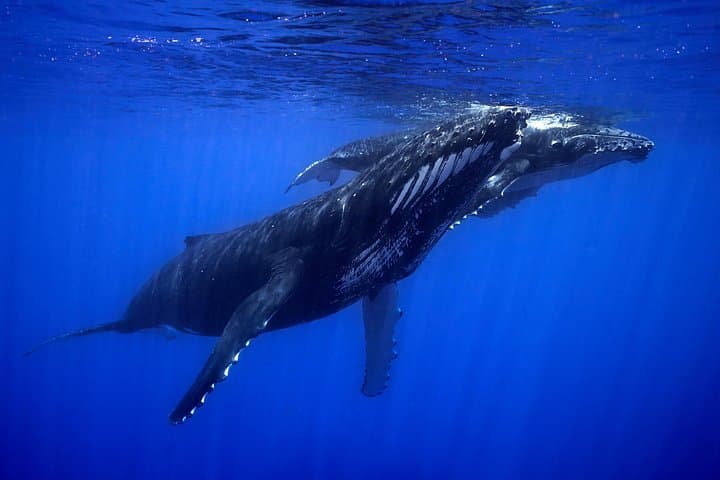
On a small-group excursion (max six), the guide watches behavior first and only authorizes launches when conditions and animal responses are appropriate — that’s how respectful encounters happen. Expect guided snorkeling near surface-feeding or mother–calf pairs, clear instructions on approach and retreat, and a strong emphasis on minimal disturbance.
Practicalities: tours run about four hours, require reasonable swimming ability, and include snorkeling gear and bottled water. Seas can be choppy; motion-sickness meds and sun protection are wise. The best months for humpback presence in French Polynesia are July–November; operators may cancel for poor weather and offer full refunds with 24-hour notice. Arrive early, follow the guide’s safety brief, and be prepared to be patient — the ocean makes the rules here.
No — basic snorkeling ability is sufficient; guides provide masks, snorkels, and instructions and will stay close to less confident swimmers.
Humpbacks frequent French Polynesia mainly during the austral winter and spring — generally July through November — for breeding and calving.
No — operators observe animal behavior and weather and may not launch if conditions or whale behavior indicate risk; the small-group approach prioritizes safety and minimal disturbance.
Most tours require cancellation 24 hours in advance for a full refund and will cancel for unsafe weather; confirm the operator’s policy when booking.
Temoana Tours operates guided outdoor trips and adventures with an emphasis on safety, stewardship, and memorable experiences.
The boat slips from Moorea's lagoon before dawn, engines a steady hum under a sky that lightens from indigo to turquoise. Salt spray cools your face as the reef drops away and the open sea opens up — a horizon where breath and tail can suddenly announce themselves.
The boat slips from Moorea's lagoon before dawn, engines a steady hum under a sky that lightens from indigo to turquoise. Salt spray cools your face as the reef drops away and the open sea opens up — a horizon where breath and tail can suddenly announce themselves.
This is the language of humpbacks: songs carried across thousands of miles from Antarctic feeding grounds to the warm lagoons of the Society Islands. Moorea itself is a jagged remnant of volcanic uplift, ringed by coral flats and pierced by ridges that fishermen and navigators have known for generations. Whales have threaded these waters for centuries; local guides combine modern cetacean science with Polynesian respect for the ocean when deciding whether and how to approach.
On a small-group excursion (max six), the guide watches behavior first and only authorizes launches when conditions and animal responses are appropriate — that’s how respectful encounters happen. Expect guided snorkeling near surface-feeding or mother–calf pairs, clear instructions on approach and retreat, and a strong emphasis on minimal disturbance.
Practicalities: tours run about four hours, require reasonable swimming ability, and include snorkeling gear and bottled water. Seas can be choppy; motion-sickness meds and sun protection are wise. The best months for humpback presence in French Polynesia are July–November; operators may cancel for poor weather and offer full refunds with 24-hour notice. Arrive early, follow the guide’s safety brief, and be prepared to be patient — the ocean makes the rules here.
