THE ADVENTURE COLLECTIVE® · Independent discovery and booking for outdoor travel

Cut loose from Caloundra for a four-hour jet ski tour through Moreton Bay Marine Park. Expect fast, guided riding with wildlife sightings, volcanic coastal views, and practical tips for making the most of the half-day outing.
Cut loose from Caloundra for a four-hour jet ski tour through Moreton Bay Marine Park. Expect fast, guided riding with wildlife sightings, volcanic coastal views, and practical tips for making the most of the half-day outing.
The engine cuts through a morning haze as the jet ski pins across Moreton Bay, spray tasting of salt and eucalyptus. From Caloundra’s launching slip the coast opens into wide water, sandbanks, and islands; the Glass House Mountains stand like old, stony teeth inland, their volcanic shapes readable even from offshore. Guides shepherd small groups across sheltered channels where pelicans eye the wake and dolphins thread the bow wave.
Verified experiences and guided adventures in the surrounding area.
The engine cuts through a morning haze as the jet ski pins across Moreton Bay, spray tasting of salt and eucalyptus. From Caloundra’s launching slip the coast opens into wide water, sandbanks, and islands; the Glass House Mountains stand like old, stony teeth inland, their volcanic shapes readable even from offshore. Guides shepherd small groups across sheltered channels where pelicans eye the wake and dolphins thread the bow wave.
Moreton Bay Marine Park is both living reef and cultural landscape. The bay sits on pathways used for millennia by the Quandamooka people; its islands and tidal flats record sea-level changes and volcanic activity that shaped the Sunshine Coast. Today the park balances recreation with protection: speed zones, seagrass beds that host dugongs, and seasonal wildlife patterns that steer where operators travel.
Practically, expect a four-hour outing that mixes instruction, open-water riding, and a midway meal. The craft are modern, low-emission models—easy to handle but responsive; beginners will get a safety briefing and on-water coaching. Plan for sun, wind, and chop: a lightweight wetshell or long-sleeve rashguard, reef-safe sunscreen, and a secure dry bag make the day more comfortable. Bring a small camera in a floating case and wear footwear with traction for boarding.
Timing matters—calmer mornings give smoother riding and better wildlife sightings, while tidal charts influence sandbars and access. Follow guides’ instructions to avoid sensitive seagrass and keep a respectful distance from marine life. The result is kinetic and local: fast water, clear horizons, and the odd curious dolphin escorting you back toward shore.
No prior experience is required; operators provide a safety briefing and on-water coaching suitable for beginners.
Most tours have minimum age limits and maximum weight or passenger restrictions—check the operator’s booking page for specifics before booking.
Common sightings include dolphins and sea turtles; dugongs and migrating whales are possible seasonally but not guaranteed.
Tours follow marine-safety rules and may be rescheduled or canceled for high winds, heavy seas, or lightning—operators usually offer alternatives or refunds per their policy.
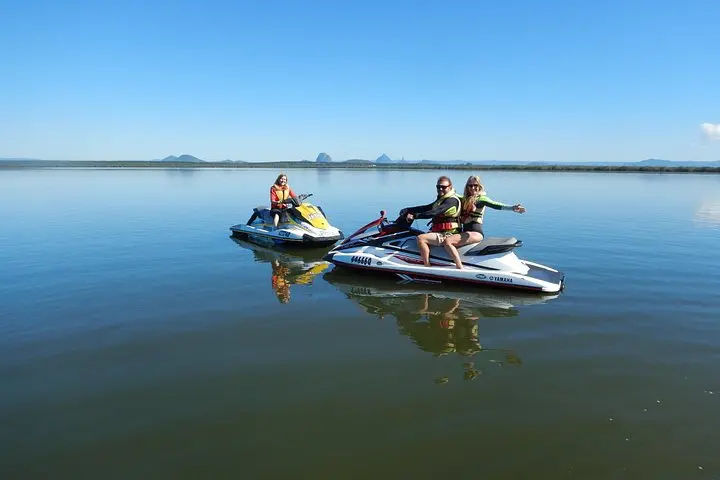
The engine cuts through a morning haze as the jet ski pins across Moreton Bay, spray tasting of salt and eucalyptus. From Caloundra’s launching slip the coast opens into wide water, sandbanks, and islands; the Glass House Mountains stand like old, stony teeth inland, their volcanic shapes readable even from offshore. Guides shepherd small groups across sheltered channels where pelicans eye the wake and dolphins thread the bow wave.
The engine cuts through a morning haze as the jet ski pins across Moreton Bay, spray tasting of salt and eucalyptus. From Caloundra’s launching slip the coast opens into wide water, sandbanks, and islands; the Glass House Mountains stand like old, stony teeth inland, their volcanic shapes readable even from offshore. Guides shepherd small groups across sheltered channels where pelicans eye the wake and dolphins thread the bow wave.
Moreton Bay Marine Park is both living reef and cultural landscape. The bay sits on pathways used for millennia by the Quandamooka people; its islands and tidal flats record sea-level changes and volcanic activity that shaped the Sunshine Coast. Today the park balances recreation with protection: speed zones, seagrass beds that host dugongs, and seasonal wildlife patterns that steer where operators travel.
Practically, expect a four-hour outing that mixes instruction, open-water riding, and a midway meal. The craft are modern, low-emission models—easy to handle but responsive; beginners will get a safety briefing and on-water coaching. Plan for sun, wind, and chop: a lightweight wetshell or long-sleeve rashguard, reef-safe sunscreen, and a secure dry bag make the day more comfortable. Bring a small camera in a floating case and wear footwear with traction for boarding.
Timing matters—calmer mornings give smoother riding and better wildlife sightings, while tidal charts influence sandbars and access. Follow guides’ instructions to avoid sensitive seagrass and keep a respectful distance from marine life. The result is kinetic and local: fast water, clear horizons, and the odd curious dolphin escorting you back toward shore.