THE ADVENTURE COLLECTIVE® · Independent discovery and booking for outdoor travel

Short, steep, and rewarded with one of Cape Town’s most dramatic viewpoints: the three-hour morning hike to Lion’s Head serves big coastal panoramas and a compact, accessible summit experience. Perfect for sunrise fotos or a quick half-day outing with a local guide.
Short, steep, and rewarded with one of Cape Town’s most dramatic viewpoints: the three-hour morning hike to Lion’s Head serves big coastal panoramas and a compact, accessible summit experience. Perfect for sunrise fotos or a quick half-day outing with a local guide.
You step off the minivan with the Atlantic wind pushing at your jacket and the cone of Lion’s Head rising above you — sharp rock, iron ladders, and scrub that seems to grip the mountain like a stubborn hand.
Verified experiences and guided adventures in the surrounding area.
Operated by Big startups pty ltd · Cape Town, Western Cape
You step off the minivan with the Atlantic wind pushing at your jacket and the cone of Lion’s Head rising above you — sharp rock, iron ladders, and scrub that seems to grip the mountain like a stubborn hand.
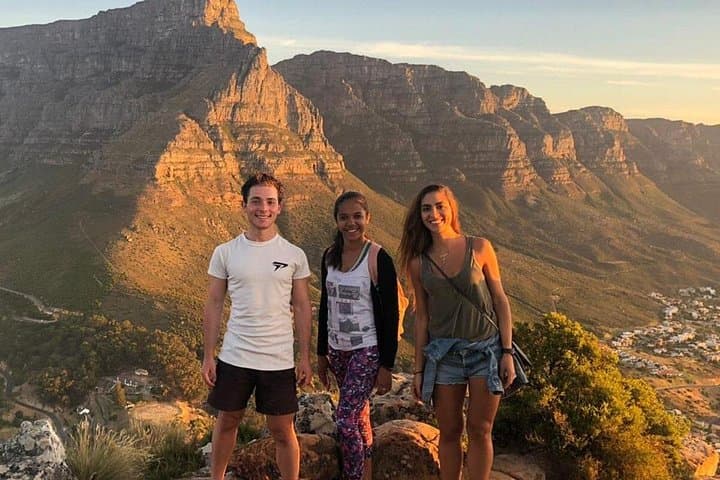
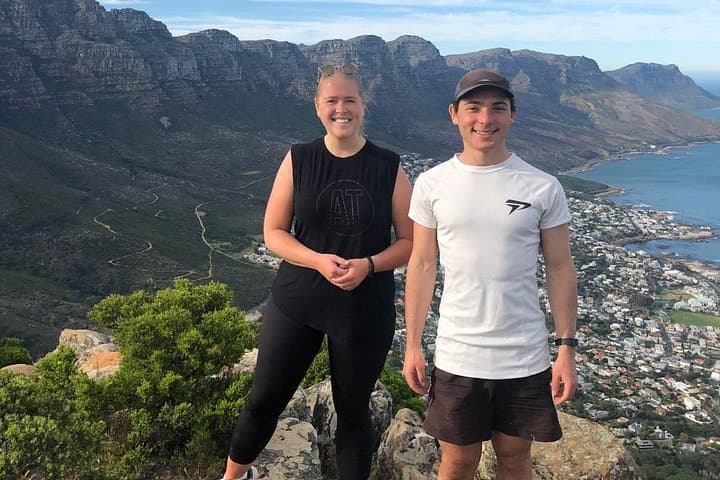
The route climbs to roughly 669 meters and offers uninterrupted panoramas: Table Mountain to the south, the sweep of Camps Bay and the Atlantic Seaboard to the west, and the city fanning out below. Geologically, Lion’s Head is part of the Cape Fold Belt, a mix of Table Mountain sandstone and weathered shale that forms steep ridgelines and exposed slabs. Historically the peak has been a landmark for sailors and locals; its distinctive profile has guided Cape Town’s growth and featured in colonial-era maps and Signal Hill firewatching.
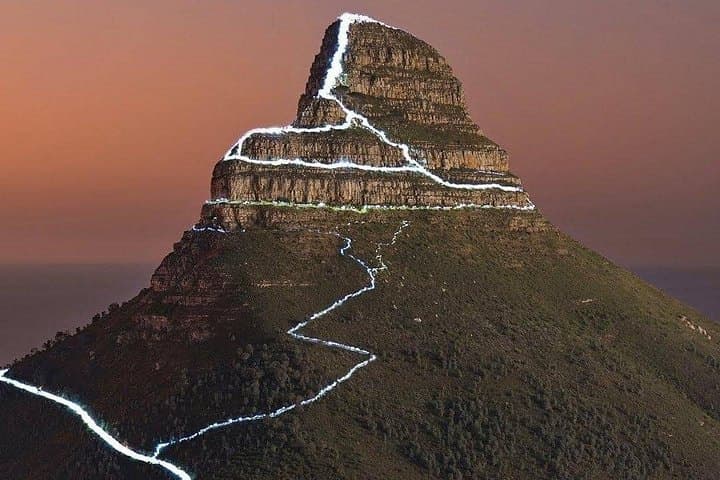
Locals value the hike for sunrise and morning light — the slopes warm quickly and the city glows. Expect a mix of narrow footpaths, packed-rock steps, short sections of chain-assisted scrambling, and a final crest that rewards patience with a 360° viewpoint.
Practical guidance: the standard tour runs about three hours including transfers and a short safety briefing; allow 2–3 hours on the trail itself. Wear stable footwear with good grip, bring at least 1–1.5 liters of water, sun protection, and a light wind layer. Trails can be busy; keep pace with the group, yield on narrow sections, and stick to the route to avoid eroding the slopes. A guide adds route knowledge and context — they point out geology, birdlife, and the best camera angles — and many operators include hotel pickup for a worry-free start.
The trail gains roughly 600–670 meters in elevation from the trailhead to the summit, with short steep sections and chain-assisted scrambling near the top.
Not mandatory, but a guide improves safety on narrow sections, provides local knowledge, and handles logistics like timing and pick-up.
Fit beginners can do it with caution; expect steady climbing and some exposure — take breaks, follow the guide, and wear good shoes.
Service animals are allowed; pets may be restricted by some operators and trail etiquette demands control on narrow sections.
Big startups pty ltd operates guided outdoor trips and adventures with an emphasis on safety, stewardship, and memorable experiences.
You step off the minivan with the Atlantic wind pushing at your jacket and the cone of Lion’s Head rising above you — sharp rock, iron ladders, and scrub that seems to grip the mountain like a stubborn hand.
You step off the minivan with the Atlantic wind pushing at your jacket and the cone of Lion’s Head rising above you — sharp rock, iron ladders, and scrub that seems to grip the mountain like a stubborn hand.
The route climbs to roughly 669 meters and offers uninterrupted panoramas: Table Mountain to the south, the sweep of Camps Bay and the Atlantic Seaboard to the west, and the city fanning out below. Geologically, Lion’s Head is part of the Cape Fold Belt, a mix of Table Mountain sandstone and weathered shale that forms steep ridgelines and exposed slabs. Historically the peak has been a landmark for sailors and locals; its distinctive profile has guided Cape Town’s growth and featured in colonial-era maps and Signal Hill firewatching.
Locals value the hike for sunrise and morning light — the slopes warm quickly and the city glows. Expect a mix of narrow footpaths, packed-rock steps, short sections of chain-assisted scrambling, and a final crest that rewards patience with a 360° viewpoint.
Practical guidance: the standard tour runs about three hours including transfers and a short safety briefing; allow 2–3 hours on the trail itself. Wear stable footwear with good grip, bring at least 1–1.5 liters of water, sun protection, and a light wind layer. Trails can be busy; keep pace with the group, yield on narrow sections, and stick to the route to avoid eroding the slopes. A guide adds route knowledge and context — they point out geology, birdlife, and the best camera angles — and many operators include hotel pickup for a worry-free start.