THE ADVENTURE COLLECTIVE® · Independent discovery and booking for outdoor travel

Watch sunlit salt basins awaken as windmills turn and salt workers begin the day. This 2–3 hour morning tour of the Saline di Trapani mixes hands-on cultural history with bird-filled coastal scenery.
Watch sunlit salt basins awaken as windmills turn and salt workers begin the day. This 2–3 hour morning tour of the Saline di Trapani mixes hands-on cultural history with bird-filled coastal scenery.
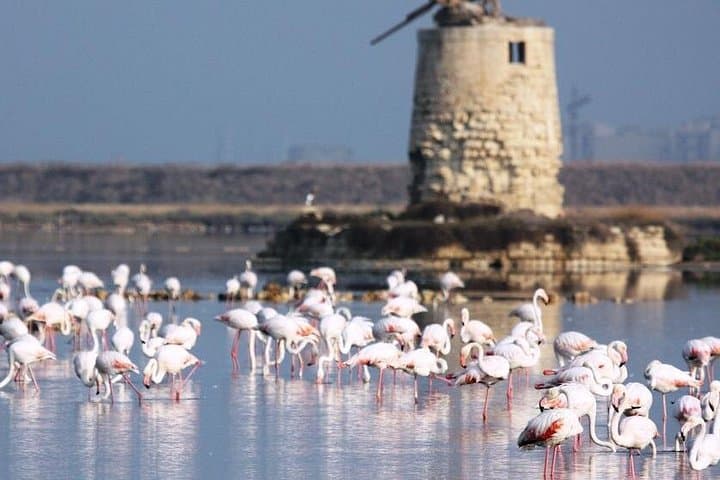
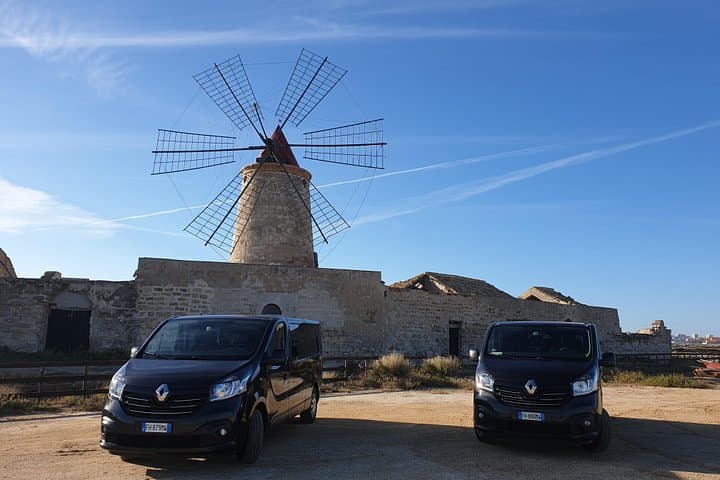
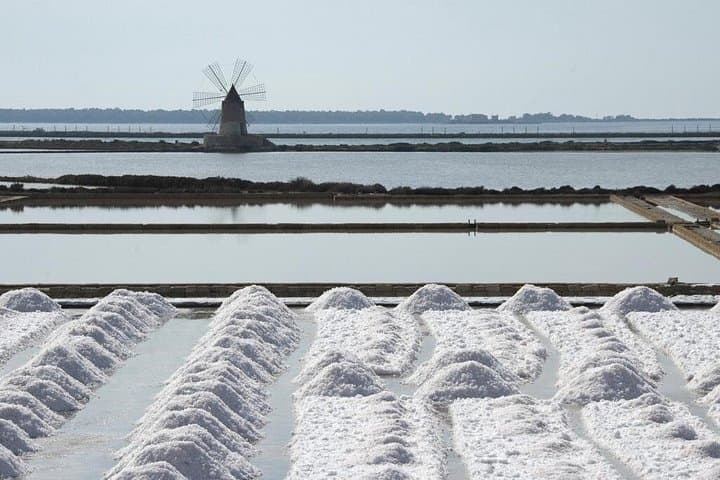
A low sun slices across shallow basins of glittering salt as the group steps from the minivan—the air smells faintly of brine and sea. Windmills punctuate the horizon, their pale sails turning lazily while neat white ridges of harvested salt rise like miniature dunes. This is the Saline di Trapani e Paceco in the cool morning hours: a working landscape where light, wind and water still do the heavy lifting.
Verified experiences and guided adventures in the surrounding area.
Operated by Flamingo Way · Trapani, Sicily
A low sun slices across shallow basins of glittering salt as the group steps from the minivan—the air smells faintly of brine and sea. Windmills punctuate the horizon, their pale sails turning lazily while neat white ridges of harvested salt rise like miniature dunes. This is the Saline di Trapani e Paceco in the cool morning hours: a working landscape where light, wind and water still do the heavy lifting.
The Reserve has shaped local life for centuries. Salt here was prized by Phoenicians, Greeks and later Venetian traders; the windmills and stone channels you’ll see are practical inheritances of that long industry. Geologically, the pans are shallow coastal lagoons—engineered evaporation basins fed by Mediterranean tides—so the ground is flat, reflective and often rimmed with pink or ochre algae that feed migrating birds.
Culturally, visits center on traditional salt-harvesting techniques and the small museums that interpret that craft; expect to meet salt workers or guides who can explain simple tools and seasonal cycles. Nature is part of the show too—flamingos and herons are regulars.
Practical guidance: the tour runs roughly 2–3 hours in the morning and includes museum admission and transport in an air-conditioned vehicle. Paths are flat but can be uneven and salty underfoot; sun protection, a reusable water bottle and sturdy shoes matter. Photography is best with low-angle light; be respectful of active worksites and wildlife. Bring a light layer for coastal breezes and plan logistics around Trapani as your base—this is an easy, sensory trip that pairs cultural history with a quiet coastal ecosystem.
The tour runs about 150 minutes (roughly 2–3 hours), with stops at salt pans, windmill viewpoints and a museum; transport is included.
Yes—museum entrance and the main reserve visits are included in the tour price.
Yes—infants and small children can be in strollers and infant seats are available; walking sections are short and on flat ground.
Most visitors use Trapani as a base; the tour includes round-trip transport from central pickup points—public transit options also exist if you travel independently.
Flamingo Way operates guided outdoor trips and adventures with an emphasis on safety, stewardship, and memorable experiences.
A low sun slices across shallow basins of glittering salt as the group steps from the minivan—the air smells faintly of brine and sea. Windmills punctuate the horizon, their pale sails turning lazily while neat white ridges of harvested salt rise like miniature dunes. This is the Saline di Trapani e Paceco in the cool morning hours: a working landscape where light, wind and water still do the heavy lifting.
A low sun slices across shallow basins of glittering salt as the group steps from the minivan—the air smells faintly of brine and sea. Windmills punctuate the horizon, their pale sails turning lazily while neat white ridges of harvested salt rise like miniature dunes. This is the Saline di Trapani e Paceco in the cool morning hours: a working landscape where light, wind and water still do the heavy lifting.
The Reserve has shaped local life for centuries. Salt here was prized by Phoenicians, Greeks and later Venetian traders; the windmills and stone channels you’ll see are practical inheritances of that long industry. Geologically, the pans are shallow coastal lagoons—engineered evaporation basins fed by Mediterranean tides—so the ground is flat, reflective and often rimmed with pink or ochre algae that feed migrating birds.
Culturally, visits center on traditional salt-harvesting techniques and the small museums that interpret that craft; expect to meet salt workers or guides who can explain simple tools and seasonal cycles. Nature is part of the show too—flamingos and herons are regulars.
Practical guidance: the tour runs roughly 2–3 hours in the morning and includes museum admission and transport in an air-conditioned vehicle. Paths are flat but can be uneven and salty underfoot; sun protection, a reusable water bottle and sturdy shoes matter. Photography is best with low-angle light; be respectful of active worksites and wildlife. Bring a light layer for coastal breezes and plan logistics around Trapani as your base—this is an easy, sensory trip that pairs cultural history with a quiet coastal ecosystem.