THE ADVENTURE COLLECTIVE® · Independent discovery and booking for outdoor travel

Ride from Fes through cedar forests and high Atlas passes to the rolling dunes of Merzouga, then along the Atlantic to Essaouira. This nine-day private motorcycle tour balances long riding days with cultural stops in medinas, kasbahs and desert camps.
Ride from Fes through cedar forests and high Atlas passes to the rolling dunes of Merzouga, then along the Atlantic to Essaouira. This nine-day private motorcycle tour balances long riding days with cultural stops in medinas, kasbahs and desert camps.
You kick the starter in the cool morning air of Fes and the city’s minarets slide behind you as the road unspools toward cedar forests and high passes.
Verified experiences and guided adventures in the surrounding area.
Operated by Bekben travel · Fes, Fès-Meknès
You kick the starter in the cool morning air of Fes and the city’s minarets slide behind you as the road unspools toward cedar forests and high passes.
The route moves fast between environments: the Middle Atlas’s forested slopes where Barbary macaques watch from stone pines, the serrated ridgelines of the High Atlas climbing above 2,000 m, then the wide, wind-sculpted sand of Erg Chebbi and the Atlantic breeze of Essaouira. Each day places a new texture under your wheels—tight hairpins over Tizi n'Tichka, long desert straights into Merzouga, and coastal lanes scented with argan trees.
Morocco’s geography reflects its history: caravan routes and kasbahs mark old trade corridors; ksars built from rammed earth show how people adapted to scarce water and shifting sand. Geologically, the Atlas is a relatively young orogeny; the Sahara’s dunes are active, moving with seasonal winds.
Practicalities matter on this ride. Expect roughly 1,600–2,000 km total, with daily legs that range from short orientation runs (50–100 km) to long transits (250–350 km). Paved roads dominate, but watch for gravel shoulders and sand near desert approaches. Fuel stations are frequent between towns but sparse in the desert—top up in Midelt and Erfoud. Pack layered riding gear for alpine cold and desert heat, a service kit for minor repairs, and documentation: an International Driving Permit and insurance. Start early to avoid midday heat in summer and to catch the best light for photos.
Accommodations alternate between riads, mountain lodges, and a desert camp—plan for firm seats and long riding days, but also for unforgettable horizons at dawn and dusk.
Yes—riders must carry a valid motorcycle license (an International Driving Permit is recommended) and be comfortable handling a mid-to-large displacement bike on varied roads.
Standard inclusions are accommodation (riads, desert camp), some breakfasts and dinners, and an official biker/guide; fuel, some meals, personal insurance and visa costs are typically excluded—confirm with the operator.
Most routes are paved with occasional gravel or sand near desert approaches; expect daily distances between ~100–350 km depending on the day’s transfer.
The tour runs year-round but timing matters—summer brings high desert heat, while winter can bring cold and occasional snow on high Atlas passes.
Bekben travel operates guided outdoor trips and adventures with an emphasis on safety, stewardship, and memorable experiences.
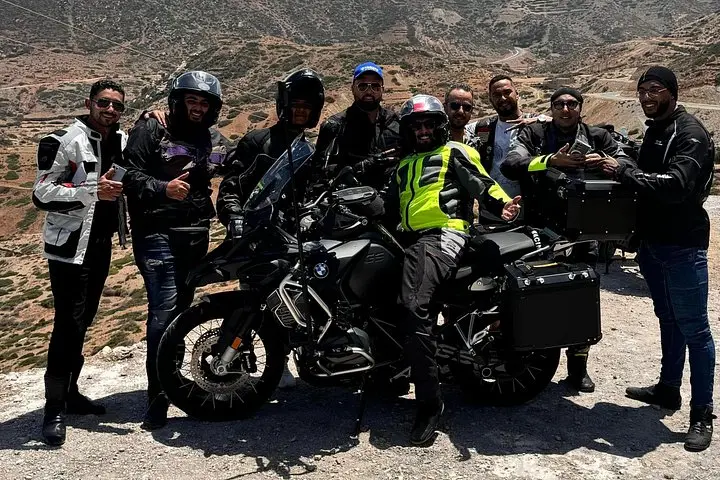
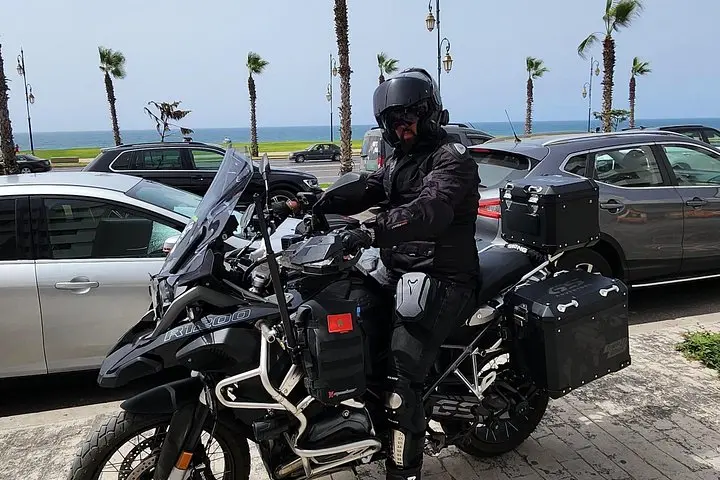
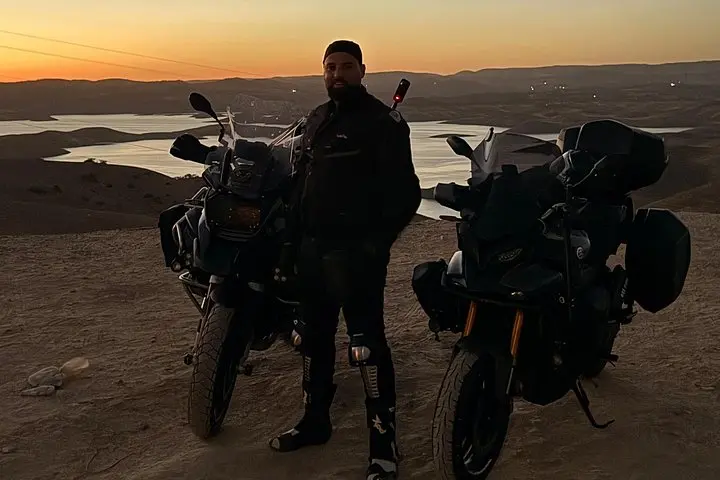
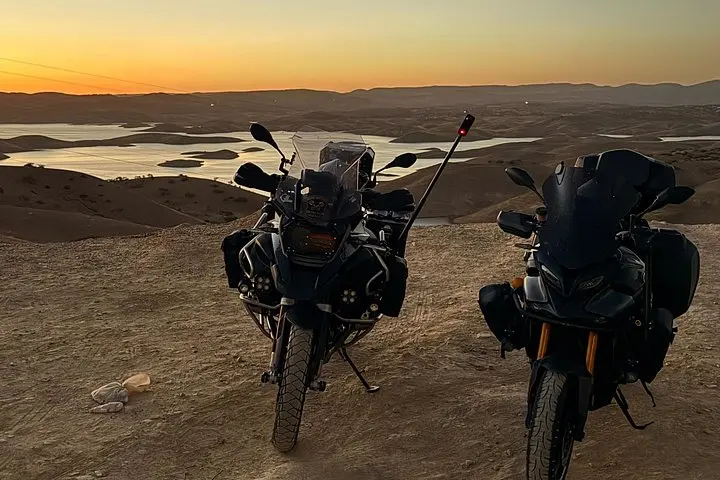
You kick the starter in the cool morning air of Fes and the city’s minarets slide behind you as the road unspools toward cedar forests and high passes.
You kick the starter in the cool morning air of Fes and the city’s minarets slide behind you as the road unspools toward cedar forests and high passes.
The route moves fast between environments: the Middle Atlas’s forested slopes where Barbary macaques watch from stone pines, the serrated ridgelines of the High Atlas climbing above 2,000 m, then the wide, wind-sculpted sand of Erg Chebbi and the Atlantic breeze of Essaouira. Each day places a new texture under your wheels—tight hairpins over Tizi n'Tichka, long desert straights into Merzouga, and coastal lanes scented with argan trees.
Morocco’s geography reflects its history: caravan routes and kasbahs mark old trade corridors; ksars built from rammed earth show how people adapted to scarce water and shifting sand. Geologically, the Atlas is a relatively young orogeny; the Sahara’s dunes are active, moving with seasonal winds.
Practicalities matter on this ride. Expect roughly 1,600–2,000 km total, with daily legs that range from short orientation runs (50–100 km) to long transits (250–350 km). Paved roads dominate, but watch for gravel shoulders and sand near desert approaches. Fuel stations are frequent between towns but sparse in the desert—top up in Midelt and Erfoud. Pack layered riding gear for alpine cold and desert heat, a service kit for minor repairs, and documentation: an International Driving Permit and insurance. Start early to avoid midday heat in summer and to catch the best light for photos.
Accommodations alternate between riads, mountain lodges, and a desert camp—plan for firm seats and long riding days, but also for unforgettable horizons at dawn and dusk.