THE ADVENTURE COLLECTIVE® · Independent discovery and booking for outdoor travel

Spend a day between Rau Forest’s spring-fed shade and the bustling Mbuyuni Market in Moshi. This private full-day tour combines gentle forest walking, local coffee-country context, and hands-on market browsing.
Spend a day between Rau Forest’s spring-fed shade and the bustling Mbuyuni Market in Moshi. This private full-day tour combines gentle forest walking, local coffee-country context, and hands-on market browsing.
Morning light spills over the southern slopes of Kilimanjaro as Moshi’s streets begin to hum — a mix of boda-bodas, market vendors calling out, and coffee drying on flat roofs. The tour starts with a town loop that lays out Moshi’s layered identity: Swahili and Chagga influences, Asian merchant streets, and the unmistakable presence of Africa’s highest peak watching on.
Verified experiences and guided adventures in the surrounding area.
Operated by PINNACLE ADVENTURES & SAFARIS LTD. · Moshi, Kilimanjaro Region
Morning light spills over the southern slopes of Kilimanjaro as Moshi’s streets begin to hum — a mix of boda-bodas, market vendors calling out, and coffee drying on flat roofs. The tour starts with a town loop that lays out Moshi’s layered identity: Swahili and Chagga influences, Asian merchant streets, and the unmistakable presence of Africa’s highest peak watching on.
By mid-morning the group moves into Rau Forest, a water-forest on Kilimanjaro’s lower alluvial base. The canopy cools the air; natural springs thread the understory and the soil holds the mountain’s runoff like a reservoir. Geologically, this floor is volcanic alluvium from the mountain’s long erosion, which nurtures coffee plantations and local farms. Culturally, the forest and market are extensions of Moshi’s agricultural lifeway — coffee and fresh produce shape livelihoods here.
The final stop is Mbuyuni Market, where stalls brim with fruit, tubers, and vegetables straight from surrounding farms. The market is sensory: colors, texture, and the cadence of bargaining.
Practical guidance: this is an easy, mostly flat day on foot but it runs 7–9 hours with transfers included. Wear sturdy walking shoes, carry a daypack with water and sun protection, and bring local currency for market purchases. Start early to catch clearer Kilimanjaro views and quieter market lanes; a local guide explains plant uses and points out springs. It’s a low-impact, culturally rich day that pairs nature observation with practical encounters of daily Tanzanian life.
The private tour runs about 7–9 hours and includes private transport, a professional local guide, bottled water, and all fees and taxes.
Yes; the walk is gentle and described as physically easy, but bring sun protection and ask about mobility needs when booking.
Yes — Mbuyuni Market sells fresh produce, snacks, and local staples; vendors typically expect cash in Tanzanian shillings.
You may encounter birds and small mammals near the springs; sightings aren’t guaranteed but guides can point out common species and signs.
PINNACLE ADVENTURES & SAFARIS LTD. operates guided outdoor trips and adventures with an emphasis on safety, stewardship, and memorable experiences.
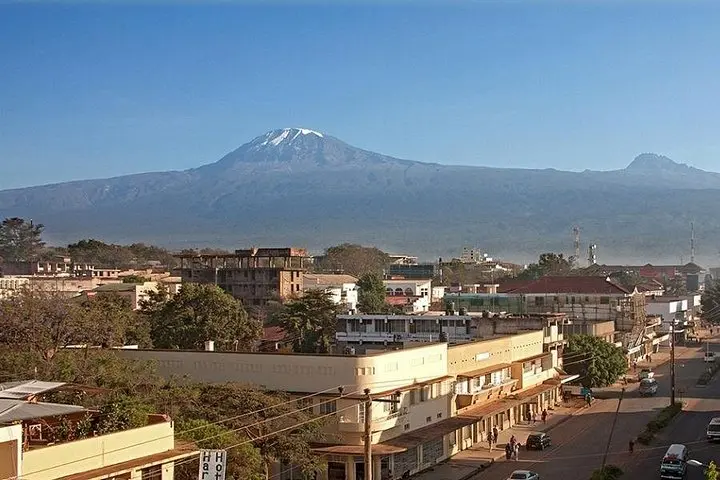
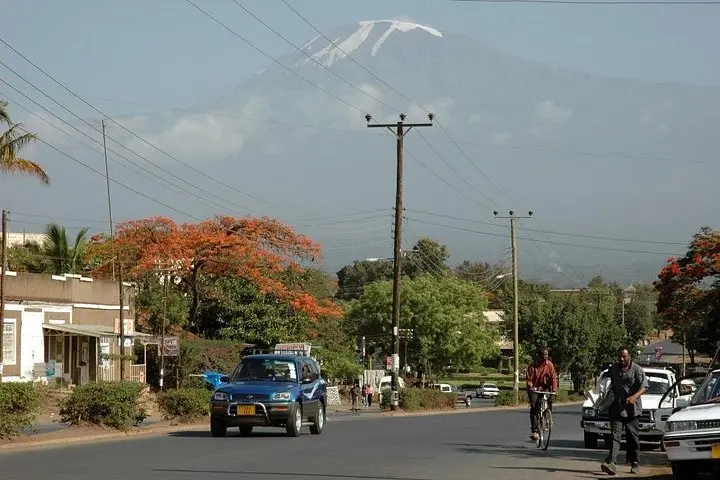
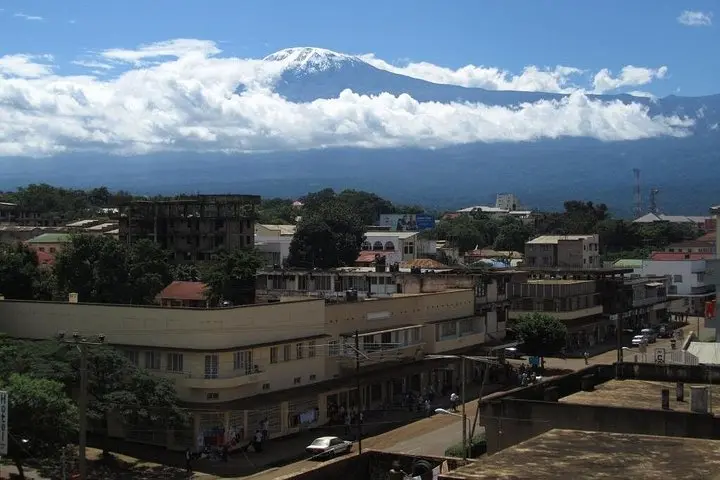
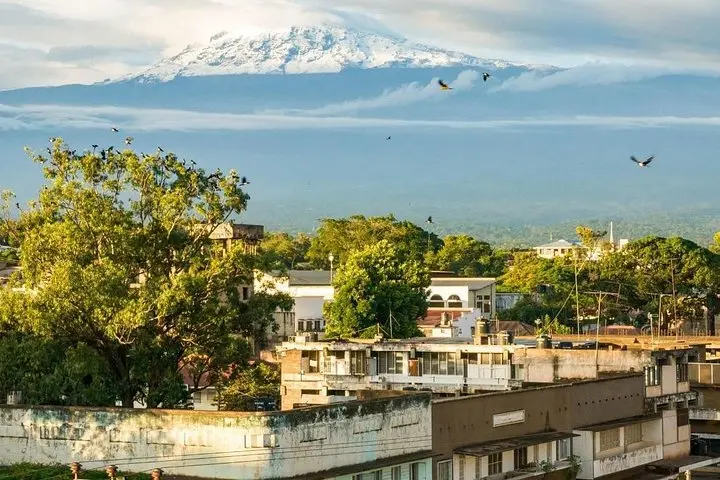
Morning light spills over the southern slopes of Kilimanjaro as Moshi’s streets begin to hum — a mix of boda-bodas, market vendors calling out, and coffee drying on flat roofs. The tour starts with a town loop that lays out Moshi’s layered identity: Swahili and Chagga influences, Asian merchant streets, and the unmistakable presence of Africa’s highest peak watching on.
Morning light spills over the southern slopes of Kilimanjaro as Moshi’s streets begin to hum — a mix of boda-bodas, market vendors calling out, and coffee drying on flat roofs. The tour starts with a town loop that lays out Moshi’s layered identity: Swahili and Chagga influences, Asian merchant streets, and the unmistakable presence of Africa’s highest peak watching on.
By mid-morning the group moves into Rau Forest, a water-forest on Kilimanjaro’s lower alluvial base. The canopy cools the air; natural springs thread the understory and the soil holds the mountain’s runoff like a reservoir. Geologically, this floor is volcanic alluvium from the mountain’s long erosion, which nurtures coffee plantations and local farms. Culturally, the forest and market are extensions of Moshi’s agricultural lifeway — coffee and fresh produce shape livelihoods here.
The final stop is Mbuyuni Market, where stalls brim with fruit, tubers, and vegetables straight from surrounding farms. The market is sensory: colors, texture, and the cadence of bargaining.
Practical guidance: this is an easy, mostly flat day on foot but it runs 7–9 hours with transfers included. Wear sturdy walking shoes, carry a daypack with water and sun protection, and bring local currency for market purchases. Start early to catch clearer Kilimanjaro views and quieter market lanes; a local guide explains plant uses and points out springs. It’s a low-impact, culturally rich day that pairs nature observation with practical encounters of daily Tanzanian life.