THE ADVENTURE COLLECTIVE® · Independent discovery and booking for outdoor travel

A six-day climb on Kilimanjaro’s Marangu Route trades technical alpine climbing for steady, high-altitude walking through rainforest, moorland and lunar saddle. This guided itinerary balances a conservative pace with a midnight summit push to Uhuru Peak.
A six-day climb on Kilimanjaro’s Marangu Route trades technical alpine climbing for steady, high-altitude walking through rainforest, moorland and lunar saddle. This guided itinerary balances a conservative pace with a midnight summit push to Uhuru Peak.
A diesel minibus leaves Moshi before dawn and the lowland air slaps closed the last of the town’s heat. By Marangu Gate the trail narrows into rainforest where ferns brush your shins and blue monkeys watch from the canopy; the climb begins not as a scramble but a patient negotiation with altitude and geology. Over six days the Marangu Route moves you through rainforest, heath, the high moorlands of the Saddle and a final night’s push across steep scree to Uhuru Peak at 5,895 m.
Verified experiences and guided adventures in the surrounding area.
Operated by Kilimanjaro Safari Experience · Moshi, Kilimanjaro Region
A diesel minibus leaves Moshi before dawn and the lowland air slaps closed the last of the town’s heat. By Marangu Gate the trail narrows into rainforest where ferns brush your shins and blue monkeys watch from the canopy; the climb begins not as a scramble but a patient negotiation with altitude and geology. Over six days the Marangu Route moves you through rainforest, heath, the high moorlands of the Saddle and a final night’s push across steep scree to Uhuru Peak at 5,895 m.
The route is the oldest and most established path on Kilimanjaro. Its huts—Mandara, Horombo and Kibo—were placed to create manageable day stages and to centralize park services; the corridor you follow threads volcanic flows and glacially carved ridgelines that mark Kilimanjaro’s million-year story. Kibo’s basalt cone is the youngest feature, and the Saddle between Mawenzi and Kibo is a pumice plain that, depending on the wind, can seem to breathe around you.
Culturally, the climb crosses Chagga farmland on the mountain’s lower flanks, where coffee terraces and banana groves feed Moshi and Arusha. Guides and porters are drawn from local villages, and the climb supports community livelihoods—expect friendly banter at hut kitchens and song at camp when the long day unravels into dinner.
Practicalities are straightforward but non-negotiable. The itinerary covers about 40–45 km round trip, with daily climbs varying from 5 to 12 km and major elevation gains: Marangu Gate (≈1,840 m) to Mandara Hut (≈2,700 m), up to Horombo (≈3,700 m), then Kibo Hut (≈4,700 m) and the summit at 5,895 m. Summit night begins around midnight: pace is slow, boots crunch on frozen scree, and the wind tests your layers. Acclimatization matters—this itinerary builds in a rest/acclimatization day at Horombo with optional Mawenzi Ridge hikes to reduce acute mountain sickness risk.
What to prepare: high-quality, broken-in mountaineering boots, layered insulation that copes with a 30–40°C swing from rainforest warmth to alpine cold, a reliable headlamp, and a hydration system that encourages sipping at altitude. Trekking poles reduce strain on knees during long descents. The huts offer basic dormitory sleeping and hot water for washing, but nights are communal and spare—pack a warm sleeping liner.
Timing: the clearest weather and most predictable summit windows run June–October and January–February. Allow a buffer day in Moshi before departure and plan for a slow summit pace; the mountain rewards patience. For many, the real summit moment is not just Uhuru Peak but the quiet, breath-by-breath ascent that carries you from forest shade into the continent’s roof.
No technical climbing skills are required, but you should have experience on multi-day hikes and be comfortable at altitude; the route is a strenuous walk rather than a technical climb.
The most reliable weather windows are June–October and January–February; these months have lower rainfall and clearer summit conditions.
Uhuru Peak is 5,895 m; the summit push typically starts around midnight and takes 6–8 hours up and 4–5 hours down to Horombo Hut.
Huts have basic toilet facilities; on trail long drops are used—pack hand sanitizer and biodegradable wipes as hut facilities are limited.
Tipping is customary and appreciated; ask your operator for current local guidelines but budget roughly 10–15% of the trip cost divided among crew.
Cancellation terms vary by operator; this specific tour allows full refund if canceled at least 24 hours before departure—confirm details with the supplier.
Kilimanjaro Safari Experience operates guided outdoor trips and adventures with an emphasis on safety, stewardship, and memorable experiences.


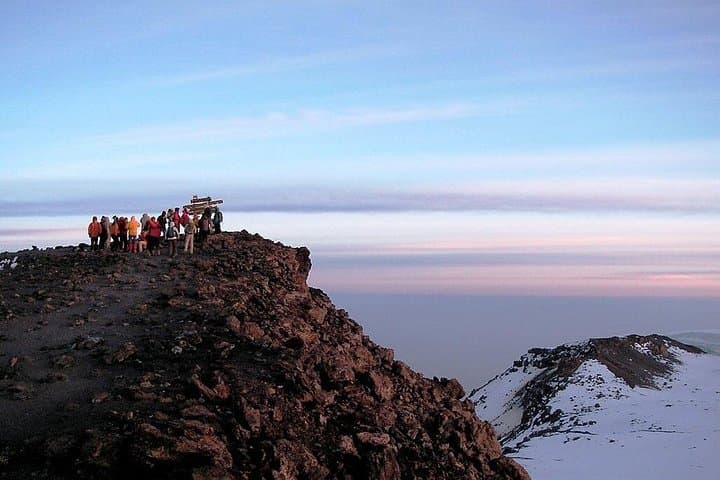
A diesel minibus leaves Moshi before dawn and the lowland air slaps closed the last of the town’s heat. By Marangu Gate the trail narrows into rainforest where ferns brush your shins and blue monkeys watch from the canopy; the climb begins not as a scramble but a patient negotiation with altitude and geology. Over six days the Marangu Route moves you through rainforest, heath, the high moorlands of the Saddle and a final night’s push across steep scree to Uhuru Peak at 5,895 m.
A diesel minibus leaves Moshi before dawn and the lowland air slaps closed the last of the town’s heat. By Marangu Gate the trail narrows into rainforest where ferns brush your shins and blue monkeys watch from the canopy; the climb begins not as a scramble but a patient negotiation with altitude and geology. Over six days the Marangu Route moves you through rainforest, heath, the high moorlands of the Saddle and a final night’s push across steep scree to Uhuru Peak at 5,895 m.
The route is the oldest and most established path on Kilimanjaro. Its huts—Mandara, Horombo and Kibo—were placed to create manageable day stages and to centralize park services; the corridor you follow threads volcanic flows and glacially carved ridgelines that mark Kilimanjaro’s million-year story. Kibo’s basalt cone is the youngest feature, and the Saddle between Mawenzi and Kibo is a pumice plain that, depending on the wind, can seem to breathe around you.
Culturally, the climb crosses Chagga farmland on the mountain’s lower flanks, where coffee terraces and banana groves feed Moshi and Arusha. Guides and porters are drawn from local villages, and the climb supports community livelihoods—expect friendly banter at hut kitchens and song at camp when the long day unravels into dinner.
Practicalities are straightforward but non-negotiable. The itinerary covers about 40–45 km round trip, with daily climbs varying from 5 to 12 km and major elevation gains: Marangu Gate (≈1,840 m) to Mandara Hut (≈2,700 m), up to Horombo (≈3,700 m), then Kibo Hut (≈4,700 m) and the summit at 5,895 m. Summit night begins around midnight: pace is slow, boots crunch on frozen scree, and the wind tests your layers. Acclimatization matters—this itinerary builds in a rest/acclimatization day at Horombo with optional Mawenzi Ridge hikes to reduce acute mountain sickness risk.
What to prepare: high-quality, broken-in mountaineering boots, layered insulation that copes with a 30–40°C swing from rainforest warmth to alpine cold, a reliable headlamp, and a hydration system that encourages sipping at altitude. Trekking poles reduce strain on knees during long descents. The huts offer basic dormitory sleeping and hot water for washing, but nights are communal and spare—pack a warm sleeping liner.
Timing: the clearest weather and most predictable summit windows run June–October and January–February. Allow a buffer day in Moshi before departure and plan for a slow summit pace; the mountain rewards patience. For many, the real summit moment is not just Uhuru Peak but the quiet, breath-by-breath ascent that carries you from forest shade into the continent’s roof.