THE ADVENTURE COLLECTIVE® · Independent discovery and booking for outdoor travel

A luxury day out from Dubrovnik that pairs spiritual calm and Ottoman history with wild, swim-ready waterfalls. Visit Blagaj’s riverside tekke, wander Mostar’s Old Town and jump into the emerald pools at Kravice.
A luxury day out from Dubrovnik that pairs spiritual calm and Ottoman history with wild, swim-ready waterfalls. Visit Blagaj’s riverside tekke, wander Mostar’s Old Town and jump into the emerald pools at Kravice.
You arrive at a low, stony quay on the Buna and the water regards you like an old friend—clear, cool, and insistent. The Dervish house at Blagaj sits against limestone cliffs; its white façade and wooden terraces seem to grow from the rock, while the Buna River pushes past the tekke and murmurs stories of Sufi ritual and Ottoman afternoons.
Verified experiences and guided adventures in the surrounding area.
Operated by Simply H · Mostar, Herzegovina-Neretva Canton
You arrive at a low, stony quay on the Buna and the water regards you like an old friend—clear, cool, and insistent. The Dervish house at Blagaj sits against limestone cliffs; its white façade and wooden terraces seem to grow from the rock, while the Buna River pushes past the tekke and murmurs stories of Sufi ritual and Ottoman afternoons.
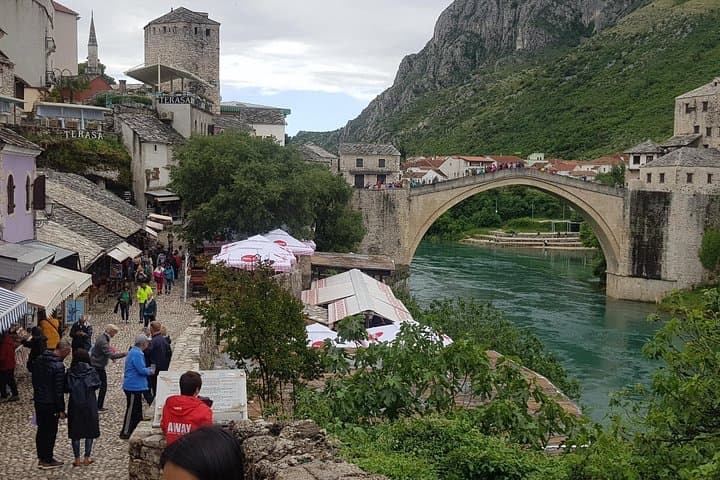
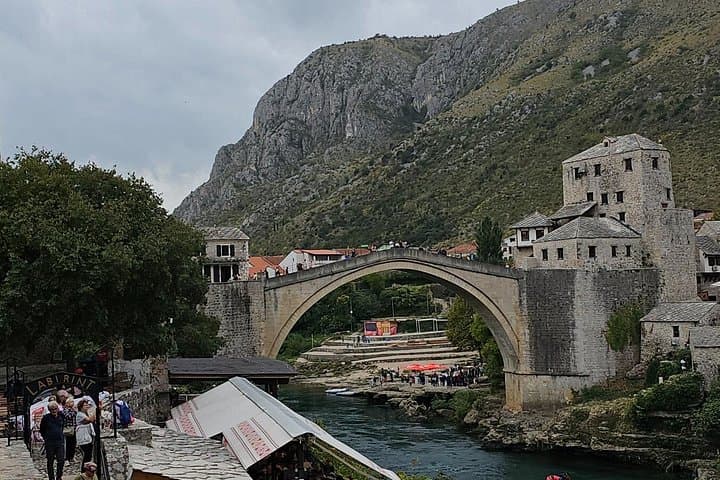
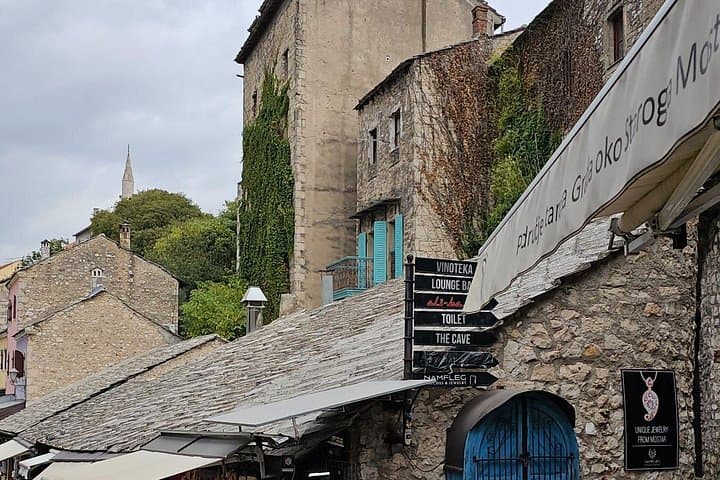
From Blagaj the road eases into Mostar, where the Old Bridge arcs over an emerald Neretva and smells of baked bread and strong coffee drift through the bazaar. Mostar’s bridge, rebuilt after the 1990s conflict, is both engineering feat and cultural milestone—stones that speak of Ottoman masons and recent reconciliation. Geologically, the region is karst country: limestone cliffs, underground springs, and sudden waterfalls carve the landscape into dramatic drops and quiet pools.
Kravice Waterfalls waits at the day’s midpoint, a semicircle of cascades pouring into wide, swimmable basins. In summer the falls dare you into the water; in shoulder seasons they offer quieter views and better light for photography. Local cuisine leans on grilled meats, freshwater fish, and simple pastries—lunch in Mostar typically pairs river views with hearty portions.
Practical guidance: this private, six-hour road loop includes vehicle transport and bottled water, but expect cobblestones, a few stair sections, and uneven trails at Kravice. Bring sturdy shoes that can handle damp rock if you plan to swim, and time your visit for morning or late afternoon light to avoid peak crowds. Respect sacred sites at Blagaj, follow signage at Kravice, and leave no trace—these places are lively, but fragile.
The tour is approximately 10 hours with a relaxed, guided pace; most time is spent sightseeing and includes transport between sites.
Swimming is optional and not specifically included; bring swimwear and be prepared for informal, public swimming areas.
Lunch in Mostar is typically included as part of the itinerary choices or arranged at a local restaurant; bring snacks if you have dietary restrictions.
Yes—infant seats and stroller access are noted, but some walking on uneven surfaces is required.
Simply H operates guided outdoor trips and adventures with an emphasis on safety, stewardship, and memorable experiences.

You arrive at a low, stony quay on the Buna and the water regards you like an old friend—clear, cool, and insistent. The Dervish house at Blagaj sits against limestone cliffs; its white façade and wooden terraces seem to grow from the rock, while the Buna River pushes past the tekke and murmurs stories of Sufi ritual and Ottoman afternoons.
You arrive at a low, stony quay on the Buna and the water regards you like an old friend—clear, cool, and insistent. The Dervish house at Blagaj sits against limestone cliffs; its white façade and wooden terraces seem to grow from the rock, while the Buna River pushes past the tekke and murmurs stories of Sufi ritual and Ottoman afternoons.
From Blagaj the road eases into Mostar, where the Old Bridge arcs over an emerald Neretva and smells of baked bread and strong coffee drift through the bazaar. Mostar’s bridge, rebuilt after the 1990s conflict, is both engineering feat and cultural milestone—stones that speak of Ottoman masons and recent reconciliation. Geologically, the region is karst country: limestone cliffs, underground springs, and sudden waterfalls carve the landscape into dramatic drops and quiet pools.
Kravice Waterfalls waits at the day’s midpoint, a semicircle of cascades pouring into wide, swimmable basins. In summer the falls dare you into the water; in shoulder seasons they offer quieter views and better light for photography. Local cuisine leans on grilled meats, freshwater fish, and simple pastries—lunch in Mostar typically pairs river views with hearty portions.
Practical guidance: this private, six-hour road loop includes vehicle transport and bottled water, but expect cobblestones, a few stair sections, and uneven trails at Kravice. Bring sturdy shoes that can handle damp rock if you plan to swim, and time your visit for morning or late afternoon light to avoid peak crowds. Respect sacred sites at Blagaj, follow signage at Kravice, and leave no trace—these places are lively, but fragile.