THE ADVENTURE COLLECTIVE® · Independent discovery and booking for outdoor travel

Ride east from Hanoi along rice-lined roads to Bat Trang, a centuries-old pottery village on the Red River. Spend five hours touring workshops, making clay pieces, and shopping for uniquely glazed ceramics with a local guide.
Ride east from Hanoi along rice-lined roads to Bat Trang, a centuries-old pottery village on the Red River. Spend five hours touring workshops, making clay pieces, and shopping for uniquely glazed ceramics with a local guide.
You peel away from the bustle of Hanoi and the road unfurls between rice paddies and the slow, broad ribbon of the Red River. The motorbike hums; the air smells of wet earth and kiln smoke. Approaching Bat Trang, the village itself begins to assert character—rows of low workshops, clay dust on wooden tables, the steady wheel of a potter’s hand.
Verified experiences and guided adventures in the surrounding area.
Operated by Street Food Tours Hanoi · Hanoi, Hanoi
You peel away from the bustle of Hanoi and the road unfurls between rice paddies and the slow, broad ribbon of the Red River. The motorbike hums; the air smells of wet earth and kiln smoke. Approaching Bat Trang, the village itself begins to assert character—rows of low workshops, clay dust on wooden tables, the steady wheel of a potter’s hand.
Bat Trang has been a center of ceramics for centuries, with written records and trade links stretching back to the late medieval period. Locally mined clay and the Red River’s transport corridor helped generations refine distinctive glazes and forms. The village sits on alluvial plains; the geology is forgiving—soft river clay ideal for throwing and molding.
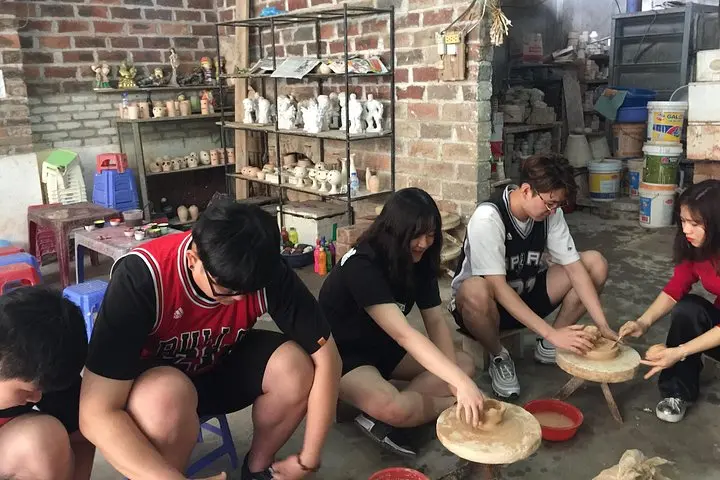
Culture here is hands-on. Families run small studios where you can make, paint, and fire pieces under traditional techniques. The market near the main lane displays everything from everyday bowls to ornate vases; kilns push out faint warmth that seems to nudge visitors closer.
Practical guidance: expect a roughly five-hour outing from central Hanoi, moving largely by motorbike with stops at workshops and the market. Helmets and an English-speaking guide are standard; workshops supply aprons and tools. Bring comfortable shoes for uneven workshop floors, a small daypack for purchases, and cash for bargaining. Timing matters—mornings are cooler for throwing and quieter in studios; afternoons are better for photography when light slants through kiln doors.
This trip suits travelers who want to trade a fast city beat for tactile craft time and rural views—a short, authentic immersion into Vietnam’s ceramic heritage.
The trip is typically about 30–60 minutes each way depending on traffic; total tour time is around five hours including stops.
Yes—family-run workshops provide instruction and tools for first-timers; staff will guide you through shaping and painting.
Usually the item needs drying and firing; many tours let you paint and leave your piece for firing, then arrange collection or shipping later.
Children can join but must follow safety rules; infants are typically required to sit on an adult’s lap and helmets are supplied.
Street Food Tours Hanoi operates guided outdoor trips and adventures with an emphasis on safety, stewardship, and memorable experiences.



You peel away from the bustle of Hanoi and the road unfurls between rice paddies and the slow, broad ribbon of the Red River. The motorbike hums; the air smells of wet earth and kiln smoke. Approaching Bat Trang, the village itself begins to assert character—rows of low workshops, clay dust on wooden tables, the steady wheel of a potter’s hand.
You peel away from the bustle of Hanoi and the road unfurls between rice paddies and the slow, broad ribbon of the Red River. The motorbike hums; the air smells of wet earth and kiln smoke. Approaching Bat Trang, the village itself begins to assert character—rows of low workshops, clay dust on wooden tables, the steady wheel of a potter’s hand.
Bat Trang has been a center of ceramics for centuries, with written records and trade links stretching back to the late medieval period. Locally mined clay and the Red River’s transport corridor helped generations refine distinctive glazes and forms. The village sits on alluvial plains; the geology is forgiving—soft river clay ideal for throwing and molding.
Culture here is hands-on. Families run small studios where you can make, paint, and fire pieces under traditional techniques. The market near the main lane displays everything from everyday bowls to ornate vases; kilns push out faint warmth that seems to nudge visitors closer.
Practical guidance: expect a roughly five-hour outing from central Hanoi, moving largely by motorbike with stops at workshops and the market. Helmets and an English-speaking guide are standard; workshops supply aprons and tools. Bring comfortable shoes for uneven workshop floors, a small daypack for purchases, and cash for bargaining. Timing matters—mornings are cooler for throwing and quieter in studios; afternoons are better for photography when light slants through kiln doors.
This trip suits travelers who want to trade a fast city beat for tactile craft time and rural views—a short, authentic immersion into Vietnam’s ceramic heritage.