THE ADVENTURE COLLECTIVE® · Independent discovery and booking for outdoor travel

Ascend Mount Batur in the blue hour to watch Mount Agung and Lake Batur wake beneath you. This guided, moderate sunrise hike combines volcanic terrain with cultural context and hotel transfers.
Ascend Mount Batur in the blue hour to watch Mount Agung and Lake Batur wake beneath you. This guided, moderate sunrise hike combines volcanic terrain with cultural context and hotel transfers.
Before dawn the trail is a column of headlamps moving up scorched pumice and loose lava rock—each step measured, each breath visible in cool summit air. As you crest the ridge the horizon ignites: Mount Agung’s silhouette and the green bowl of Batur caldera fill the view while Lake Batur holds a quiet glassy sheen below.
Verified experiences and guided adventures in the surrounding area.
Operated by Tour East Indonesia · Kintamani, Bali
Before dawn the trail is a column of headlamps moving up scorched pumice and loose lava rock—each step measured, each breath visible in cool summit air. As you crest the ridge the horizon ignites: Mount Agung’s silhouette and the green bowl of Batur caldera fill the view while Lake Batur holds a quiet glassy sheen below.
Geology and culture sit close here. Mount Batur is an extremely active stratovolcano within a larger caldera created by a massive eruption thousands of years ago. The area is culturally important to local Balinese, who maintain temples and rituals tied to the mountain and lake.
Expect a rugged, stair-like ascent of roughly 2 hours from the trailhead at the base, with loose volcanic scree and occasional steep switchbacks. Guides lead small groups (shared tours max ~15) with a light breakfast at the top and hotel transfers included for many pickup zones. Summit temperatures commonly drop to 8–15°C, so layers are essential.
You'll often explore younger craters on the descent and pass through scrub, grassy terraces and small coffee plots cultivated by villagers. Wildlife is subtle—birds and the occasional macaque—while night air carries the scent of volcanic rock and damp earth.
Practical notes: be ready for an early pickup, use a reliable headlamp, wear grippy boots, and carry water and a warm jacket. The effort is moderate but steady; pacing and proper footwear make the climb straightforward. Respect temple sites and local farms, stick to trails to limit erosion, and leave no trace to protect this dramatic volcanic landscape.
Expect roughly 2–3 hours to ascend from the trailhead to the summit depending on pace and fitness; descent is typically 1.5–2 hours.
Summit temperatures commonly range 8–15°C—bring warm layers, a windproof shell, and gloves for the sunrise stop.
Yes, this is a guided tour with English-speaking guides and hotel pickup/drop-off from many areas (Kuta, Seminyak, Sanur, Jimbaran, Nusa Dua) included.
Children must be accompanied by an adult; the tour is not recommended for travelers with spinal or serious cardiovascular issues due to steep sections and altitude change.
Tour East Indonesia operates guided outdoor trips and adventures with an emphasis on safety, stewardship, and memorable experiences.
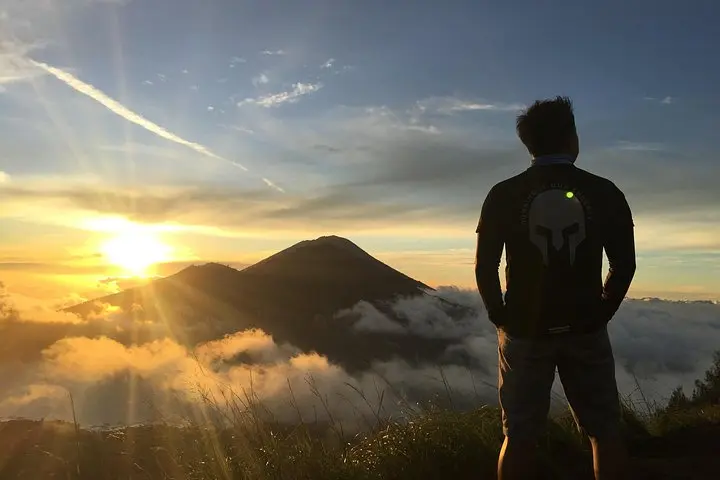
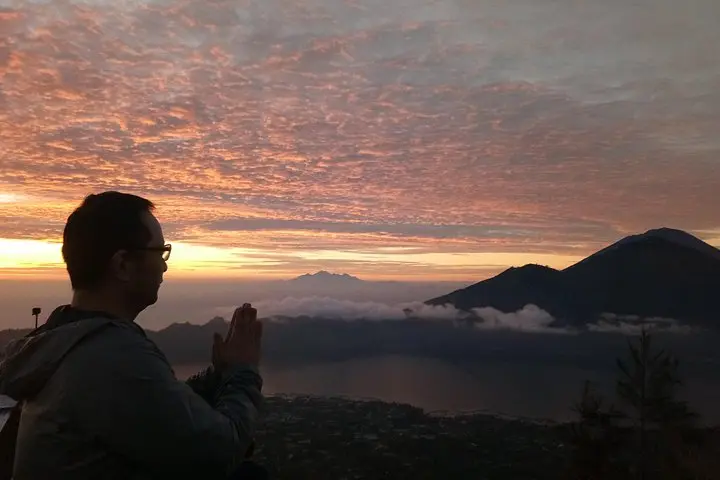
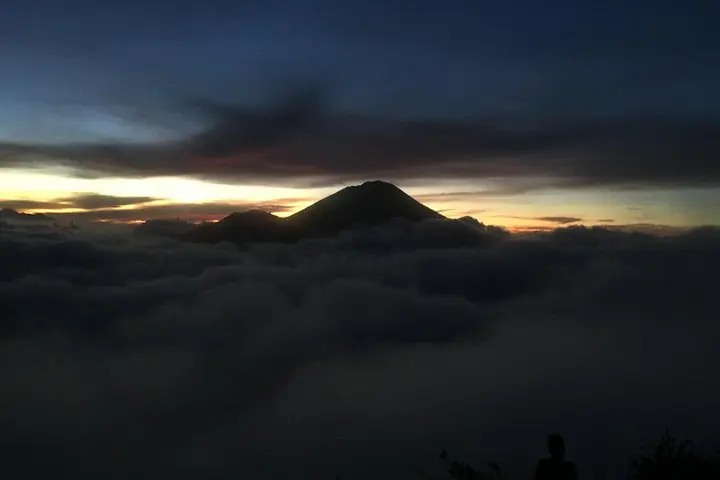
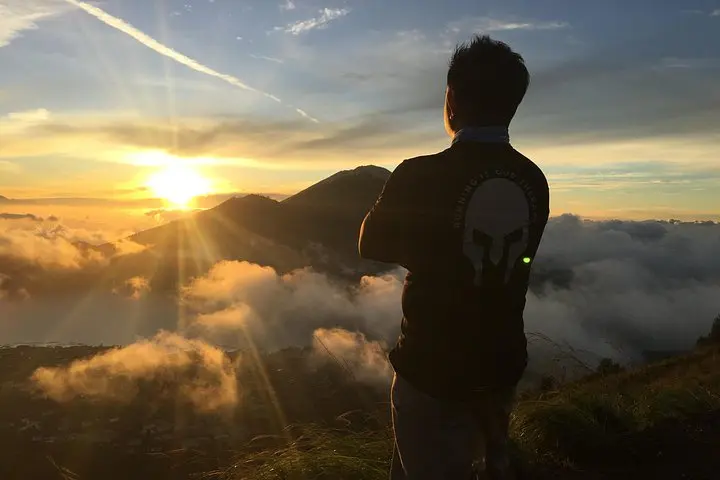
Before dawn the trail is a column of headlamps moving up scorched pumice and loose lava rock—each step measured, each breath visible in cool summit air. As you crest the ridge the horizon ignites: Mount Agung’s silhouette and the green bowl of Batur caldera fill the view while Lake Batur holds a quiet glassy sheen below.
Before dawn the trail is a column of headlamps moving up scorched pumice and loose lava rock—each step measured, each breath visible in cool summit air. As you crest the ridge the horizon ignites: Mount Agung’s silhouette and the green bowl of Batur caldera fill the view while Lake Batur holds a quiet glassy sheen below.
Geology and culture sit close here. Mount Batur is an extremely active stratovolcano within a larger caldera created by a massive eruption thousands of years ago. The area is culturally important to local Balinese, who maintain temples and rituals tied to the mountain and lake.
Expect a rugged, stair-like ascent of roughly 2 hours from the trailhead at the base, with loose volcanic scree and occasional steep switchbacks. Guides lead small groups (shared tours max ~15) with a light breakfast at the top and hotel transfers included for many pickup zones. Summit temperatures commonly drop to 8–15°C, so layers are essential.
You'll often explore younger craters on the descent and pass through scrub, grassy terraces and small coffee plots cultivated by villagers. Wildlife is subtle—birds and the occasional macaque—while night air carries the scent of volcanic rock and damp earth.
Practical notes: be ready for an early pickup, use a reliable headlamp, wear grippy boots, and carry water and a warm jacket. The effort is moderate but steady; pacing and proper footwear make the climb straightforward. Respect temple sites and local farms, stick to trails to limit erosion, and leave no trace to protect this dramatic volcanic landscape.