THE ADVENTURE COLLECTIVE® · Independent discovery and booking for outdoor travel

Ascend Mount Batur before dawn, stand on a volcanic rim as sunlight floods Lake Batur, and enjoy a simple summit breakfast served with local insight. This small-group sunrise trek balances dramatic views with pragmatic preparation for loose volcanic terrain.
Ascend Mount Batur before dawn, stand on a volcanic rim as sunlight floods Lake Batur, and enjoy a simple summit breakfast served with local insight. This small-group sunrise trek balances dramatic views with pragmatic preparation for loose volcanic terrain.
You step from the transfer van into pre-dawn black at Toya Bungkah; a cool wind off Lake Batur pushes at your jacket while headlamps bob like slow comets up the trail.
Verified experiences and guided adventures in the surrounding area.
Operated by Bali Exploring Tours · Kintamani, Bali
You step from the transfer van into pre-dawn black at Toya Bungkah; a cool wind off Lake Batur pushes at your jacket while headlamps bob like slow comets up the trail.
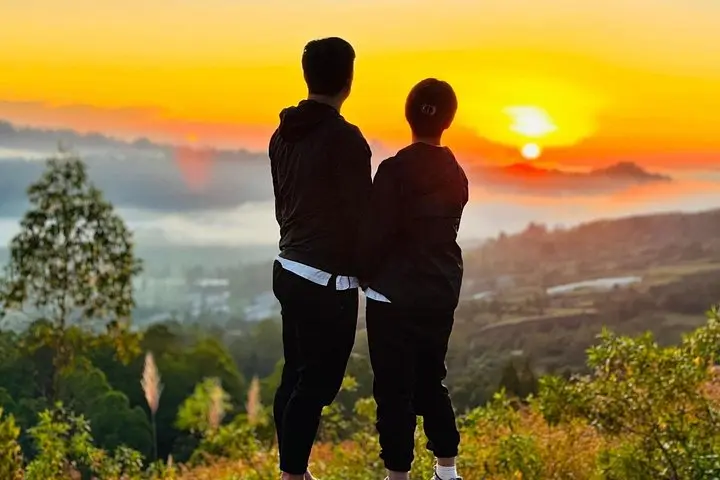
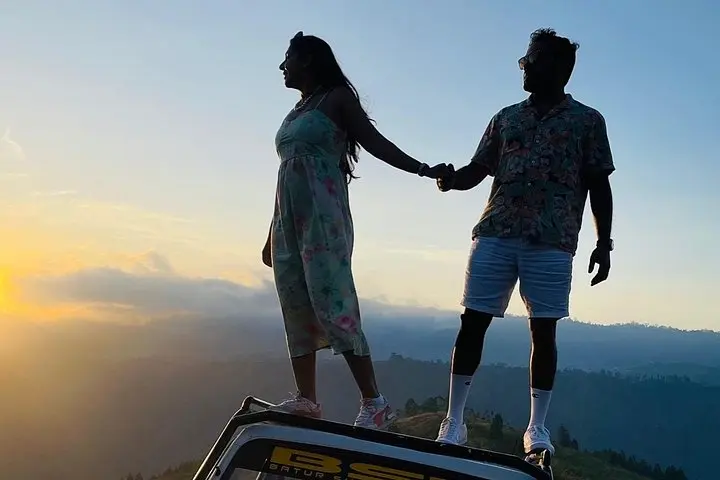
The route climbs through scrub and loose volcanic rock toward Mount Batur’s 1,717 m rim, arriving at the summit just as the sky begins to separate night from day. The caldera opens below—Lake Batur’s dark surface, the skeletal outline of volcanic cones, and distant Mount Agung receiving the first light.
Geologically, Batur sits inside a large caldera formed by repeated explosive eruptions; its current cone is active and shaped by relatively recent flows. Culturally the mountain is woven into Balinese Hindu ritual life, and local guides often point out shrines and explain how the lake and slopes feed village agriculture.
This particular sunrise trek is a small-group, guided experience: expect about 2–3 km each way with roughly 600–700 m of ascent, 1.5–2 hours uphill on uneven volcanic scree and rocky steps, then a simple summit breakfast and coffee. After descending you’ll relax at a base bonfire with your guide.
Practical edge: wear grippy hiking shoes, layer for a sharp temperature swing at the top, and use a headlamp on the ascent. Trails can be slippery after rain—go slow on loose rock and follow your guide. Carry water, a light waterproof, and a phone camera with a charged battery; the light changes fast and you’ll want a few clear shots. Respect trail markers and local sites—sticking to the path helps preserve fragile volcanic soil and village land.
You should have moderate fitness—able to hike 1.5–2 hours uphill at a steady pace on loose volcanic rock; guides will set the pace for the group.
Pickups are typically very early (around 2:00–3:00 AM). The full activity runs about 5–6 hours including transfer, ascent (1.5–2 hours), summit time, and descent.
Mount Batur is active but monitored; guided treks use established trails and follow local safety guidance—check current volcanic advisories before travel.
A simple breakfast (local breakfast items), tea/coffee, a flashlight or headlamp may be provided, and often a hiking stick—confirm specifics with the operator.
Bali Exploring Tours operates guided outdoor trips and adventures with an emphasis on safety, stewardship, and memorable experiences.

You step from the transfer van into pre-dawn black at Toya Bungkah; a cool wind off Lake Batur pushes at your jacket while headlamps bob like slow comets up the trail.
You step from the transfer van into pre-dawn black at Toya Bungkah; a cool wind off Lake Batur pushes at your jacket while headlamps bob like slow comets up the trail.
The route climbs through scrub and loose volcanic rock toward Mount Batur’s 1,717 m rim, arriving at the summit just as the sky begins to separate night from day. The caldera opens below—Lake Batur’s dark surface, the skeletal outline of volcanic cones, and distant Mount Agung receiving the first light.
Geologically, Batur sits inside a large caldera formed by repeated explosive eruptions; its current cone is active and shaped by relatively recent flows. Culturally the mountain is woven into Balinese Hindu ritual life, and local guides often point out shrines and explain how the lake and slopes feed village agriculture.
This particular sunrise trek is a small-group, guided experience: expect about 2–3 km each way with roughly 600–700 m of ascent, 1.5–2 hours uphill on uneven volcanic scree and rocky steps, then a simple summit breakfast and coffee. After descending you’ll relax at a base bonfire with your guide.
Practical edge: wear grippy hiking shoes, layer for a sharp temperature swing at the top, and use a headlamp on the ascent. Trails can be slippery after rain—go slow on loose rock and follow your guide. Carry water, a light waterproof, and a phone camera with a charged battery; the light changes fast and you’ll want a few clear shots. Respect trail markers and local sites—sticking to the path helps preserve fragile volcanic soil and village land.