THE ADVENTURE COLLECTIVE® · Independent discovery and booking for outdoor travel

Clip into a continuous steel cable and move across ladders, rungs, and cliffside bridges on a guided via ferrata above Idaho Springs. This three‑hour experience pairs exposed mountaineering with short ziplines—ideal for fit adventurers comfortable with height and exposure.
Clip into a continuous steel cable and move across ladders, rungs, and cliffside bridges on a guided via ferrata above Idaho Springs. This three‑hour experience pairs exposed mountaineering with short ziplines—ideal for fit adventurers comfortable with height and exposure.
The iron rail winds above Clear Creek, every rung rattling under boot and breath, Idaho Springs shrinking to a strip of roofs in the bend below. On AVA’s Mount Blue Sky Via Ferrata you clip into a continuous steel cable, step onto ladders bolted into solid granite, and edge across exposed ledges with wind pushing at your jacket.
Verified experiences and guided adventures in the surrounding area.
Operated by AVA Rafting and Zipline · Idaho Springs, Colorado
The iron rail winds above Clear Creek, every rung rattling under boot and breath, Idaho Springs shrinking to a strip of roofs in the bend below. On AVA’s Mount Blue Sky Via Ferrata you clip into a continuous steel cable, step onto ladders bolted into solid granite, and edge across exposed ledges with wind pushing at your jacket.
The route follows cliffs shaped by ancient glaciers and the hard Precambrian gneiss that makes secure bolt placements possible. The valley below still holds 19th‑century mining relics—Ore cars, tailings, and the Argo mill—reminders that this corridor has long been a working landscape. The mountain’s recent renaming to Mount Blue Sky acknowledges Indigenous connections to the range; guides often point out old mining switchbacks and local geology as part of the narrative.
Expect three hours of active mountaineering: aided climbs on iron rungs, a 50‑foot free‑fall style section, and short ziplines that shuttle you back toward the outpost. Groups are small (max ~12) and guided; no prior climbing certification is required, but comfort with exposure, steady footing, and basic coordination are essential. Guides supply helmet, harness, and dual‑locking lanyards—practice clipping procedures closely. Dress in windproof layers, bring 1–2 liters of water, and plan for altitude (routes sit around 10,000–12,000 ft). Operations run in most conditions except lightning; mornings usually mean calmer winds and clearer light. Follow guide instructions, move deliberately through clipping stations, and you’ll finish with a distinct sense of earned vertical travel—and possibly a hot drink back in Idaho Springs.
No formal climbing experience is required; the route is guided and uses fixed cables and rungs, but you should be comfortable with exposure and following clipping procedures.
Operator weight limits are 40–250 lbs; guides provide all harnesses, helmets, and lanyards and will brief safety procedures before starting.
Minimum age can vary by operator and route; contact the provider when booking—children must be able to follow directions and meet weight requirements.
Full refund if cancelled at least 24 hours before the scheduled departure; weather cancellations occur for lightning and other unsafe conditions.
AVA Rafting and Zipline operates guided outdoor trips and adventures with an emphasis on safety, stewardship, and memorable experiences.
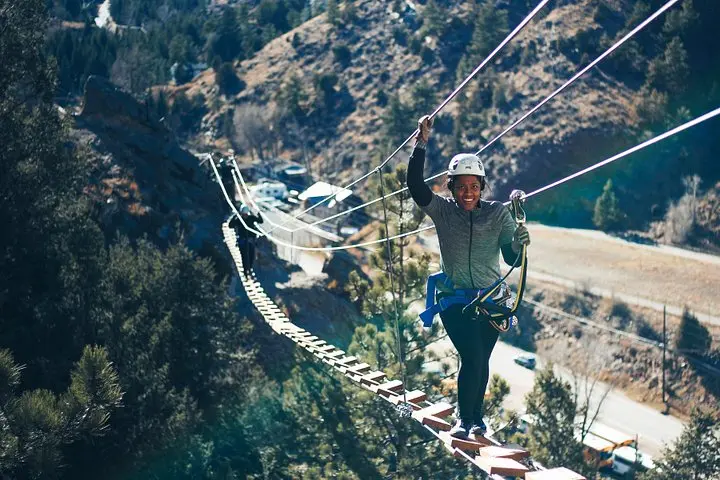
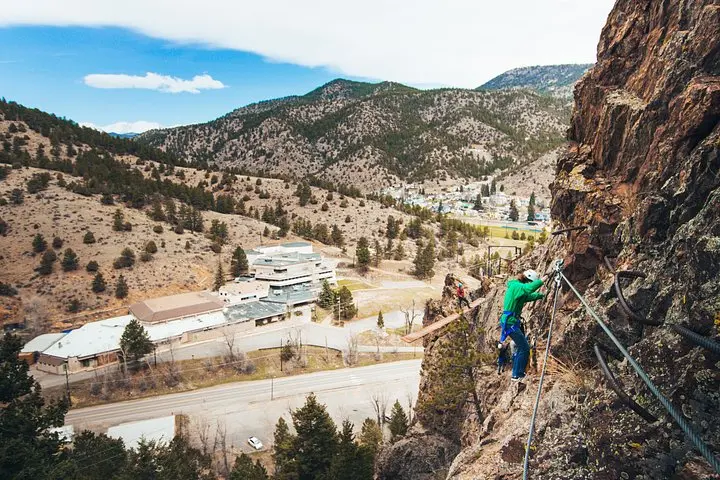
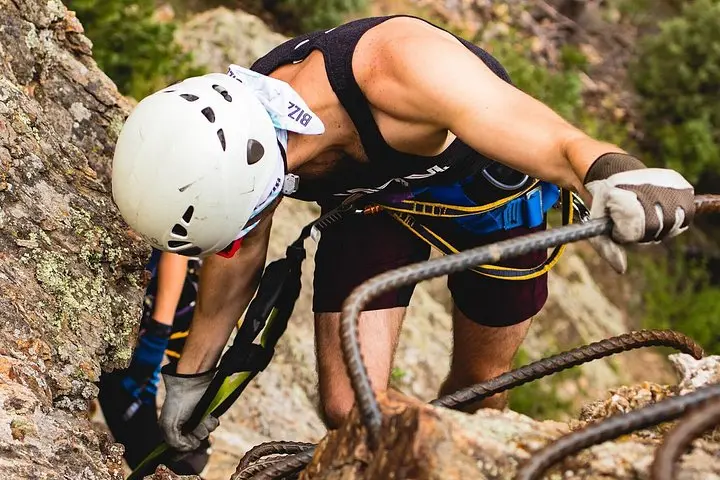
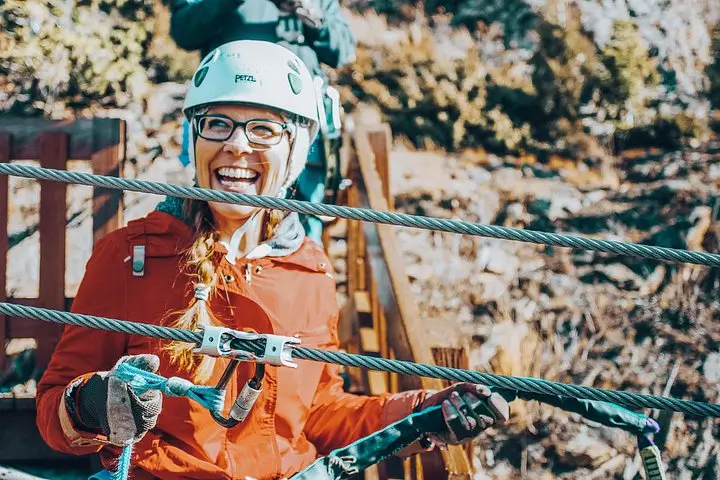
The iron rail winds above Clear Creek, every rung rattling under boot and breath, Idaho Springs shrinking to a strip of roofs in the bend below. On AVA’s Mount Blue Sky Via Ferrata you clip into a continuous steel cable, step onto ladders bolted into solid granite, and edge across exposed ledges with wind pushing at your jacket.
The iron rail winds above Clear Creek, every rung rattling under boot and breath, Idaho Springs shrinking to a strip of roofs in the bend below. On AVA’s Mount Blue Sky Via Ferrata you clip into a continuous steel cable, step onto ladders bolted into solid granite, and edge across exposed ledges with wind pushing at your jacket.
The route follows cliffs shaped by ancient glaciers and the hard Precambrian gneiss that makes secure bolt placements possible. The valley below still holds 19th‑century mining relics—Ore cars, tailings, and the Argo mill—reminders that this corridor has long been a working landscape. The mountain’s recent renaming to Mount Blue Sky acknowledges Indigenous connections to the range; guides often point out old mining switchbacks and local geology as part of the narrative.
Expect three hours of active mountaineering: aided climbs on iron rungs, a 50‑foot free‑fall style section, and short ziplines that shuttle you back toward the outpost. Groups are small (max ~12) and guided; no prior climbing certification is required, but comfort with exposure, steady footing, and basic coordination are essential. Guides supply helmet, harness, and dual‑locking lanyards—practice clipping procedures closely. Dress in windproof layers, bring 1–2 liters of water, and plan for altitude (routes sit around 10,000–12,000 ft). Operations run in most conditions except lightning; mornings usually mean calmer winds and clearer light. Follow guide instructions, move deliberately through clipping stations, and you’ll finish with a distinct sense of earned vertical travel—and possibly a hot drink back in Idaho Springs.