THE ADVENTURE COLLECTIVE® · Independent discovery and booking for outdoor travel

A compact three-day private tour from Bali that pairs Kawah Ijen’s famous blue flames with Mount Bromo’s sunrise panorama. Expect steep volcanic trails, pre-dawn starts, and a hands-on look at local mining and Tenggerese culture.
A compact three-day private tour from Bali that pairs Kawah Ijen’s famous blue flames with Mount Bromo’s sunrise panorama. Expect steep volcanic trails, pre-dawn starts, and a hands-on look at local mining and Tenggerese culture.
You arrive at night: salt-cooled air from the Bali ferry, headlights slicing through banana groves, and the driver charting a long pull toward East Java. Before dawn on day two you stand under a coal-black sky above Kawah Ijen, headlamp cutting a narrow cone. Blue flames lick sulfur vents below as sulfur miners work like shadows; the crater lake glows an acid green beyond.
Verified experiences and guided adventures in the surrounding area.
Operated by TripGuru · Banyuwangi, East Java
You arrive at night: salt-cooled air from the Bali ferry, headlights slicing through banana groves, and the driver charting a long pull toward East Java. Before dawn on day two you stand under a coal-black sky above Kawah Ijen, headlamp cutting a narrow cone. Blue flames lick sulfur vents below as sulfur miners work like shadows; the crater lake glows an acid green beyond.
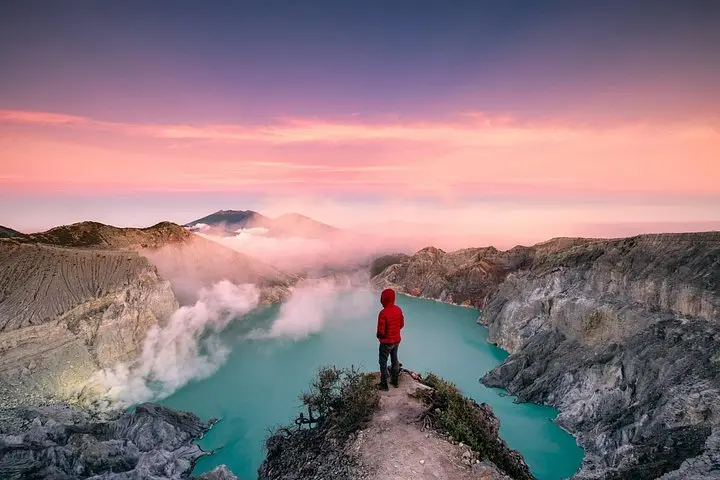
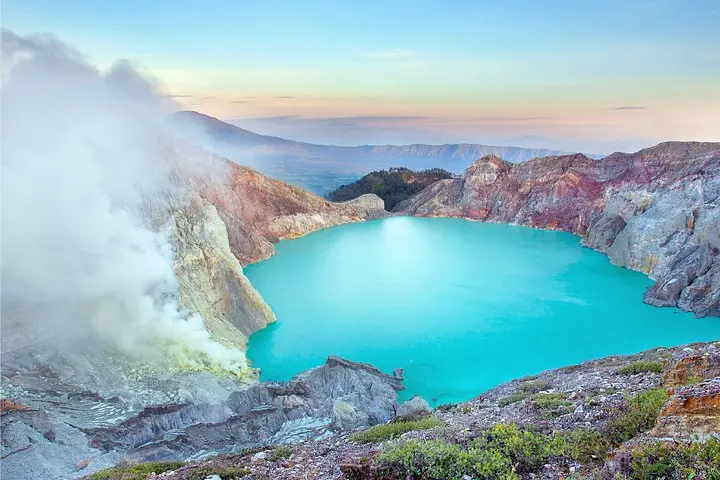
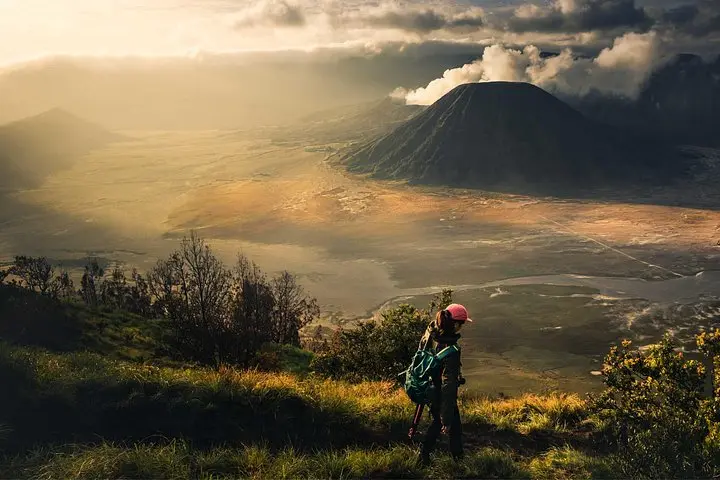
These are volcanic places with layered histories—Ijen’s acid lake formed in a caldera ringed by columns of basalt, while Bromo sits in the wider Tengger caldera, its smoking cone rising from a sea of volcanic sand. Both sites carry local culture: the Tenggerese people maintain Hindu customs around Bromo, and Banyuwangi’s sulfur economy and mining traditions shape Ijen’s human landscape.
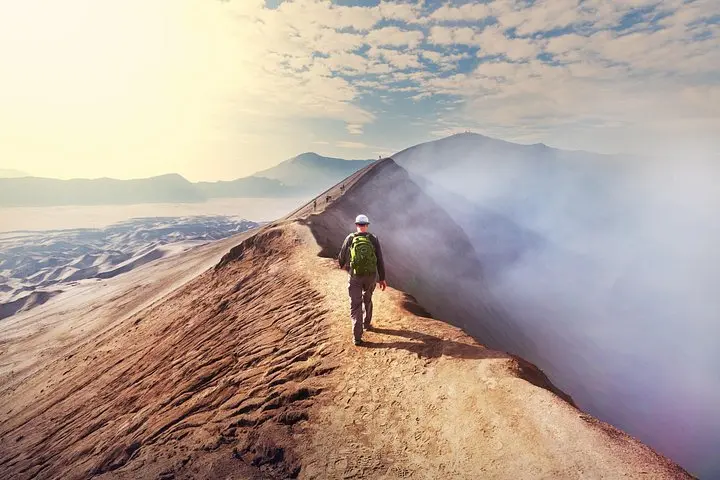
Expect steep, exposed trails with loose scree and steps—roughly two hours’ uphill at Ijen and shorter, steeper approaches at Bromo’s rim. Temperatures swing: cold before sunrise at higher elevations and hot in the lowlands later in the day. Guides provide masks, torches and transport; a private 4WD handles the ash plain to Penanjakan.
Practical pulse: bring a warm layer, a reliable headlamp, sturdy treaded hiking shoes and a printed local health certificate (required). Plan for very early starts, basic mountain lodgings, and limited cellphone signal. Time your visit for the dry season if you want clearer skies and safer trails, and move deliberately on sulphur-streaked steps—these volcanoes demand respect, not speed.
The ascent from the trailhead typically takes about 1.5–2.5 hours depending on pace and fitness; expect steep sections with loose footing.
Blue flames are visible on dark hours before dawn and require low wind and dry conditions; guides schedule pre-dawn climbs to maximize visibility.
Not recommended for people with respiratory, heart, spinal conditions or pregnant travelers; children should be capable of sustained uphill walking and exposed conditions.
By road they’re roughly 200–250 km apart and require several hours’ driving; this itinerary includes overnight in Bromo Village to split the travel.
TripGuru operates guided outdoor trips and adventures with an emphasis on safety, stewardship, and memorable experiences.
You arrive at night: salt-cooled air from the Bali ferry, headlights slicing through banana groves, and the driver charting a long pull toward East Java. Before dawn on day two you stand under a coal-black sky above Kawah Ijen, headlamp cutting a narrow cone. Blue flames lick sulfur vents below as sulfur miners work like shadows; the crater lake glows an acid green beyond.
You arrive at night: salt-cooled air from the Bali ferry, headlights slicing through banana groves, and the driver charting a long pull toward East Java. Before dawn on day two you stand under a coal-black sky above Kawah Ijen, headlamp cutting a narrow cone. Blue flames lick sulfur vents below as sulfur miners work like shadows; the crater lake glows an acid green beyond.
These are volcanic places with layered histories—Ijen’s acid lake formed in a caldera ringed by columns of basalt, while Bromo sits in the wider Tengger caldera, its smoking cone rising from a sea of volcanic sand. Both sites carry local culture: the Tenggerese people maintain Hindu customs around Bromo, and Banyuwangi’s sulfur economy and mining traditions shape Ijen’s human landscape.
Expect steep, exposed trails with loose scree and steps—roughly two hours’ uphill at Ijen and shorter, steeper approaches at Bromo’s rim. Temperatures swing: cold before sunrise at higher elevations and hot in the lowlands later in the day. Guides provide masks, torches and transport; a private 4WD handles the ash plain to Penanjakan.
Practical pulse: bring a warm layer, a reliable headlamp, sturdy treaded hiking shoes and a printed local health certificate (required). Plan for very early starts, basic mountain lodgings, and limited cellphone signal. Time your visit for the dry season if you want clearer skies and safer trails, and move deliberately on sulphur-streaked steps—these volcanoes demand respect, not speed.