THE ADVENTURE COLLECTIVE® · Independent discovery and booking for outdoor travel

Ascend over the Tasman Glacier and land on ancient ice during a 50-minute helicopter tour from Aoraki / Mount Cook. See Tasman, Franz Josef and Fox Glaciers while receiving pilot-led commentary and learning about the region’s geology and Ngāi Tahu connections.
Ascend over the Tasman Glacier and land on ancient ice during a 50-minute helicopter tour from Aoraki / Mount Cook. See Tasman, Franz Josef and Fox Glaciers while receiving pilot-led commentary and learning about the region’s geology and Ngāi Tahu connections.
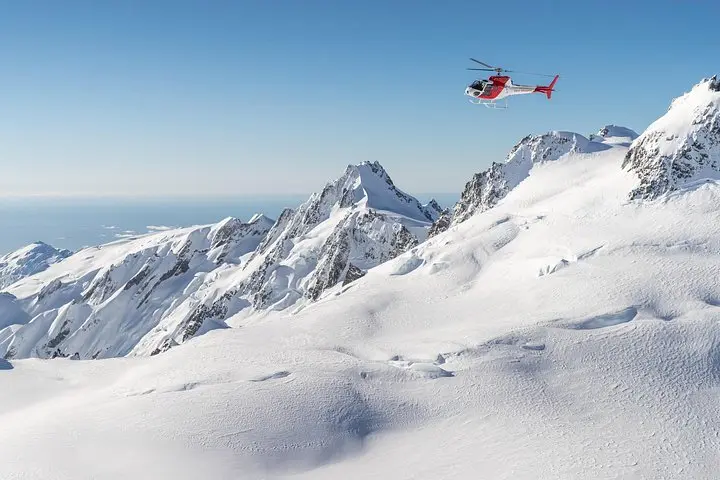
You lift off from a compact airstrip near Aoraki / Mount Cook Village and the valley exhales beneath you — blue ice fields and milky glacial lakes unspool as the Southern Alps press the horizon.
Verified experiences and guided adventures in the surrounding area.
Operated by Glacier Helicopters · Aoraki / Mount Cook Village, Canterbury
You lift off from a compact airstrip near Aoraki / Mount Cook Village and the valley exhales beneath you — blue ice fields and milky glacial lakes unspool as the Southern Alps press the horizon.
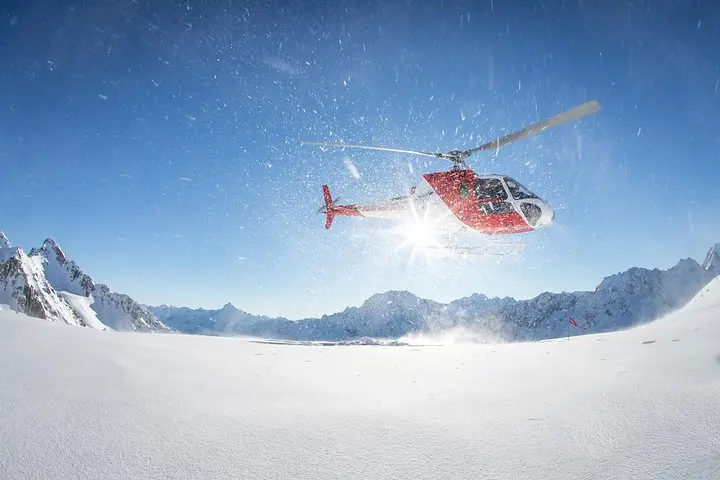
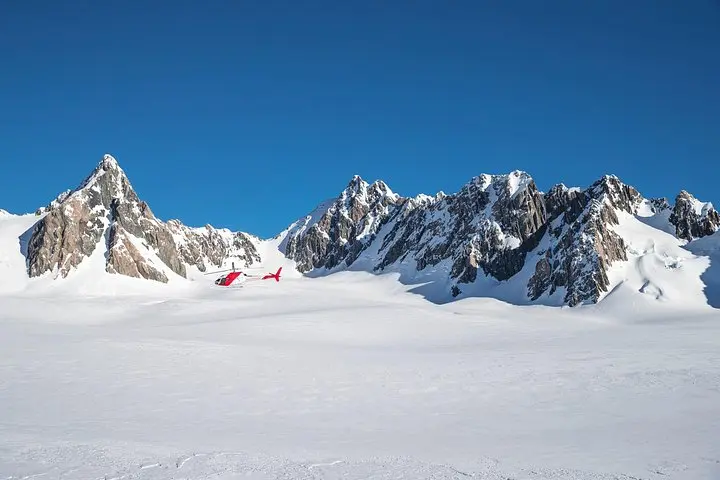
The flight tracks the Tasman Glacier, skirting icefall cliffs and moraine ridges before setting down on a pristine glacier surface. From the skid of the helicopter you sense the slow, relentless work of ice: crevasses yaw like old scars and meltwater threads toward the Tasman Glacier Lake. To the west the peaks give way to long glacier tongues — Franz Josef and Fox appear as icy ribbons feeding the rainforest slopes below.
Geology here is active; the Alpine Fault has uplifted rock and carved deep valleys over millions of years, while the Ngāi Tahu stories connect people to Aoraki as a defining landmark. Modern visitors also witness living change — glaciers that once reached farther into the valleys are in measurable retreat, a blunt reminder of climate dynamics.
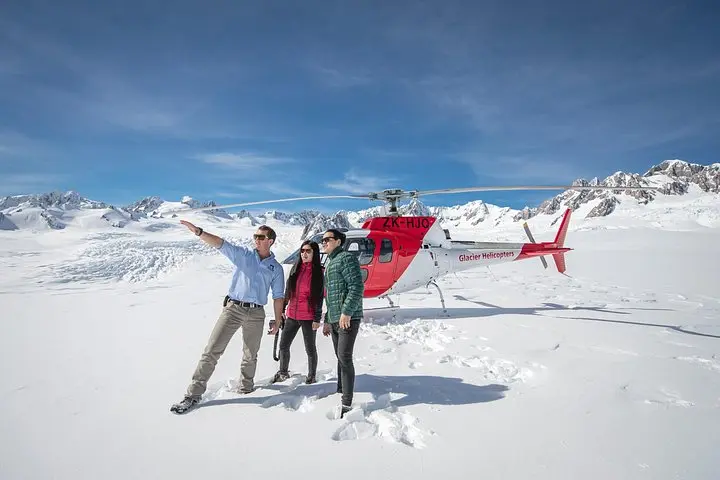
Practical notes: plan for a roughly 50-minute total tour with a glacier landing, arrive 30 minutes early for check-in, and expect pilot commentary that points out geological features and local names. Weight disclosure is required for safety, and flights are weather-dependent — calls 1 hour prior are standard. Dress in warm, windproof layers, bring sturdy footwear for the short snow/ice exit, protect your camera batteries from cold, and treat the glacier respectfully: fragile water channels and surface instability demand attentive guides and minimal impact behavior.
The full experience is about 50 minutes, including flight time and a brief 10-minute glacier landing/exploration stop.
You must disclose accurate weights for seating; infants may sit on laps by prior arrangement and pregnant travelers are generally not recommended to fly.
Flights are weather-dependent; operators usually require a pre-flight weather check and will offer refunds or rebookings if canceled due to conditions.
Yes — operators allow children, though infant policies vary (infants often sit on laps) and safety briefings are mandatory for all passengers.
Glacier Helicopters operates guided outdoor trips and adventures with an emphasis on safety, stewardship, and memorable experiences.
You lift off from a compact airstrip near Aoraki / Mount Cook Village and the valley exhales beneath you — blue ice fields and milky glacial lakes unspool as the Southern Alps press the horizon.
You lift off from a compact airstrip near Aoraki / Mount Cook Village and the valley exhales beneath you — blue ice fields and milky glacial lakes unspool as the Southern Alps press the horizon.
The flight tracks the Tasman Glacier, skirting icefall cliffs and moraine ridges before setting down on a pristine glacier surface. From the skid of the helicopter you sense the slow, relentless work of ice: crevasses yaw like old scars and meltwater threads toward the Tasman Glacier Lake. To the west the peaks give way to long glacier tongues — Franz Josef and Fox appear as icy ribbons feeding the rainforest slopes below.
Geology here is active; the Alpine Fault has uplifted rock and carved deep valleys over millions of years, while the Ngāi Tahu stories connect people to Aoraki as a defining landmark. Modern visitors also witness living change — glaciers that once reached farther into the valleys are in measurable retreat, a blunt reminder of climate dynamics.
Practical notes: plan for a roughly 50-minute total tour with a glacier landing, arrive 30 minutes early for check-in, and expect pilot commentary that points out geological features and local names. Weight disclosure is required for safety, and flights are weather-dependent — calls 1 hour prior are standard. Dress in warm, windproof layers, bring sturdy footwear for the short snow/ice exit, protect your camera batteries from cold, and treat the glacier respectfully: fragile water channels and surface instability demand attentive guides and minimal impact behavior.