THE ADVENTURE COLLECTIVE® · Independent discovery and booking for outdoor travel

A full-day guided hike from Catania up Mount Etna to the Valle del Bove and Silvestri craters. Expect lunar landscapes, recent lava flows and panoramic views from 2,200–2,400 m with all equipment provided.
A full-day guided hike from Catania up Mount Etna to the Valle del Bove and Silvestri craters. Expect lunar landscapes, recent lava flows and panoramic views from 2,200–2,400 m with all equipment provided.
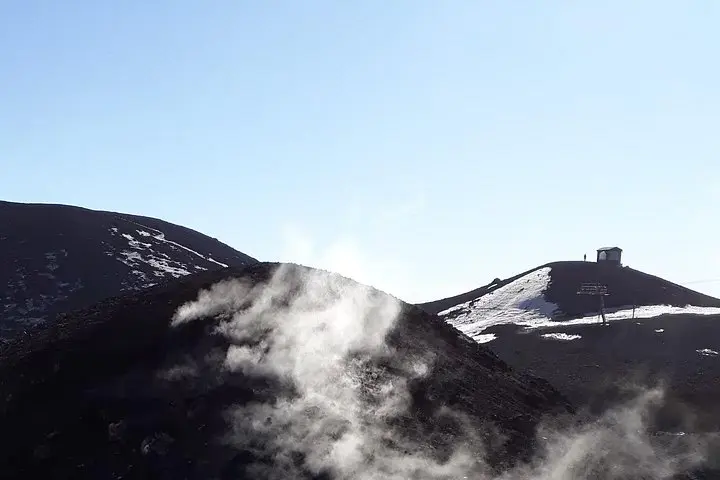
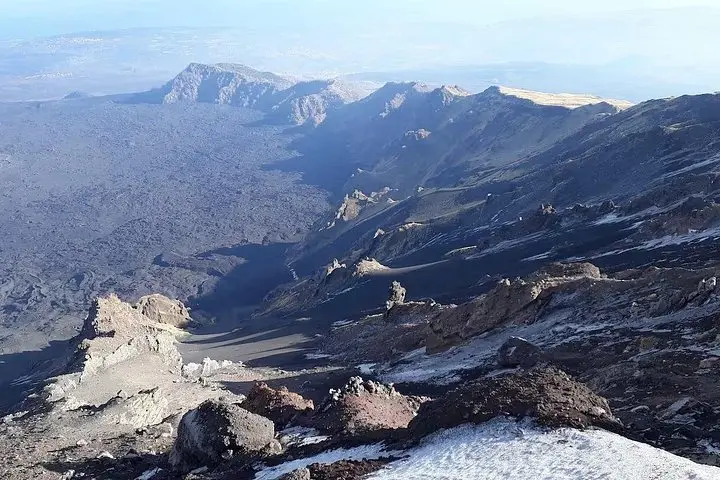
You step off the minivan at a wind-buffed car park and the volcano takes over the horizon — black ribs of lava, scarred slopes and fumaroles exhaling a raw, mineral breath. The trail climbs from lunar fields into ridges that look out over the Valle del Bove, a vast amphitheater carved by collapses and repeated eruptions, where rocks are layered like pages of the mountain's history.
Verified experiences and guided adventures in the surrounding area.
Operated by Etnarock · Nicolosi, Sicily
You step off the minivan at a wind-buffed car park and the volcano takes over the horizon — black ribs of lava, scarred slopes and fumaroles exhaling a raw, mineral breath. The trail climbs from lunar fields into ridges that look out over the Valle del Bove, a vast amphitheater carved by collapses and repeated eruptions, where rocks are layered like pages of the mountain's history.
Etna’s bones are visible here: stratified lava flows, recent pahoehoe and aa textures, and the scarlet iron stains left by hot gas. The Silvestri craters, born in 1892, sit like small moons at about 1,900 m, offering close views of cinders and the patterns of cooling lava. Local guides will point out fumarolic vents, explain Etna’s frequent strombolian activity and how lava flows have shaped agriculture and villages on the lower slopes.
Culturally, Etna has long been a border between vineyards and bare rock — farmers plant ash-rich soils with hardy vines and orchards; towns like Nicolosi and Zafferana carry seasonal festivals tied to harvest and the mountain’s moods.
Practical: expect a 6–8 hour day with climbs up to 2,200–2,400 m, rocky and loose volcanic terrain, and sharp midday sun. The operator supplies poles, boots and jackets, but bring your own well-broken boots if possible, layered clothing, sunscreen and 2–3 liters of water. Allow time for acclimatization if you’re sensitive to altitude, and plan for sudden weather shifts: the mountain changes faster than the coastal forecast.
This is a day that pairs geology with grit — a real mountain walk that rewards steady pace and attention to the landscape.
Private transportation from Catania, guide services, and provided equipment such as hiking shoes, poles, jackets, helmets and a backpack are included per the operator's listing.
The trek reaches 2,200–2,400 meters with mixed rocky and ash terrain; it is rated moderate and requires steady fitness rather than technical mountaineering skills.
Not recommended for travelers with serious back, heart conditions, or for infants; children should be physically capable of long walks at altitude and accompanied by guardians.
The operator may cancel for safety reasons (storms, poor visibility). Full refunds are typically available if canceled at least 24 hours prior or due to bad weather.
Etnarock operates guided outdoor trips and adventures with an emphasis on safety, stewardship, and memorable experiences.
You step off the minivan at a wind-buffed car park and the volcano takes over the horizon — black ribs of lava, scarred slopes and fumaroles exhaling a raw, mineral breath. The trail climbs from lunar fields into ridges that look out over the Valle del Bove, a vast amphitheater carved by collapses and repeated eruptions, where rocks are layered like pages of the mountain's history.
You step off the minivan at a wind-buffed car park and the volcano takes over the horizon — black ribs of lava, scarred slopes and fumaroles exhaling a raw, mineral breath. The trail climbs from lunar fields into ridges that look out over the Valle del Bove, a vast amphitheater carved by collapses and repeated eruptions, where rocks are layered like pages of the mountain's history.
Etna’s bones are visible here: stratified lava flows, recent pahoehoe and aa textures, and the scarlet iron stains left by hot gas. The Silvestri craters, born in 1892, sit like small moons at about 1,900 m, offering close views of cinders and the patterns of cooling lava. Local guides will point out fumarolic vents, explain Etna’s frequent strombolian activity and how lava flows have shaped agriculture and villages on the lower slopes.
Culturally, Etna has long been a border between vineyards and bare rock — farmers plant ash-rich soils with hardy vines and orchards; towns like Nicolosi and Zafferana carry seasonal festivals tied to harvest and the mountain’s moods.
Practical: expect a 6–8 hour day with climbs up to 2,200–2,400 m, rocky and loose volcanic terrain, and sharp midday sun. The operator supplies poles, boots and jackets, but bring your own well-broken boots if possible, layered clothing, sunscreen and 2–3 liters of water. Allow time for acclimatization if you’re sensitive to altitude, and plan for sudden weather shifts: the mountain changes faster than the coastal forecast.
This is a day that pairs geology with grit — a real mountain walk that rewards steady pace and attention to the landscape.